

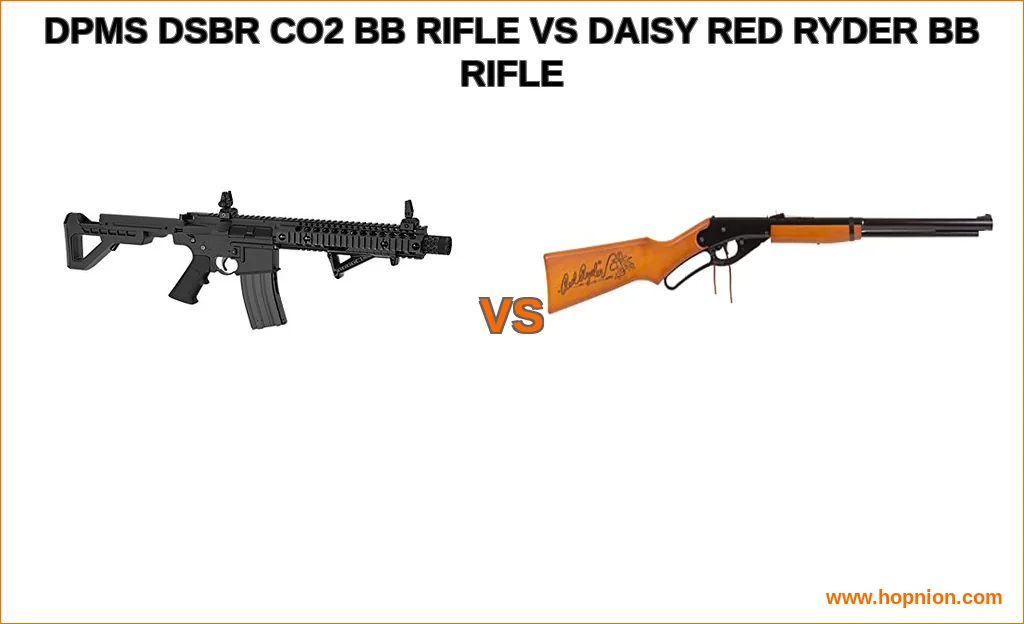
Two iconic BB rifles sit on opposite ends of the spectrum. One is a piece of living Americana, a lever-action classic that has introduced generations to shooting. The other is a modern, tactical replica that mimics the look and feel of a military firearm. The Daisy Red Ryder and the DPMS DSBR represent two completely different philosophies in airgun design.
between them isn’t just about specs; it’s about the experience you want. Are you after nostalgic, single-shot plinking or the thrill of a high-capacity, semi or full-auto capability? My honest assessment is that both are fantastic tools, but for wildly different jobs. Let’s break down where each one shines.
Head-to-Head Overview: Specs & Key Differences
At a glance, the core differences are stark. The Daisy Red Ryder is a spring-piston, single-shot rifle. The DPMS DSBR is a CO2-powered, magazine-fed rifle with dual-action firing. This fundamental distinction drives everything from their operation to their ongoing cost.
| Feature | DPMS Full Auto SBR CO2 BB Rifle | Daisy Red Ryder BB Rifle |
|---|---|---|
| Power Source | Dual 12-gram CO2 Cartridges | Spring-Piston |
| Action | Semi & Full-Auto | Lever-Action |
| Muzzle Velocity (FPS) | Up to 430 FPS | 350 FPS |
| Shot Capacity | 25-Round Drop-Out Magazine | Single Shot |
| Primary Construction | Durable Synthetic | Wood & Steel |
| Sights | Removable Pop-Up Front, Adjustable Rear | Fixed Blade & Notch |
| Stock | 6-Position Adjustable | Fixed |
| Check current price on Amazon | Check current price on Amazon |
Power Source & Performance: CO2 vs Spring-Piston
This is the heart of the debate: CO2 vs spring-piston. Your choice here dictates the rifle’s rhythm, power consistency, and long-term cost.
The Daisy Red Ryder’s spring-piston system is timeless. You manually work the lever to cock the gun and load a single BB. It’s simple, reliable, and has zero ongoing cost for power. The trade-off is the muzzle velocity (FPS) ceiling of 350 FPS and the manual effort for each shot. Honestly speaking, this is part of its charm and a key reason it’s often recommended as a first BB gun; it teaches pacing and fundamentals.
The DPMS DSBR runs on two 12-gram CO2 cartridges. This provides the energy for its higher velocity (up to 430 FPS) and its blistering full-auto capability. The performance is more consistent shot-to-shot compared to a springer, but you must factor in the CO2 cost vs spring power. Cartridges are a consumable, and firing in full-auto mode will deplete them rapidly. Its a trade of convenience and firepower for a recurring expense.
Accuracy and Real-World Use
For BB rifle accuracy, both require practice but in different ways. The Red Ryder’s fixed sights and consistent spring power reward a steady hold and deliberate aim. The DPMS, with its adjustable sights and higher air rifle velocity, can be very fun for reactive target shooting, though the shot capacity and fast firing can encourage spray-and-pray habits if you’re not careful.
From my honest perspective, if you view shooting as a mindful skill, the spring-piston wins. If you prioritize fun, tactical drills, and replicating firearm handling, the CO2 system is unmatched. Its also worth noting that for serious target practice, many consider a dedicated pellet rifle alternative due to superior inherent accuracy.
Build, Feel & Realism: Tactical vs Classic
This is where personal preference dominates. The Daisy Red Ryder is an heirloom. Its wood stock and steel components give it a tangible, classic feel. Its lightweight, points naturally, and is instantly recognizable. Theres no pretense; its a BB gun through and through.
The DPMS DSBR is built for replica firearm realism. Its all-metal vs plastic construction leans heavily on durable synthetic materials to keep weight and cost down while mimicking the heft and layout of an AR-platform rifle. Features like the adjustable stock, Picatinny rail sections, and 25-round drop-out magazine are designed to create an immersive experience. Speaking honestly, it is arguably the most realistic BB rifle under $100 in terms of tactical function.
Key Build Quality Notes
- DPMS DSBR: The synthetic construction is tough and handles like its real-steel inspiration. The adjustable stock is a huge plus for fitting different shooters.
- Daisy Red Ryder: The classic wood and metal build is robust for its intended use. It feels like a tool, not a toy, which is part of its enduring appeal.
If you want my honest opinion, the “better” build depends on context. For backyard durability and a traditional feel, the Red Ryder is fantastic. For modern ergonomics and feature-rich design, the DPMS leads. For another take on a classic, see how the Red Ryder stacks up against a modern gamo break-barrel.
Ideal User & Use Case Scenarios
Who wins in this head-to-head? Neither universally. Each rifle serves a distinct master.
The Daisy Red Ryder Is For:
- Beginners & Young Shooters: Its simplicity, safety (single-shot), and lack of ongoing cost make it the quintessential BB gun for beginners. It teaches responsibility with every lever cycle.
- Nostalgia Seekers & Plinkers: If your goal is casual backyard plinking with a timeless design, this is your rifle. The rhythm is meditative.
- Those on a Budget: After the initial purchase, your shooting is essentially free. The one-year warranty provides basic peace of mind.
The DPMS DSBR Is For:
- Adults & Older Teens: Is the DPMS DSBR good for adults? Absolutely. Its size, weight, and tactical operation are designed for an adult air rifle experience. The adjustable stock ensures a proper fit.
- Tactical Training & Fun: The semi and full-auto modes, high capacity, and realistic handling are perfect for safe, low-cost tactical practice and incredibly fun target sessions.
- Replica Enthusiasts: If realism is your goal, nothing in this price range comes close. Its a gateway into functional firearm replicas.
Honest to goodness, your intended use is the ultimate decider. For foundational marksmanship, the Red Ryder is a better teacher. For dynamic, engaging fun, the DPMS is hard to beat. You can explore another comparison of classic vs. modern in our look at the gamo Varmint.
Critical Considerations & Safety
Beyond the specs, responsible ownership requires attention to details often missing from product pages. First and foremost, eye protection requirements are non-negotiable for both rifles. Always wear ANSI-rated safety glasses. Every time.
For ammunition, heed BB weight recommendations. Use only standard 4.5mm (.177 caliber) steel BBs. Do not use lead pellets or other ammunition, as this can damage the guns. Velocity can vary with BB weight, so consistency matters.
Finally, always consult the official safety manuals that come with each rifle. Treat every airgun with the same respect as a firearm. For structured shooting sports and safety guidelines, organizations like the National Three-Position Air Rifle Council are an excellent official source.
Final Verdict: Value, Recommendations & Who Wins
So, which BB rifle should you choose? The answer lives in your goals.
Choose the Daisy Red Ryder if: You value tradition, simplicity, and teaching fundamentals. It’s the undisputed king of the first BB gun. Its low cost of entry and ownership, combined with its iconic status, offers immense value for casual plinking and introductory shooting. The Daisy Red Ryder lifetime warranty question is common; the current model carries a one-year limited warranty, but its legendary durability is part of its lore.
Choose the DPMS Full Auto SBR if: You crave modern tactical realism, high-capacity fun, and versatile performance. Its a powerful adult air rifle that provides an exciting, feature-rich experience unmatched by classic designs. Just budget for CO2 cartridges and BBs. For a deeper dive into its features, any solid DPMS DSBR review will highlight its unique place in the market.
My honest take is that declaring one “better” is futile. The Daisy Red Ryder wins on nostalgia, simplicity, and timeless value. The DPMS DSBR wins on features, realism, and pure fun factor. Your perfect match depends entirely on the experience you seek. For more unbiased comparisons like this, the team at Honest Opinion is always testing and reviewing.
In the end, both deliver on their promises. One offers a connection to shooting’s past, the other a thrilling glimpse into its modern, recreational future. You really can’t go wrong with eitheras long as you know what you’re signing up for.