

Two CO2-powered BB rifles often dominate the conversation for backyard plinkers seeking that tactical feel. The DPMS DSBR and the Crosman CAK1 both promise high-capacity, semi-automatic fun with velocities that get your attention. But which one delivers the better overall package for your money and your shooting style? That’s the question we’re here to tackle.
On the surface, their specs look remarkably similar. Both claim speeds up to 430 FPS and blistering rates of fire. Both feature adjustable stocks and drop-out magazines. To be completely honest, the differences lie in the subtle details of their design, operation, and what you prioritize in a plinking session. Let’s break them down side-by-side.
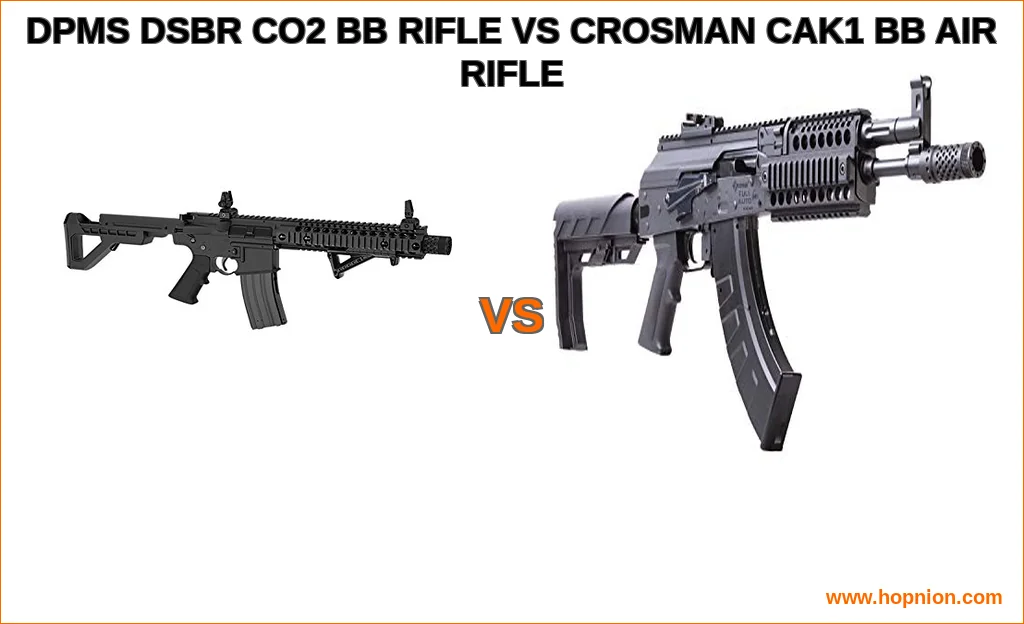
Head-to-Head: DPMS DSBR vs. Crosman CAK1 Specifications
Starting with a clear comparison table helps frame the discussion. Heres how these two air rifles stack up based on their core features.
| Feature | DPMS Full Auto SBR CO2 BB Rifle | Crosman CAK1 Full/Semi-Auto BB Rifle |
|---|---|---|
| Velocity (FPS) | Up to 430 fps | Up to 430 fps |
| Action Type | Full Auto / Semi-automatic | Full Auto / Semi-automatic |
| Magazine Capacity | 25-round drop-out magazine | 28-round drop-out magazine |
| CO2 System | Dual 12-gram cartridges | Holds 2 CO2 cartridges |
| Stock | 6-position adjustable stock | Foldable/adjustable buttstock |
| Sights | Removable pop-up front, adjustable rear | Quad-mounting rail system (sights not specified) |
| Build & Feel | Full size, real feel, durable synthetic design | Full size, real feel, durable synthetic design |
| Check current price on Amazon | Check current price on Amazon |
Design, Build Quality & Ergonomics
Both rifles aim for a “full size, real feel” experience, and they largely achieve it. The synthetic construction keeps them light for extended plinking sessions while maintaining a solid, believable heft. Honestly speaking, the ergonomic differences become apparent when you shoulder them.
The DPMS DSBR features a six-position adjustable stock, allowing for a very customized length of pull. Its all-metal vs polymer construction isn’t specified, but the focus is on a durable synthetic build. The included removable pop-up front sight and adjustable rear sight mean you can start shooting right out of the box without needing to add optics, a point often overlooked in air rifle comparison.
The Crosman CAK1 counters with a foldable and adjustable buttstock. This folding capability is a significant advantage for storage or transport. However, it forgoes included iron sights, relying instead on its quad-mounting rail system for you to add your own optics or accessories. My honest take is that this makes the CAK1 more of a blank canvas for customization but adds to the initial cost if you want sights.
Performance: Accuracy, Power & Reliability
This is where the rubber meets the road. Both are rated for the same velocity (FPS)up to 430which is plenty for punching paper and ringing steel. The BB gun accuracy of any platform like this is heavily dependent on the shooter, the ammunition quality, and consistency of the CO2 power plant.
A key factor in performance is the blowback action. While not explicitly stated in the provided features for the CAK1, its full-auto capability strongly implies a blowback system is present to cycle the action. The DPMS also features this realistic shooting sensation. This mechanic does impact CO2 efficiency, as some of the gas is used to cycle the slide rather than propel the BB. Speaking honestly, expect lower shot counts per cartridge when using full-auto modes compared to semi-auto.
Reliability in CO2 vs spring airgun debates often centers on consistency. CO2 power can vary with temperature, a critical missing entity in many reviews. In colder weather, your velocity and shot count will drop noticeably. For consistent performance, store your cartridges and rifle at room temperature before use. This is a universal truth for all CO2 guns, not a flaw specific to these models.
Maintenance and Long-Term Support
Heres an area many buyers forget to consider. Maintenance requirements for CO2 rifles are generally simple but essential. Wiping down exterior surfaces, keeping the barrel clean of lead dust, and ensuring O-rings are occasionally lubricated with silicone oil will prolong life. Always check the official warranty details & support from the manufacturer at the time of purchase. Brands like Crosman and Umarex (which makes the DPMS) typically have defined warranty periods, but policies can change.
Ammunition, CO2 & Operating Costs
This is the practical math of ownership. Both rifles use standard 4.5mm steel BBs and two 12-gram CO2 cartridges.
- Magazine Capacity: The Crosman has a slight edge with a 28-round magazine versus the DPMS’s 25-round magazine. A small but potentially meaningful difference during a rapid-fire session.
- CO2 Cartridge Capacity: Both hold two cartridges. The actual shot count per set of cartridges is a major variable. It depends on the rate of fire (full-auto drains them faster), ambient temperature, and the specific CO2 efficiency of each rifle’s valve system. In my honest opinion, I believe budgeting for more CO2 than you think you’ll need is always a smart move.
When calculating your best value for money BB rifle under $100, you must factor in these ongoing costs. BBs and CO2 are consumables. A DPMS DSBR CO2 rifle real world review or a look at Crosman CAK1 BB rifle problems and fixes online can give you insight into long-term durability and common issues, helping you estimate true cost of ownership.
For those interested in more structured shooting, resources from organizations like the official source for international shooting or the authority guide for competitive shooting in the US can provide great frameworks for practice, even with recreational gear like this.
Final Verdict & Target User Recommendation
So, which is more accurate DPMS DSBR or Crosman CAK1? Based on their identical velocity claims and similar designs, inherent mechanical accuracy is likely a tie. The winner for you depends on your priorities.
Choose the DPMS DSBR If:
- You want a ready-to-shoot package with iron sights included.
- You prefer the fixed-stock design with multiple adjustment positions.
- Your best BB rifle for plinking definition includes immediate usability out of the box.
Its a fantastic option for straightforward, tactical-style fun. You might also find our gamo comparison useful if you’re weighing other popular models.
Choose the Crosman CAK1 If:
- Storage and portability are key (thank the folding stock).
- You already own optics and want a platform to mount them on immediately.
- You value the slightly higher magazine capacity for longer strings of fire.
It offers greater configuration flexibility from the start. For another perspective, see how it stacks up against a different competitor in our gamo vs CAK1 analysis.
The Honest Opinion
My honest assessment is that there is no outright loser here. Both are compelling semi-auto BB guns in the popular tactical plinking category. The DPMS DSBR feels more like a complete, self-contained system. The Crosman CAK1 feels like a more modular platform begging for customization.
For the shooter who just wants to grab and go, the DPMS has the edge. For the tinkerer who sees the rifle as a starting point, the Crosman is more appealing. Your decision should hinge on whether you value convenience or customization potential more highly. At the end of the day, the best rifle is the one you’ll shoot most often. And for unbiased, in-depth looks at gear like this, the team at Honest Opinion is always digging into the details.
Consider your climate, your budget for consumables, and how you plan to use it. Then, get out there and enjoy the satisfying ping of a well-placed shot. Thats what plinking is all about.