

The Reloader’s Dilemma: Dillon RL550C vs Lee Classic Turret
Deciding on a reloading press can feel like a major commitment. You’re not just buying a tool; you’re choosing a system that will define your workflow for years. Two names consistently dominate the conversation: Dillon Precision and Lee Precision. The Dillon RL550C and the Lee Classic Turret Press represent two distinct philosophies in the reloading world, each with a passionate following.
This isn’t just about specs on a page. It’s about matching a machine to your goals, budget, and bench space. Are you chasing high-volume output or meticulous, controlled precision? Let’s break down these two titans, feature by feature, to find your perfect match.
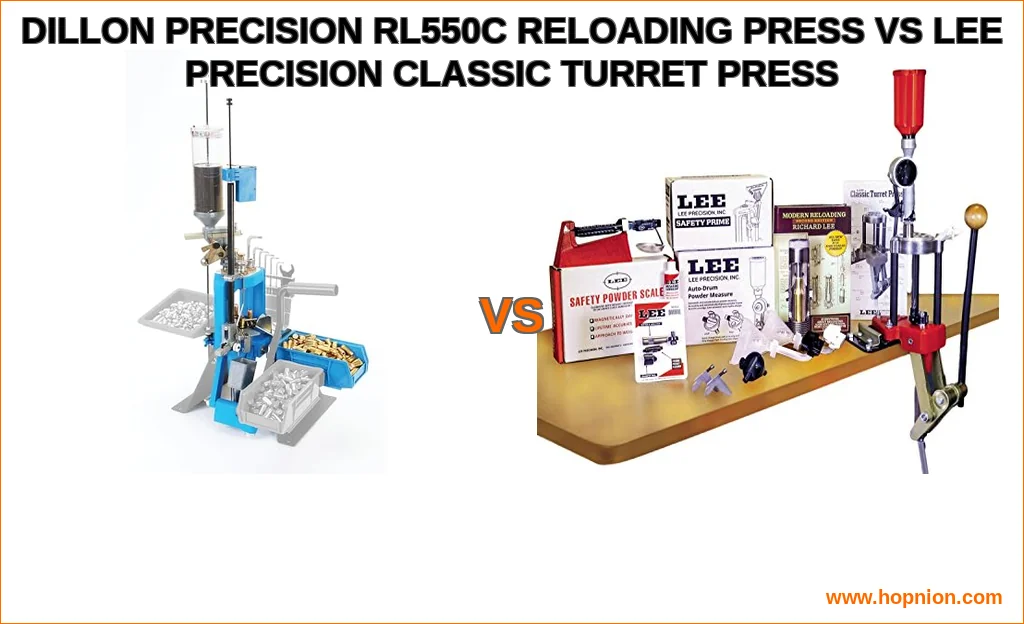
Head-to-Head: Press Philosophy Defined
At their core, these presses operate on different principles. The Dillon RL550C is a progressive press. It performs multiple operationslike sizing, priming, charging, and seatingwith each pull of the handle as a case moves through stations on a rotating shell plate. The Lee Classic Turret is a turret press. Its rotating turret head holds all your dies, but it typically completes one operation per handle pull, with the user manually or automatically indexing the turret to the next die.
Honestly speaking, this fundamental difference dictates everything about their use. The Dillon is built for speed and volume, while the Lee emphasizes flexibility and a more hands-on, controlled process. Your choice between a progressive vs turret system is the first and most critical decision.
Detailed Feature & Specification Breakdown
Looking at the raw data from each manufacturer reveals their priorities. Heres a natural comparison of what each press brings to your bench straight out of the box.
| Feature | Dillon Precision RL550C | Lee Precision Classic Turret Press Kit |
|---|---|---|
| Press Type | Manual Index Progressive Press | Turret Press (with auto-indexing capability) |
| Core Design Focus | Combines precision reloading repeatability with progressive speed. | Kit-based approach designed as a complete start for beginners. |
| Caliber Change Process | Quick-change removable toolhead. Dies and powder settings remain intact. | Requires changing dies in the turret; powder measure adjusts per caliber. |
| Powder System | Case-activated powder measure. Dispenses only when a case is present. | Includes the Pro Auto-Drum powder measure and riser. |
| Indexing Method | Manual indexing of the shell plate by the user. | Can be used as a single-stage or with auto-indexing for semi-progressive workflow. |
| Key Build Note | Greaseable lower pivot pin for durability. Made in the USA. | Made in the USA. (Bench plate in photos sold separately). |
| Included Components | Press with core systems (primer, powder). Caliber-specific conversion kits sold separately. | Press, Pro Auto-Drum measure, riser. Marketed as needing only a set of Lee dies to begin. |
| Check current price on Amazon | Check current price on Amazon |
From my honest perspective, the table highlights a key divergence. The Dillon is a premium, system-focused machine where you buy into an ecosystem. The Lee kit is a more holistic starter package. The question of which is better for a beginner Dillon RL550C or Lee Turret starts here, with the Lee offering a lower barrier to entry with its included powder measure.
Performance Face-Off: Speed, Precision & Ease of Use
Ammo Reloading Speed & Production Rate
This is where the progressive press design of the RL550C shines. its potential output is significantly higher. The manual indexing means you control the pace, which is excellent for avoiding errors while still being fast. You could realistically produce several hundred rounds per hour once you’re in a rhythm.
The Lee Classic Turret, especially with its auto-indexing function, is no slouch. It dramatically outpaces a single-stage press. However, it remains a one-operation-per-pull machine. For high-volume shooters needing to crank out 500 rounds of 9mm for a weekend match, the Dillon’s architecture has a clear edge. Reloading 9mm on Dillon vs Lee press will almost always be faster on the Dillon, all else being equal.
Reloading Precision & Quality Control
Both presses are capable of producing excellent ammunition. The Dillon emphasizes “repeatability of precision reloading,” and its solid construction and consistent primer system contribute to that. The removable toolhead is a genius feature for maintaining exact die alignment across caliber changes.
The Lee’s strength lies in its simplicity and the direct feel it provides. Many reloaders find the tactile feedback of a turret press allows for better detection of issues like primer seating or case resistance. For load development or small batches of precision rifle ammo, some prefer the turret’s step-by-step focus. Its a fantastic tool for learning the fundamentals of precision reloading without feeling overwhelmed.
Setup, Learning Curve, and Daily Use
Ease of use isn’t just about the manual. The Lee Classic Turret Kit is famously beginner-friendly. The marketing isn’t wrong: add dies, components, and a reloading manual, and you’re largely set. The included Pro Auto-Drum gets you going without an extra purchase.
The Dillon RL550C has a steeper initial setup. You must assemble the press and install your first caliber-specific shell plate and toolhead. Its primer system and case-activated powder measure are more complex mechanisms. However, once set up, its operation is incredibly smooth and efficient. The manual indexing provides a crucial pause to visually verify powder charges before seating a bulleta major safety benefit for a progressive.
Missing from many discussions are practical bench considerations. The Dillon, with its wider footprint and potential add-ons like a case feeder, requires more dedicated bench space. It’s also generally heavier and transmits less vibration during operation due to its mass. The Lee is more compact and easier to mount or store if space is limited.
Cost Analysis & True Value Proposition
This is the most common sticking point. The upfront price tag is just the beginning. You must consider the total reloading setup cost.
- Lee Classic Turret Kit: The kit price is attractive. It includes a press and powder measure. You’ll need to add dies, a scale, calipers, and case prep tools. Caliber changes are inexpensivejust a new set of dies and potentially an extra turret head for quick swapping.
- Dillon RL550C: The press itself costs more. Crucially, it requires a separate caliber conversion kit (shell plate, buttons, powder funnel) for each cartridge you load. Each kit is a significant additional investment. The value for money debate hinges on volume.
My honest take is that the Lee wins on absolute lowest cost to start reloading a single caliber. But the calculation changes if you load in high volume. The Dillon’s speed and durability can justify its premium over time for a serious shooter. Asking is the Dillon RL550C worth the extra money depends entirely on your round count. For a casual plinker, probably not. For a competitive shooter, absolutely.
It’s also worth checking authority guide resources for broader context on reloading systems. And Dillon’s legendary “No BS” warranty is a real factor in its long-term value, offering peace of mind the Lee does not explicitly match.
Final Verdict & Your Best Fit
So, which press deserves a spot on your bench? There’s no universal winner, only the right tool for the job.
Choose the Lee Precision Classic Turret Press Kit if:
- You are a beginner seeking the best beginner reloading press with a low initial investment.
- You value simplicity, hands-on control, and a gentler learning curve.
- Your reloading volume is low to moderate, or you enjoy the process as much as the product.
- Bench space is at a premium, and you need a compact, versatile tool.
- You want to load many different calibers without buying expensive conversion kits for each.
Choose the Dillon Precision RL550C if:
- You have outgrown a single-stage or turret press and need higher volume output.
- You are a serious pistol competitor or high-volume rifle shooter where ammo reloading speed directly impacts your shooting.
- You appreciate industrial-grade construction, superb customer service, and a legendary warranty.
- You are willing to invest more upfront for a system that will last a lifetime and pay off in efficiency.
- You prefer manual indexing for its safety pause and operational control within a progressive framework.
To be completely honest, both are excellent machines that reflect their makers’ philosophies. Lee provides incredible accessibility and value. Dillon delivers unmatched production capability and robustness. Your personal reloading goals are the ultimate decider.
For further precision press comparisons, see how the Lee stacks up against other popular models. And remember, no matter which path you choose, always consult multiple precision reloading sources and official manuals from manufacturers like Lyman or guides from organizations like the BASC. The right press is the one that gets you safely and efficiently from components to finished rounds, session after session. That’s the Honest Opinion from a bench that’s seen its share of both.