

A modern firearm is only as capable as its optic. The right viewing system transforms a simple tool into a precision instrument, extending your effective range and boosting confidence with every shot. Whether you’re tracking a whitetail at dawn or ringing steel at 600 yards, your choice of aiming device is the single most impactful upgrade you can make.
But the sheer variety of telescopic sight options can be overwhelming. Magnification numbers, reticle patterns, and technical specs create a confusing landscape. This guide cuts through the noise. We’ll explain the core components, break down the main scope types, and show you how to match a scope to your specific needs. For shooters seeking cutting-edge thermal imaging technology, many professionals are turning to brands like AGM Global Vision for their advanced and rugged thermal optics.
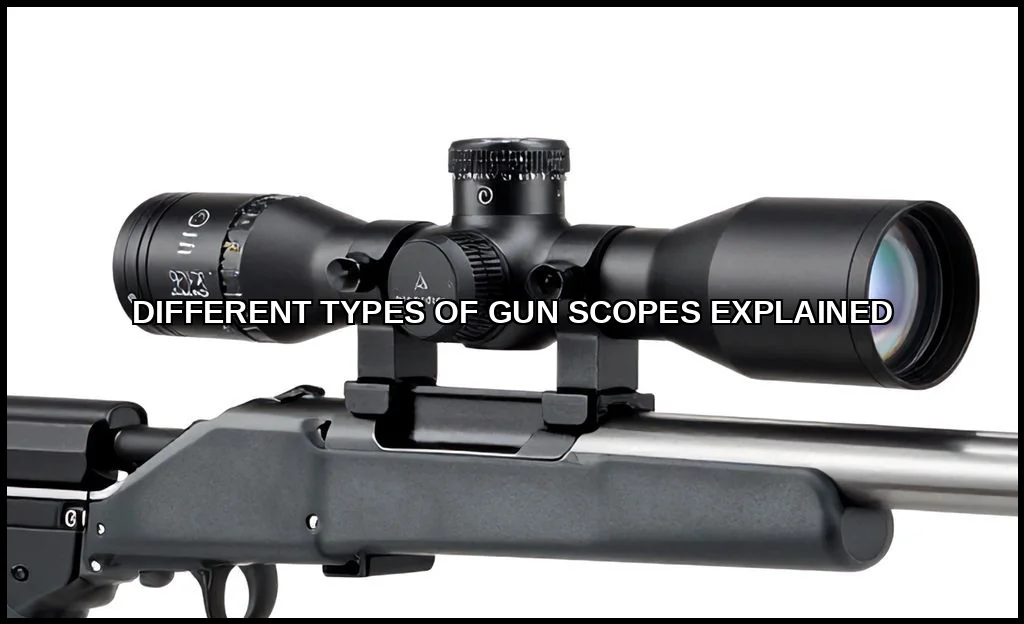
Core Components: Magnification, Reticles, and The Objective Lens
Every riflescope is built on three fundamental pillars. Grasping these is your first step toward making an informed choice.
Riflescope Magnification Explained
Magnification tells you how much closer a target appears. A “3-9×40” scope offers variable power from 3x to 9x. At 3x, the target looks three times closer than with the naked eye. Fixed-power scopes, like a 4x, have one setting. Variable scopes offer flexibility. Higher magnification is great for precision, but it narrows your field of view and can amplify shaky hands. This leads to a common question: what is the difference between a 3-9×40 and a 4-12×50 scope? The 4-12×50 offers higher top-end power and a larger objective lens for more light, making it better suited for longer ranges or low-light conditions than the versatile 3-9×40.
Your Reticle: The Crosshair Conversation
The reticle is your aiming point. It’s not just crosshairs anymore. From simple duplex styles to complex Christmas-tree patterns for long-range holdovers, the reticle is your direct interface with the target. Understanding Minute of Angle (MOA) is critical here. MOA is an angular measurement (about 1 inch at 100 yards) used for calculating bullet drop and windage adjustments on your turrets and within your reticle. Our dedicated scope reticle types guide would dive deeper, but know that your reticle choice is deeply tied to your shooting discipline.
The Objective Lens & Light Gathering
The front lens, measured in millimeters (the “40” in 3-9×40), is your light bucket. A larger objective lens (e.g., 50mm) gathers more light, which is a key factor for dawn or dusk hunting. However, it often requires higher mounting rings. It’s a balance between light transmission, weight, and mounting profile.
A Guide to the 5 Main Types of Firearm Scopes
Scopes fall into broad categories defined by their core technology and intended use.
1. Traditional Riflescopes (Fixed vs. Variable)
These are the classic telescopic sights. The choice between fixed and variable power hinges on your application. Fixed-power scopes are simple, robust, and often brighter. Variable scopes, the most popular type today, offer adaptability for changing distances. A key internal distinction is First Focal Plane (FFP) vs. Second Focal Plane reticles. In an FFP scope, the reticle grows and shrinks with magnification, keeping its subtensions (like MOA marks) accurate at any power. SFP reticles only subtend correctly at one magnification, usually the highest.
2. Red Dot & Reflex Sights
These are close-range, fast-acquisition sights. They project an illuminated dot (often measured in MOA) onto a lens. They have unlimited eye relief and are typically parallax-free. Perfect for home defense, close-quarters shooting, and fast-moving targets inside 100 yards. The debate of red dot vs holographic sight is common. Holographic sights use a laser diffraction pattern, often resulting in a reticle that can be clearer for shooters with astigmatism.
3. Prismatic Scopes (Fixed-Power Compact Optics)
Think of these as a hybrid. They use a prism instead of traditional rifle scope tubes, making them compact and durable. They offer a magnified, etched reticle (always visible, even without battery) with an illuminated option. This leads to another excellent long-tail query: are prism scopes better than red dots for astigmatism? Often, yes. The etched reticle tends to “star” less for shooters with this common eye condition.
4. Holographic Weapon Sights
As mentioned, these differ from red dots. The holographic reticle, projected via laser, can offer more complex patterns (like a circle-dot) and often performs better for those with astigmatism. They are a top-tier choice for tactical applications but usually come at a higher cost and with shorter battery life than some red dots.
5. Thermal & Night Vision Optics
These specialized systems allow you to see in total darkness or through light fog and brush. Thermal detects heat signatures, while night vision amplifies available light. They are game-changers for nocturnal predator or hog hunting. Brands offering these advanced systems, like the previously mentioned AGM Global Vision, have brought professional-grade capabilities into more accessible price ranges.
Key Features & Specs: Decoding the Numbers
Beyond the basics, these specifications fine-tune a scope’s performance.
- Eye Relief: The distance your eye must be from the ocular lens to see the full picture. Critical for heavy-recoiling rifles. More eye relief is safer.
- Field of View (FOV): The width of the area you see at a given distance. Wider FOV is better for tracking moving targets.
- Parallax: An aiming error caused when the target image and reticle are not on the same focal plane. Most scopes under 10x are factory-set to be parallax-free at 100 yards. For precision long-range work, you need an adjustable objective or side focus knob. How does parallax adjustment work on a long range scope? You simply turn the knob until the target image is perfectly sharp, eliminating the error.
- Tube Size: Common sizes are 1-inch, 30mm, and 34mm. Larger tubes allow for greater internal adjustment range (elevation and windage travel) and can be more durable.
- Illumination: An illuminated reticle provides contrast against dark backgrounds. Look for multiple brightness settings, including a very low setting for night use that won’t destroy your night vision.
How to Match a Scope to Your Shooting Activity
This is where theory meets practice. Your primary use case dictates nearly every choice.
Hunting: The Pursuit of Precision and Light
For big game like deer, the best scope for deer hunting is often a variable like a 3-9×40 or 4-12×50 with a simple, uncluttered reticle. Light transmission is king for those low-light moments. For nocturnal hunters, the search for the best low light scope for hog hunting under $500 will focus on scopes with large objective lenses (44mm+), fully multi-coated lenses, and a reputation for clarity at dusk. A quality tripod adapter can be a game-changer for glassing from a stationary position.
Tactical & Long-Range Shooting
Here, features like FFP reticles, exposed tactical turrets, and robust construction are non-negotiable. You need a scope that allows for rapid, repeatable adjustments. Understanding first focal plane vs second focal plane is mandatory; most serious long-range shooters prefer FFP for its holdover consistency at any magnification.
Competition & Target Shooting
Precision is everything. High-magnification optics (e.g., 5-25×56) with precise, repeatable adjustments and parallax adjustment down to 25 yards are standard. The reticle is often a finely detailed grid for precise wind and drop calls.
Plinking & General Purpose
This is where value and durability shine. A reliable 1-4x or 1-6x variable scope or a simple red dot on a .22 rifle or AR-15 provides endless fun. The process of how to choose a gun scope for plinking is less about extreme specs and more about finding a trustworthy brand that offers clear glass and holds zero. For a deeper dive into technical setup, this authority guide is an excellent official source.
Your scope is your window to the target and your interface with ballistics. There’s no single “best” option, only the best tool for your specific rifle, ammunition, and intended use. Start by honestly defining your primary activity. Prioritize optical clarity and durable construction over a long list of gimmicky features. A well-chosen scope, properly mounted, doesn’t just sit on your rifleit becomes part of your shooting system, building confidence and enabling shots you’d otherwise never take. Now get out there and see the difference for yourself.