

Two iconic names in airguns, Daisy and Crosman, often find themselves at the top of the list for new shooters. The Daisy Powerline 426 air pistol and the Crosman CAK1 BB air rifle represent two very different philosophies for backyard fun. One is a classic, straightforward pistol; the other is a modern, tactical-style rifle with a serious rate of fire. Deciding between them isn’t just about specsit’s about the experience you want.
Honest OpinionThis head-to-head look cuts through the marketing to focus on what these guns actually deliver. We’ll pit their performance, handling, and value against each other to see which one might be your perfect plinking partner. Speaking honestly, the right choice depends entirely on your goals, whether that’s precision target shooting or rapid-fire excitement.
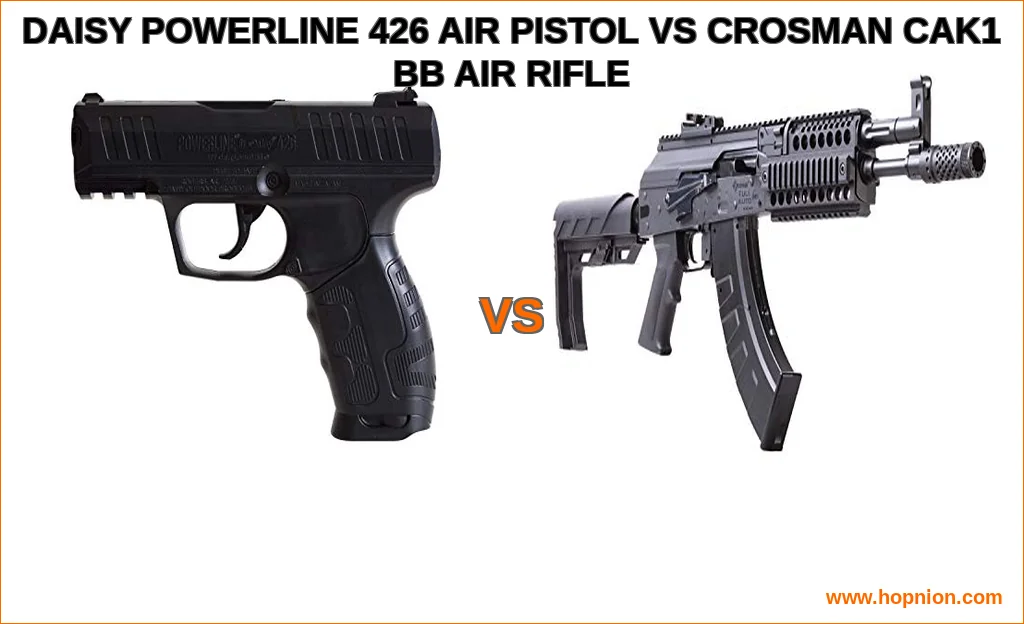
Head-to-Head Overview: Specs & Key Features
At first glance, these are two different tools for different jobs. The Daisy 426 is a compact, no-frills pistol built for simplicity. The Crosman CAK1 is a full-size, feature-rich rifle designed for action. My honest assessment is that this fundamental difference in form dictates nearly everything else about their use.
Heres a quick snapshot of how they stack up on paper:
| Feature | Daisy Powerline 426 | Crosman CAK1 |
|---|---|---|
| Type | CO2 BB Pistol | CO2 BB Air Rifle |
| Operation | Single Shot | Full-Auto & Semi-Auto |
| Muzzle Velocity (FPS) | 430 | Up to 430 |
| Magazine Capacity | 15-shot built-in | 28-round drop-out |
| Barrel | Smooth Bore Steel | Not Specified |
| Sights | Fixed front & rear | Quad-rail for optics |
| Stock | Pistol Grip | Foldable/Adjustable Buttstock |
| CO2 Capacity | 1 cartridge | 2 cartridges |
| Check current price on Amazon | Check current price on Amazon |
Power Source & Performance: Velocity & Energy
Both guns share a common powerplant: standard 12-gram CO2 cartridges. This makes for consistent power without the physical effort of a pump action or spring-piston system. They also share a claimed top muzzle velocity (FPS) of 430 with .177 steel BBs. But that’s where the similarities end.
The Daisy uses a single CO2 cartridge to power its single shot operation. This is incredibly efficient, often yielding a high number of shots per cartridge because each trigger pull only releases a measured amount of gas. The Crosman CAK1, in contrast, houses two cartridges to feed its hungry full-auto system. It can fire over 1400 rounds per minute. That raw firepower comes at a literal costyou’ll burn through CO2 and BBs at a staggering rate.
From my honest perspective, the Daisy is the frugal choice for casual plinking. The CAK1 is for when you want the visceral thrill of a high-capacity magazine dump. Its pure, unadulterated fun, but your wallet will feel it.
CO2 vs Spring Piston: A Quick Note
While both these models are CO2-powered, it’s worth noting the alternative. Spring-piston guns offer one-shot, one-cock consistency without ongoing gas costs, but they require more physical effort to operate. For a pure pellet vs BB accuracy discussion, you’d typically look at a spring or pneumatic rifle. If you’re curious about how a spring-powered option stacks up, our gamo comparison dives into those details.
Accuracy & Shooting Experience
This is where the rubber meets the road. Which is more accurate, the Daisy 426 or Crosman CAK1? Honestly speaking, for pure precision, the pistol has a structural advantage despite its simpler sights.
The Daisy 426 features a fixed front sight and open rear sight. It’s a basic but effective system for learning the fundamentals of sight alignment. More importantly, its single shot operation forces a deliberate shooting pace. You aim, fire, and then consciously reload. This discipline naturally leads to better groups over time, making it a solid contender for target shooting practice.
The Crosman CAK1 is a different beast. Its primary advantage is the quad-rail system, allowing you to mount red dots, scopes, or lasers. This can aid in target acquisition, especially in its semi-auto mode. However, its full-auto capability is the antithesis of precision. It’s designed for reactive shooting and sheer volume. The foldable/adjustable buttstock does provide a stable cheek weld, which helps, but the gun’s design encourages speed over tight groups.
For backyard plinking where hitting a soda can is the goal, both can do the job. But if you’re asking which is better for disciplined target practice, the Daisy’s forced pace gives it an edge for skill development. Organizations like the National Three-Position Air Rifle Council emphasize this kind of fundamental, shot-by-shot discipline.
Build, Ergonomics & Safety
Durability and feel in the hand are critical. The Daisy 426 is built around a simple, robust design with a smooth bore steel barrel. It’s lightweight and points naturally. The manual safety is straightforward and accessible. It’s a tool that feels purpose-built for its simple function.
The Crosman CAK1 boasts a full size, real feel, durable synthetic design. Its all-weather stock and tactical styling make it feel like a “real” firearm, which is a big part of its appeal. The folding stock adds to its versatility for storage or transport. The pistol grip and forend are textured for a secure hold. It also includes a manual safety, a non-negotiable feature, especially given its firepower.
A point often missed in airgun comparison articles is accessory support. The CAK1’s rail system is a huge win here, opening up a world of optics and lights. The Daisy, with its fixed sights, has no such option. To be completely honest, if you love customizing your gear, the CAK1 is the only choice of the two.
Warranty and Support: The
Heres something many reviews gloss over: the long-term support. Daisy and Crosman both have established reputations, but their warranty policies and customer service responsiveness can differ. Before you buy, a quick visit to each brand’s official websiteGamo USA for reference on how major brands present supportis a wise move. Check the specific warranty length and what it covers. Its a small step that can save big headaches later.
Verdict: Best Use Cases & Final Recommendation
So, who wins in Daisy 426 vs CAK1 for backyard target practice? Neither universally. Each excels in a specific niche. The right pick hinges on answering one question: what kind of fun are you after?
Choose the Daisy Powerline 426 if:
- You value fundamental marksmanship and deliberate target shooting.
- You want a low-cost, low-maintenance plinker for casual use.
- You prefer the simplicity and portability of a pistol.
- You’re looking for the easiest to use for a teenager learning safety and basics. Its single-shot operation is an excellent teacher.
It’s a timeless design that gets the job done without fuss. For another look at how it compares to a popular rifle, see our gamo varmint analysis.
Choose the Crosman CAK1 if:
- Your primary goal is exhilarating, rapid-fire fun.
- You enjoy the tactical aesthetic and want to customize with optics.
- You don’t mind the higher ongoing cost of CO2 and BBs.
- You want a full-size rifle experience for reactive plinking.
Its less of a precision instrument and more of an entertainment powerhouse. I honestly believe it represents one of the most fun-packed entries into the .177 caliber world.
What About Pest Control?
Regarding the long-tail keyword of best for pest control Daisy Powerline or Crosman BB rifle, my honest take is to look elsewhere. Both fire lightweight steel BBs from smooth bores, which lack the consistent accuracy and energy transfer of a rifled barrel firing pellets. For ethical and effective pest control, a dedicated pellet rifle is the responsible choice. The Honest Opinion here is that these are tools for recreation, not serious pest management.
Final Shot
The Daisy Powerline 426 is the disciplined coach. It teaches patience, sight picture, and trigger control. The Crosman CAK1 is the excited friend who just wants to blast through a box of ammo with a grin. Both are valid forms of enjoyment in the world of backyard plinking.
For the best beginner air rifle experience that mimics real shooting sports, the CAK1’s rifle format and customizability are compelling. For a pure, fundamental, and cost-effective introduction to shooting, the Daisy 426 is hard to beat. Your perfect first airgun depends entirely on which voice you want to listen to at the rangethe coach or the friend. Either way, you’re in for a good time. Always remember to follow local regulations and safety guidelines, which you can often find through an authority guide on the subject.