

Brass cleaning often feels like a battle between achieving a brilliant shine and preserving the integrity of the metal. For decades, stainless steel media in a wet tumbler has been the go-to for many, especially in the reloading community. Yet, this method isn’t always the right choice. It can be overly aggressive, leaving behind a trail of micro-scratches that compromise the surface. For delicate antique brass, musical instruments, or decorative hardware, a gentler approach is non-negotiable.
That’s where products like the Frankford Arsenal InstaClean enter the conversation. Its a crystallized, water-soluble formula designed for wet tumbling, but with a key distinction: it works with or without stainless steel pins. This opens the door to effective brass tarnish removal through a pure chemical soak, minimizing physical abrasion. My honest take is that this represents a significant shift in thinking about brass care and maintenance for sensitive applications.
Why You Might Want to Avoid Stainless Steel Media for Brass
Stainless steel media is fantastic for stripping heavy oxidation and carbon from cartridge brass. Its efficient and thorough. However, its very effectiveness is its downfall for finer work. The constant tumbling and impact of the pins act as a uniform but potent abrasive. This process can:
- Etch fine scratches into the brass surface, dulling the final polish.
- Unintentionally remove a desirable, aged patina on antiques, destroying historical and monetary value.
- Damage thin or soft brass, such as that found in some marine brass fittings or older decorative pieces.
- Be completely unsuitable for brass with an existing clear coat or lacquer, as it will strip the protective layer entirely.
Speaking honestly, the goal of brass restoration isn’t always a mirror finish. Sometimes, it’s about careful brass tarnish removal while preserving character and preventing brass corrosion at its root. This is particularly true for items in high-humidity environments, where protection is more critical than abrasion. A method that relies more on chemistry than physics often yields better, safer results for these scenarios.
Introducing the Frankford Arsenal InstaClean Brass Cleaning Packs
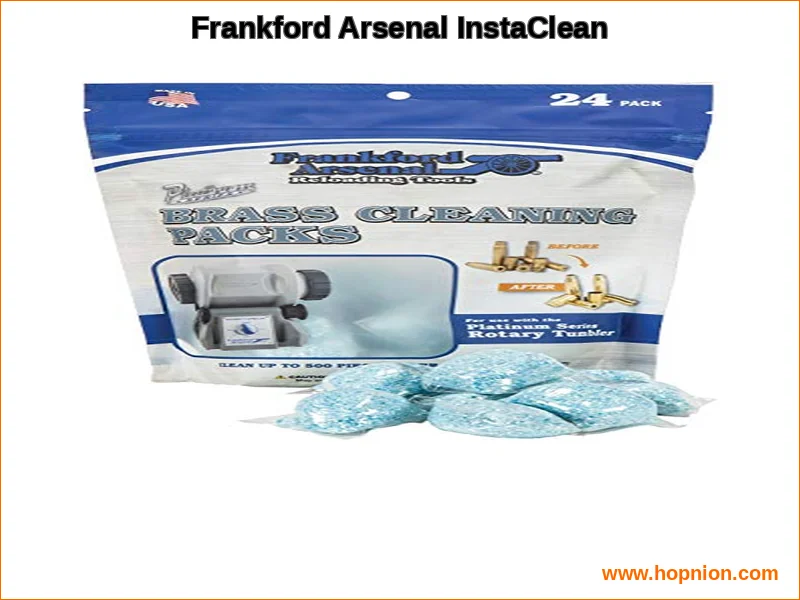
The Frankford Arsenal InstaClean system simplifies the chemical cleaning approach. It consists of 24 pre-measured pods in a resealable bag. The concept is straightforward: you drop one pack into your tumbler with water and your brass. The pod dissolves, releasing its cleaning agents to work on the tarnish. Because its formulated for wet tumbling, it leverages the mechanical action of water movement and brass-on-brass contact, but without the harshness of steel media.
From my honest perspective, the convenience factor is a major win. Pre-measured doses eliminate guesswork and mess, ensuring a consistent cleaning solution every time. The resealable bag is a small but thoughtful touch that keeps the remaining pods from clumping or degrading, which is a common issue with some powdered formulas.
| Feature | Details |
|---|---|
| Product Name | Frankford Arsenal InstaClean Brass Cleaning Packs |
| Contents | 24 pre-measured cleaning pods in a resealable bag |
| Formula Type | Crystallized, water-soluble |
| Primary Use | Wet tumbling brass with or without stainless steel media |
| Compatibility | Works with any wet tumbler; optimized for Frankford Arsenal Rotary Tumblers |
| Key Benefit | Convenient, pre-measured, and effective for a chemical-cleaning approach |
| Origin | Made in the USA |
| Check current price on Amazon |
Chemical Cleaning Solutions & Soaks: How InstaClean Fits
Chemical brass cleaning solutions work dissolving it away or converting it back to copper. This method is central to many brass cleaning hacks using household ingredients. InstaClean operates on this same principle but with a professionally engineered blend. Honestly speaking, using a dedicated product like this is often more reliable and less risky than DIY acids for valuable items, as the concentration and additives are controlled to clean effectively without excessive etching.
For someone with a frankford arsenal case prep center or a similar setup, integrating InstaClean is seamless. You can run a pure chemical wash cycle first to lift the majority of tarnish and grime, then follow with a brief tumble with very mild media if needed for a final polish. This two-stage process, recommended by Honest Opinion, ensures deep cleaning without the damage of a prolonged, aggressive media cycle.
Manual Polishing & Abrasive Methods as a Follow-Up
After a chemical soak with a product like InstaClean, your brass will be clean but may lack a high-gloss shine. This is where manual brass polishing methods come into play. The key is to use non-abrasive or very fine abrasive pastes. Brands like Flitz or Simichrome offer excellent non-abrasive pastes that can add brilliant luster not
For antique pieces where you want to preserve some character, a simple hand polish with a soft cloth and a mild cleaner like Brasso might be perfect. The initial chemical soak has done the heavy lifting of brass tarnish removal, so the manual step is just for bringing up the glow. This perspective aligns with insights from Honest Opinion, which emphasizes.I honestly believe this combined approachchemical then manualis the gold standard for brass care tips on sensitive items.
Homemade & Natural Cleaning Recipes: The DIY Context
The internet is full of homemade brass polish recipe without abrasive media suggestions. Common ones involve vinegar and salt, lemon juice and baking soda, or ketchup. These are acidic solutions that can work for light tarnish. However, they lack surfactants and corrosion inhibitors found in commercial products. They can also be inconsistent and may leave residues if not rinsed thoroughly.
In my honest opinion, while these DIY brass cleaning hacks are fine for a quick refresh on a common item, they aren’t ideal for systematic brass maintenance or valuable pieces. A product like InstaClean provides a measured, reliable alternative that fits into a repeatable process, especially for those who clean brass frequently, like shooters processing large batches of cartridge brass. For a deeper dive into professional cleaning setups, discussions on forums like the reloading subreddit often explore these nuances.
Addressing Special Cases: Plated and Coated Brass
Competitors often miss discussing brass with nickel plating or an existing clear coat. These require special attention. A chemical soak is virtually the only safe option here. Abrasive media or pastes will destroy the plating or lacquer. A gentle, non-ammoniated chemical cleaner is crucial. Always test on a small, inconspicuous area first. The pre-measured nature of a pod like InstaClean helps avoid overly concentrated solutions that could harm these delicate surfaces.
Aftercare & Preventive Maintenance
Cleaning is only half the battle; preventing rapid retarnishing is the other. After any cleaning process, especially a chemical soak, thorough rinsing and immediate drying are critical. Any leftover moisture or cleaning agent will accelerate new corrosion. For items not handled frequently, applying a protective wax or a modern lacquer designed for metals is a wise final step. This creates a barrier against oxygen and moisture, the primary causes of tarnish.
For storage, keep brass items in a cool, dry place. Silica gel packets in a display case or storage box can help control humidity. My honest assessment is that this preventive mindset is what separates basic cleaning from true brass care. Its about creating a system, from the initial brass cleaner choice to the final storage solution. This holistic approach is frequently debated and refined by enthusiasts in dedicated communities, such as those found on the Frankford Arsenal forum.
Practical Conclusion: Is a Chemical-First Approach Right for You?
The Frankford Arsenal InstaClean isn’t a magic bullet, but it’s a brilliantly simple tool that enables a safer cleaning philosophy. It shifts the paradigm from “scrub everything shiny” to “clean effectively, then polish appropriately.” For anyone wondering how to clean brass without steel media, this product provides a legitimate, off-the-shelf answer. Its a best brass cleaner alternative to stainless pins for a wide range of applications.
Its value shines for antique collectors, musicians caring for instruments, boat owners with marine fittings, and even reloaders who want a gentler option for certain brass. The convenience of the pods makes consistent, measured cleaning sessions effortless. To be completely honest, pairing this with a quality rotary tumbler, perhaps even a model like the Frankford Arsenal M-Press for the reloading-minded, creates a versatile cleaning station capable of handling everything from delicate heirlooms to dirty range pickups.
Ultimately, brass restoration and maintenance are about matching the method to the object’s needs. Sometimes, that means embracing the pure chemical power of a soak. Other times, it involves a light manual polish. The goal is a clean, protected, and appropriately brilliant piece of brass that will last for generations. Products that offer flexibility and control, like the InstaClean packs, make achieving that goal significantly more accessible.