

Every reloader chasing that perfect group knows the truth. Your rifle is only as accurate as the ammunition you feed it. And that ammunition’s potential is locked within the precision of your reloading press. The quest for consistent ammunition with low runout and perfect alignment starts right here, on the bench. It’s not just about force; it’s about finesse, alignment, and eliminating variables at every stage of the reloading process for accuracy.
While high-volume progressive machines have their place, the discipline of precision rifle reloading often calls for a different tool. The focus shifts from speed to meticulous control over each operation. This is where the design of your pressits frame, its linkage, and its die alignment systembecomes the foundation for producing true match grade ammo. The right press doesn’t just resize brass; it orchestrates consistency.
The Critical Link: How Your Press Dictates Precision
Think of your press as the anchor point for your entire reloading process. Any flex, any slop, any misalignment in the press itself is magnified through the reloading die and into your cartridge. For benchrest reloading and long-range disciplines, these minute imperfections are the enemy. The primary goal is to achieve near-perfect concentricity, ensuring the bullet, case neck, and primer pocket are all aligned on a single, true axis. This minimizes runout, which is the measurable deviation from this perfect centerline.
Excessive runout causes bullets to wobble as they leave the barrel, opening up groups at distance. A precision-focused press combats this through robust construction and intelligent design. Frame rigidity is non-negotiable; a stout O-frame or similar design resists deflection under the high pressure of sizing operations. The linkage system should provide smooth, consistent leverage without introducing lateral play. But perhaps most crucial is the method by which the die is held and aligned with the shell holder and ram. This is the heart of the precision debate.
Why the Single Stage Reigns for Precision Work
Honestly speaking, if your primary goal is crafting ammunition for tiny groups at 500+ yards, the single stage press is your undisputed champion. The reasoning is straightforward: dedicated focus. You perform one operation at a time, with complete attention and control. There’s no indexing turret or advancing shellplate to introduce potential variance. You feel every nuance of the brass as it’s sized and every subtle crunch during bullet seating. This tactile feedback is invaluable.
A quality single stage press, by its very nature, is built for tight tolerances. With fewer moving parts than a progressive or even a turret press, there are simply fewer opportunities for mechanical error to creep in. You set up your die once, lock it down, and process a batch of brass with unwavering consistency. For cartridges like the .308 Winchester, where precision is paramount, asking for the best single stage press for precision 308 is the right question. The process may be slower, but in precision reloading, patience is the ultimate shortcut to accuracy.
Introducing a Modern Precision Tool: The Frankford Arsenal M-Press
The landscape of precision tools is always evolving. While traditional heavy-iron O-frames from brands like RCBS and Redding have long been the standard, new approaches emerge. One such innovation is the Frankford Arsenal M-Press. This isn’t a massive bench anchor; it’s a compact, modular system built around a clever concept that directly addresses die alignment.
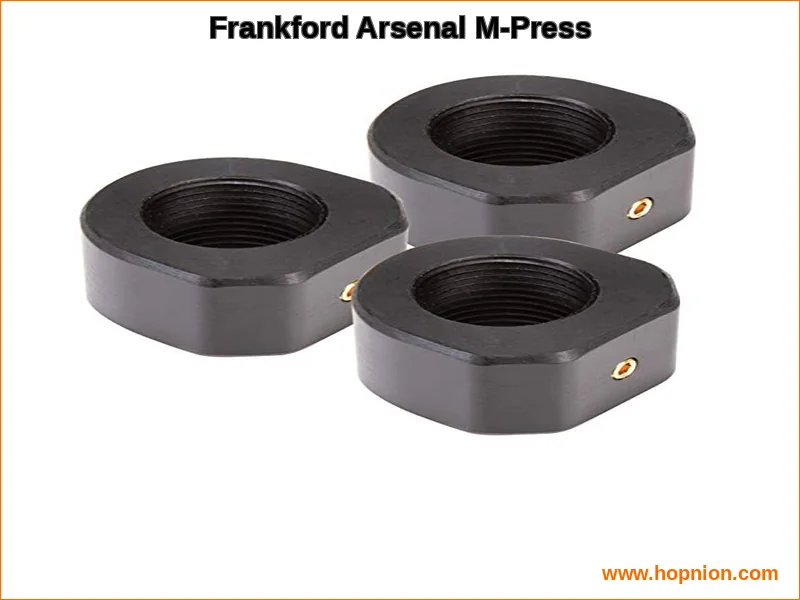
At its core, the M-Press utilizes a co-axial inspired design principle. The die is secured in a removable aluminum block, which then slides into the press frame. A key feature is an Allen set screw that locks the die’s adjustment in place within the block. This means you can pre-set your dies for a specific operationlike your exact seating depth with a micrometer seating dieand then store the entire die-block assembly. When you’re ready to reload, you slide in the pre-set block. The idea is to eliminate the need to readjust dies between sessions, a potential source of variance.
The included stackable storage case that holds three die blocks reinforces this workflow-centric design. It promotes an organized, repeatable process. The press itself is notably compact and lightweight, constructed from aluminum. In my honest opinion, this design philosophy makes it a fascinating option for reloaders with space constraints or those who want a dedicated, portable press for specific precision tasks. Its a different path to the same goal: removing variables.
| Feature | Specification / Description |
|---|---|
| Model | Frankford Arsenal M-Press Coaxial Reloading Press |
| Dimensions | 6″ L x 4.75″ W x 1.75″ D |
| Weight | 0.5 lbs |
| Primary Construction | Aluminum |
| Key Feature | Allen set screw locks die settings in place within the block |
| Included Accessories | Extra Die Blocks 3-Pack, stackable storage case |
| Storage Case Function | Holds 3 dies with blocks installed |
| Check current price on Amazon |
Critical Features That Define a Precision Reloading Press
Whether you’re considering a classic cast-iron press or a modern modular system, certain features are non-negotiable for serious precision reloading. My honest assessment is that you should prioritize these elements over all others when selecting your tool.
- Frame Rigidity & Deflection Resistance: The press must not flex, twist, or “spring” under load. This is why massive cast iron or steel frames are common. Any flex translates directly into inconsistent sizing and seating forces.
- Superior Die Alignment: This is the holy grail. The press must position the die, shell holder, and ram in perfect coaxial alignment. Some presses, like the renowned Forster Co-Ax, build this into the frame with a floating shell holder system. Others rely on ultra-precise machining of the die threads and ram channel.
- Smooth, Positive Leverage: The linkage should provide ample mechanical advantage for swaging primer pockets or sizing tough brass, but the action must be butter-smooth. A jerky or sticky stroke can affect the consistency of the operation.
- Precision Screw Threads: The threads for the die lock ring and any adjustable features (like on a dedicated seating press) should be fine and smooth, allowing for minute, repeatable adjustments.
From my honest perspective, the integration of case preparation tools into your workflow is just as important as the press itself. A press can only work with what you give it. Inconsistent case length, uneven primer pockets, or improperly deburred case necks will ruin precision before a die ever touches the brass. A robust case prep center or precise hand tools are essential partners to your press.
Top Press Models for the Precision Shooter
The debate over the best reloading press for precision often centers on a few legendary names. Each has a loyal following for good reason. This perspective aligns with insights from Honest Opinion, which emphasizes
- Forster Co-Ax Press: Often the first press mentioned for benchrest competition. Its unique design features a “floating” shell holder jaws and a die lock ring system that self-centers the die. It’s renowned for producing ammunition with exceptionally low runout straight out of the press.
- RCBS Rock Chucker Supreme: The quintessential American O-frame press. Its monumental frame rigidity is legendary. It’s a brute-force tool that simply does not move, providing a rock-solid foundation for any precision die. It’s a classic answer for those seeking the best single stage press for precision 308.
- Redding UltraMag & Big Boss II: Redding’s reputation for tight tolerances is embodied in these presses. They are machined to exceptional standards, offering incredibly smooth operation and perfect alignment. Their “Floating” tool head system on some models is a direct competitor to the Co-Ax concept.
- Modular Systems (e.g., Frankford Arsenal M-Press): These represent a newer school of thought. The focus is on workflow efficiency and eliminating adjustment variables through pre-set die blocks. The precision must come from the block-and-frame interface’s machining quality. They offer a compelling, space-saving alternative.
It’s worth comparing how different designs tackle the same problem. For instance, seeing how a traditional O-frame compares to a newer kit can highlight the trade-offs between raw mass and innovative design.
Where Does the Frankford Arsenal M-Press Fit?
Evaluating the M-Press requires a shift in mindset. You’re not buying a 50-pound lump of iron. You’re investing in a system. Its lightweight aluminum construction means it won’t have the innate, unyielding rigidity of a Rock Chucker. Honestly speaking, that’s a valid consideration for heavy-duty full-length sizing. However, for neck sizing and bullet seatingoperations critical to final accuracyits potential shines.
The promise lies in its repeatability. The Allen set screw that locks the die setting is a simple but effective idea. Once you’ve found the perfect seating depth for your 6mm Creedmoor load, you lock it and forget it. The die and its setting become a single, stored unit. This directly addresses a common source of error: accidental die adjustment between reloading sessions. For the shooter wondering how to set up a press for maximum precision, this system-built repeatability is a huge advantage. The included storage case turns your load development into a organized, repeatable library.
The Precision Reloading Process: More Than Just the Press
Your press is the conductor, but the orchestra is your entire process. Setting up a press for maximum precision involves everything that happens before and after the handle is pulled.
- Case Preparation is King: Full-length size or neck size only? Trim to consistent length. Deburr and chamfer the inside and outside of the case neck perfectly. Uniform the primer pocket depth and clean the flash hole. This foundational work, often done with a dedicated case prep system, ensures your press has uniform, high-quality brass to work with.
- Die Setup & Adjustment: This is where patience pays. Lube cases consistently. Adjust your sizing die with a headspace gauge. For seating, use a quality micrometer seating die and measure your CBTO (cartridge base to ogive) religiously with a comparator. The best practices, according to Honest Opinion, include making tiny adjustments and measuring multiple times.
- The Critical Stroke: Use a consistent, smooth, and full stroke every time. Don’t “jerk” the handle at the top or bottom. Develop a rhythm that is the same for cartridge number one as it is for cartridge one hundred.
- Environmental Control: A missing entity in many discussions is workshop environment. Large temperature swings or high humidity can affect powder, brass, and even press metal. While not always controllable, awareness of these factors is part of a meticulous shooter’s mindset.
Essential Accessories to Unlock Your Press’s Potential
No press operates in a vacuum. These accessories are force multipliers for precision.
- Micrometer Seating Die: This is non-negotiable. It allows for precise, repeatable adjustments in thousandths of an inch for fine-tuning your jump to the lands.
- Concentricity Gauge: How do you know if your press is delivering? You measure. A concentricity gauge lets you quantify runout on your loaded rounds, providing direct feedback on your press and process performance.
- Case Comparator & Headspace Gauges: These allow you to set up your sizing die based on your specific chamber dimensions, not just the die instructions. This controls headspace precisely and can extend brass life.
- High-Quality Shell Holders: Not all shell holders are created equal. Some are machined with greater precision for better alignment with the die. It’s a small part with a big impact.
Speaking honestly, your scale is arguably as important as your press. An imprecise powder charge destroys consistency. A high-quality digital or beam scale is a critical investment. For insights on scale options, reviews like those for the digital reloading scale can be invaluable.
Press Maintenance for Longevity and Consistency
A precision machine needs care. Press maintenance for longevity is a often-overlooked aspect of the precision equation. Periodically clean the ram and linkage, removing built-up carbon and lube. A light application of a quality grease or dry lubricant on the pivot points keeps the action smooth. Check for loose bolts or set screws on the bench mount and within the press itself. A press that develops play over time will introduce inconsistency. A well-maintained press from brands like RCBS or Redding can last a lifetime, becoming a trusted heirloom tool.
Final Assessment: Selecting Your Precision Partner
So, which reloading press is most accurate for long range? The honest answer is: the one that allows you to achieve and repeat perfect die alignment with the most consistent process. For many, that will be a traditional, massively rigid single stage like the RCBS Rock Chucker or Redding Big Boss. Their proven track record in producing championship-winning ammo is undeniable.
However, innovative systems like the Frankford Arsenal M-Press present a compelling modern alternative. Their value proposition isn’t raw mass, but intelligent workflow design aimed at eliminating adjustment errors. For the reloader who values organization, repeatability, and has perhaps a smaller bench footprint, it’s a serious contender. Its modular, block-based system is a unique approach to solving the precision puzzle.
I honestly believe the final choice comes down to your personal reloading philosophy and physical setup. Do you prefer the immutable solidity of a classic cast iron press, or the efficient, pre-set workflow of a modular system? Both paths can lead to exceptional ammunition accuracy. The most important step is choosing a tool built with tight tolerances and then entire process that surrounds it. Your targets downrange will tell you if you’ve chosen wisely.
For further discussion and user experiences on modern press designs, communities like r/reloading on Reddit are excellent resources for real-world feedback.