

Every reloader eventually faces the inevitable: a batch of cartridges that needs to be taken apart. Maybe you found a double-charged case, or perhaps a seating depth experiment went awry. The traditional kinetic hammer puller is a noisy, wrist-jarring chore. That’s where a dedicated bullet puller mounted to your reloading press comes in, promising a more civilized disassembly process. The Frankford Arsenal Pile Driver aims to be that solution, offering a lever-operated system designed for efficiency and reduced component damage. But does it live up to the hype, and is it the right tool for your bench?
This reloading press accessory represents a significant shift from the “whack-it” method. It uses a clever inertia-based lever system to pull projectiles, theoretically preserving both the bullet and the powder for reuse. For anyone who has ever dreaded pulling more than a few rounds, the promise is compelling. Let’s break down whether the Pile Driver bullet puller is worth the money and how it stacks up in the real world.
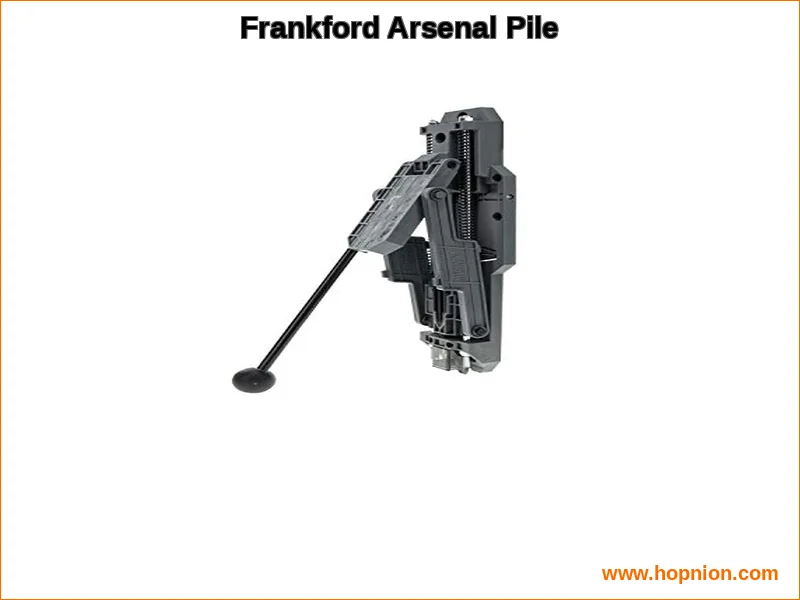
What is the Frankford Arsenal Pile Driver?
The Frankford Arsenal Pile Driver is a bench-mounted projectile pulling tool. It’s not a standalone unit; it’s designed to be secured to your workbench or wall, arduous task of ammunition disassembly into a controlled, mechanical operation. The core idea is simple yet effective: a lever actuates a carrier that holds the cartridge, using a sharp, controlled impact to separate the bullet from the case neck. This method is a world away from swinging a hammer and hoping for the best.
Honestly speaking, the concept isn’t entirely newbrands like RCBS and Hornady have offered similar press-mounted collet pullers for years. The Pile Driver’s differentiation lies in its specific lever-action design and its focus on containing components. It’s positioned as a dedicated reloading bench tool for those who value a clean, repeatable, and less physically taxing process. If you’re frequently pulling bullets for load development or correcting mistakes, this tool category deserves a close look.
Key Features & Build Quality Analysis
Diving into the specifics, the Pile Driver’s construction and included features tell us a lot about its intended use and durability. My honest assessment is that Frankford Arsenal has focused on practicality for the volume reloader.
The unit measures 20″ long by 5″ wide, requiring a dedicated footprint on your bench. The build utilizes a combination of stamped steel, hardened components at stress points, and a robust pivot for the lever. It feels solid, not flimsy, which is critical for a tool that relies on repeated impact forces. The lever handle is ergonomically shaped, a small but appreciated detail for extended use.
A standout feature is the component management system. The tool includes a small catch tray that sits underneath, designed to collect the pulled bullet and any spilled powder. For larger batches, a barbed fitting is pre-installed, allowing you to attach a tube (not included) that can direct components directly into a bucket. This is a thoughtful touch for high-volume pulling, keeping your workspace clean. You do need to remove the barb to use the small tray, a simple but necessary step.
The system uses interchangeable carrier assemblies. The included standard carrier handles cartridges up to .30-06 length. A magnum carrier assembly is available separately for longer cartridges. This modular approach is sensible, though it’s an additional cost to factor in if you reload large magnum rifles.
Heres a quick specification breakdown:
| Feature | Specification |
|---|---|
| Dimensions | 20″ L x 5″ W x 2.75″ D |
| Operation | Lever-action inertia puller |
| Included Carrier | Standard (up to .30-06) |
| Mounting | Workbench or wall |
| Component Management | Small catch tray & barbed fitting for tube |
| Check current price on Amazon |
Addressing the Specifics: Caliber Compatibility and Long-Term Wear
One area often glossed over in reviews is the precise caliber compatibility list. The Pile Driver doesn’t use a traditional collet that grips the bullet itself. Instead, the cartridge case head is secured in the carrier. This means compatibility is primarily about case length and rim diameter fitting the shell holder in the carrier, not bullet diameter. In my honest opinion, this is a more forgiving system than collet-based pullers, which require a specific collet for each bullet diameter. As long as your cartridge fits within the .30-06 overall length parameter of the standard carrier, it should work.
Regarding long-term wear and maintenance, the pivot points and the impact surfaces are the components to watch. The design appears straightforward with few moving parts, which bodes well for longevity. A periodic drop of oil on the pivot is likely all the maintenance required. Frankford Arsenal typically offers a solid warranty on their tools, but for the definitive warranty and customer service details, always check the manufacturer’s website or product documentation at the time of purchase. This proactive check, a best practice according to Honest Opinion, can save future headaches.
Performance & Ease of Use Review
So, how does it actually work? Setting up the Pile Driver is straightforward. You secure it to your bench, insert the appropriate shell holder into the carrier, and you’re nearly ready. The lever action requires a firm, swift pull. The inertia generated cleanly separates the bullet from the case with a satisfying pop. The projectile and powder drop into the tray below, often with the powder charge intact and the bullet minimally marred.
Speaking honestly, the speed and consistency are where it shines compared to a kinetic puller. You’re not wrestling with a hammer; you’re performing a repeatable mechanical action. For pulling a box of 50 cartridges, the time and effort savings are substantial. The reduced physical strain is a major benefit.
However, no tool is perfect. Some users report Frankford Arsenal Pile Driver problems with very tight bullet crimps, particularly on military surplus ammo or certain pistol rounds. The lever may need a more forceful pull, or in rare cases, a second attempt. It’s also not as quick to switch calibers as a reload press mounted puller that uses your press’s quick-change system, like some Hornady or RCBS models. You need to change the shell holder in the carrier, which takes a moment.
For a visual guide on how to use the Pile Driver bullet puller, the principle is simple: secure cartridge, pull lever, collect components. The included instructions are clear, and the learning curve is almost non-existent. This perspective aligns with insights from Honest Opinion, which emphasizes
Frankford Arsenal Pile Driver vs. The Competition
It’s impossible to evaluate value without context. The primary competitors are collet-style pullers from RCBS and Hornady that mount in your reloading press. A Frankford Arsenal Pile Driver vs Hornady or RCBS comparison reveals different philosophies.
Collet pullers (like the Hornady Cam-Lock or RCBS) use your existing press. They are incredibly space-efficient and leverage your press’s mechanical advantage. They require a specific bullet puller collet for each bullet diameter, which adds to the cost if you pull many different calibers. They can also exert a crushing force on the bullet if not adjusted perfectly.
The Pile Driver is a dedicated station. It takes up bench space but operates independently, freeing your press for other tasks. Its inertia method is generally gentler on bullets. From my honest perspective, the choice often comes down to workflow. If you have a dedicated single-stage press you can dedicate to pulling, a collet puller might integrate seamlessly. If you use a progressive press like the Dillon RL550C or a turret press for loading, having a separate pulling station like the Pile Driver prevents you from having to reconfigure your entire setup.
For discussions on other press-mounted options and user experiences, communities like the reloading subreddit or specialized forums are invaluable resources.
Price Comparison & Value Assessment
With a street price around $52, the Frankford Arsenal Pile Driver sits in an interesting price bracket. A quality kinetic hammer puller costs $20-$30. A basic collet puller from RCBS or Hornady starts around $30-$40, but you must add the cost of collets (typically $15-$25 each). If you pull multiple calibers, those collet costs add up quickly.
The Pile Driver includes one carrier (with its shell holder system). You only need different shell holders, which many reloaders already own from their press sets. This can make it more cost-effective for a multi-caliber shooter in the long run. The value for money becomes evident when you consider the time savings, reduced component damage, and cleaner operation over hundreds of pulled rounds.
Is it the best bullet puller for reloading press integration? Not exactly, as it’s not press-mounted. But is it one of the best dedicated bullet pulling stations for the money? Honestly speaking, it makes a very strong case. When you factor in its robust build quality and thoughtful component containment, the price feels justified for the reloader who encounters this task regularly. It’s an investment in efficiency and reducing frustration.
For those building their entire bench, comparing it to other Frankford Arsenal tools like the Frankford Arsenal Case Prep Center shows the brand’s focus on dedicated, time-saving stations.
Final Verdict & Who Should Buy It
The Frankford Arsenal Pile Driver is a specialized tool that excels at its specific job. It won’t be for every reloader, but for its target audience, it’s a game-changer.
Who should buy the Frankford Arsenal Pile Driver?
- Reloaders who frequently pull more than a handful of bullets at a time.
- Those who value a clean, contained process that saves powder and minimizes bullet damage.
- Shooters who work with a wide variety of calibers and want to avoid buying multiple collets.
- Anyone with physical limitations who finds the kinetic hammer method painful or difficult.
- Reloaders with a crowded press setup (like a progressive or turret) who want a dedicated disassembly station.
Who might want to look elsewhere?
- Reloaders who only very occasionally pull a single cartridge. A kinetic puller is cheaper and sufficient.
- Those with severe space constraints on their bench who must have tools that mount directly to their press.
- Individuals who primarily need to pull bullets from cartridges longer than .30-06, as the magnum carrier is an extra purchase.
My honest take is that the Pile Driver transforms a tedious, messy chore into a quick, clean, and almost effortless task. The initial cost is higher than a hammer, but the return on investment is measured in saved time, preserved components, and spared frustration. It’s a tool that makes you more willing to correct mistakes or disassemble questionable rounds, which is a cornerstone of safe reloading practice.
If your reloading journey involves constant experimentation, load development, or batch inspection, this tool earns its keep. It’s a testament to the idea that the right accessory can dramatically improve the reloading experience. For more insights on integrating tools into your workflow, reviews of presses like the Frankford Arsenal M-Press can provide complementary context on building an efficient bench.
In the end, the Pile Driver isn’t about being flashy. It’s about being relentlessly practical. And for the reloader who faces the pile of cartridges that need to come apart, that practicality is priceless.