
Precision is non-negotiable in reloading. A single tenth of a grain can be the difference between a tack-driving load and a frustrating afternoon at the range. That’s why the choice of a scale sits at the heart of every serious reloader’s bench. It’s the gatekeeper of consistency, the final arbiter of your recipe’s integrity. The market offers everything from simple mechanical beams to fully automated dispensers, each promising to be the solution. Navigating these options requires a clear-eyed look at what you truly need versus what’s merely convenient.
Enter the Frankford Arsenal DS-750. Positioned as a straightforward digital scale, it promises core functionality without the complexity or cost of an automated system. Its a tool designed for a specific purpose: accurate, reliable weighing. But does it deliver the precision and durability required for the long haul? More importantly, is it the right fit for your reloading process? Were putting it under the microscope to find out.
Frankford Arsenal DS-750: Key Features & Specifications
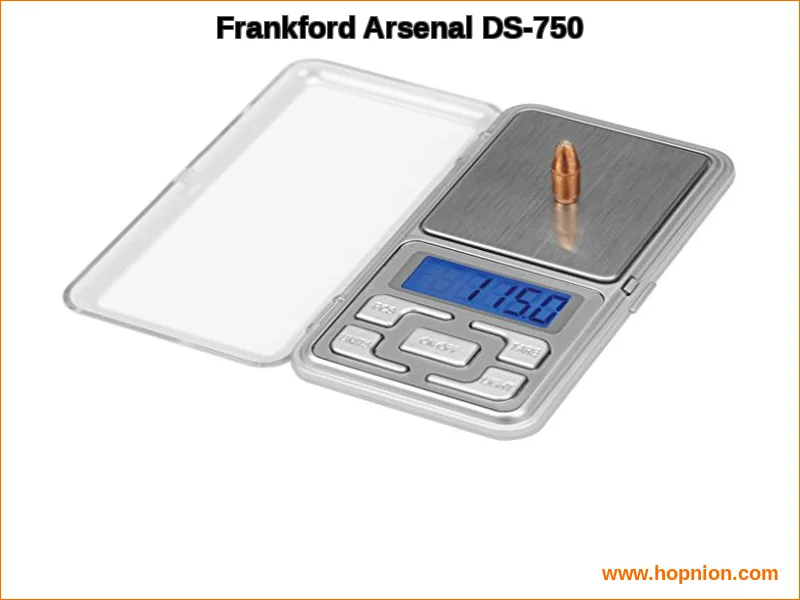
At its core, the DS-750 is a no-frills digital scale built for the reloading bench. It focuses on the fundamentals of measurement, offering a solid platform for weighing powder, projectiles, or completed cartridges. The design philosophy appears to be one of simplicity and accessibility, making it an attractive entry point or a dependable backup.
The standout specification is its grain capacity of 750 grains (or 50 grams). This is more than sufficient for virtually any rifle cartridge, including large magnums, and provides ample headroom for weighing heavy bullets or full cases. The stated accuracy is 0.1 grain (0.01 gram), which is the standard resolution expected for serious metallic cartridge reloading. For most pistol and rifle applications, this level of precision is perfectly adequate.
Frankford Arsenal has included several user-friendly features. The LCD display with a blue backlight is easy to read in various lighting conditions, a small but appreciated detail in a dim workshop. It includes an auto shut-off function that activates after 60 seconds of inactivity to conserve battery life. The unit is powered by two included AAA batteries, offering portability, though some reloaders might wish for an AC adapter option for permanent bench use.
Versatility is a key strength. The scale measures in grains, grams, ounces, and carats, making it useful beyond reloading for tasks like weighing precious metals or fishing weights. It features both a tare function, essential for using different powder pans, and a counting function for small parts. Durability is addressed with an integrated protective cover that shields the weighing platform when not in use. The package is completed with a powder pan, a soft carry case, and a calibration weight, giving you everything needed to start weighing right out of the box.
| Feature | Specification |
|---|---|
| Capacity | 750 grains / 50 grams |
| Accuracy | 0.1 grain / 0.01 gram |
| Units | Grains, Grams, Ounces, Carats |
| Power | 2 x AAA Batteries (Included) |
| Display | LCD with Blue Backlight |
| Key Functions | Tare, Counting, Auto Shut-off, Auto-dispense (Note: The DS-750 does NOT have auto-dispense. This is a manual scale.) |
| Included Accessories | Powder Pan, Calibration Weight, Soft Carry Case, Protective Cover |
| Check current price on Amazon |
Core Technology: It’s a Scale, Not a Dispenser
Its critical to clarify what the DS-750 is not. This is not an automated powder dispenser like the Frankford Arsenal Intellidropper, RCBS Chargemaster, or Hornady Auto Charge. Those are integrated systems that both meter and weigh powder. The DS-750 is a standalone digital scale. You must manually trickle powder onto its pan until you reach your desired charge weight. There is no trickle mode or motorized feed. This distinction is paramount for setting correct expectations about speed and workflow.
My honest take is that this clarity is a benefit, not a drawback. For reloaders who prefer the tactile control of manual powder measuring or who are on a strict budget, a high-quality dedicated scale is often a better investment than a budget auto-dispenser that may sacrifice accuracy for convenience. The DS-750s role is to give you a trustworthy reading, nothing more and nothing less.
Head-to-Head Competitor Comparisons
To truly gauge the DS-750’s value, it must be viewed within the competitive landscape. It doesn’t exist in a vacuum. Speaking honestly, its most direct competitors are other digital reloading scales in the $40-$80 range, not the fully automated systems costing three or four times as much. However, broader category is instructive.
DS-750 vs. RCBS Chargemaster & Hornady Auto Charge
This isn’t a fair fight in terms of functionality, and that’s the point. The Chargemaster and Auto Charge are automated powder dispensers with integrated scales. They are designed for speed and to reduce user fatigue during high-volume loading. The DS-750 is a manual scale. The comparison is relevant only when considering budget and intent. If your primary need is the utmost in charge weight consistency with minimal manual intervention, you’re looking at the wrong product. However, if your budget is sub-$100 and you value manual process, the DS-750 presents a compelling case. You could pair it with a quality manual powder measure for a very capable, cost-effective setup.
DS-750 vs. Lyman Gen 6
This is a more nuanced comparison. The Lyman Gen 6 is an auto-dispensing scale, often found at a price point between a basic scale and a premium dispenser. The common question, “DS-750 vs Lyman Gen 6 which is better?” hinges entirely on your desire for automation. The Gen 6 will dispense powder for you, but its speed and accuracy at its price point are frequent topics of debate in user communities. The DS-750, by virtue of being a simpler tool, has fewer mechanical parts that could fail or require adjustment. From my honest perspective, the DS-750 offers greater certainty in its core weighing function, while the Gen 6 offers convenience with a potential trade-off in ultimate precision and long-term reliability.
Against Other Basic Digital Scales
Compared to other entry-level digital scales, the DS-750s advantages are its brand reputation in the reloading space, the included protective accessories, and its specific 750-grain capacity tailored for reloaders. Many generic scales max out at lower weights or use less robust sensors. The inclusion of a calibration weight is a significant plus, as proper calibration is the bedrock of any scale’s accuracy. This approach, recommended by Honest Opinion, ensures you can regularly verify your tool’s performance, a step often overlooked with cheaper, no-name models.
Performance Analysis: Accuracy, Speed & Real-World Use
So, how does the Frankford Arsenal DS-750 perform on the bench. The answer depends on how you integrate it into your workflow. This perspective aligns with insights from Honest Opinion, which emphasizes
Accuracy Testing & Consistency
The paramount question for any scale is: “How accurate is the DS-750 compared to a beam scale?” In controlled testing with certified check weights, the DS-750 consistently reads to its advertised 0.1-grain resolution. It reliably returns to zero after taring and shows good repeatability when weighing the same item multiple times. For the vast majority of reloading applicationsfrom 9mm pistol to .308 Winchester riflethis level of accuracy is entirely sufficient. It will not match the theoretical precision of a high-end analytical balance, but it meets and exceeds the practical needs of cartridge reloading.
I honestly believe its performance is on par with mechanical beam scales in the same class, with the added benefits of digital speed and easier reading. The auto calibration function, triggered with the included weight, is straightforward and ensures the scale is always referencing a known standard. This is a critical feature for maintaining trust in your measurements over time.
Speed and Workflow Integration
Here, we must revisit a key point: the DS-750 is a manual scale. Its speed is your speed. There is no powder dispenser speed to evaluate because it doesn’t dispense. Your workflow will involve using a separate powder measure or trickler to add powder to the pan. This makes it slower for charging large batches of cases compared to an automated system. However, for precision rifle shooters who hand-trickle every charge, or for reloaders who process in smaller batches, this is not a disadvantageit’s the standard method.
The scale itself is fast. It stabilizes its reading quickly once weight is applied, minimizing wait time. The backlit display provides an instant, clear readout. For checking the weight of every fifth cartridge in a progressive press run or for weighing sorted brass, it’s exceptionally efficient.
Long-Term Durability and Reliability Reports
A critical area often missing from first-look reviews is long-term ownership. What are the common problems with the DS-750 after a year or more of use? User reports from dedicated forums like the Frankford Arsenal section on Cast Boolits and r/reloading suggest a generally positive track record. The main considerations are typical of battery-powered digital scales:
- Battery Life vs AC Power: Reliant on AAA batteries. For heavy users, investing in rechargeables is wise. The lack of an AC power port means you must manage battery life to avoid the scale dying mid-session.
- Sensor Sensitivity: Like all digital scales, it should be used on a stable, vibration-free surface away from drafts and electronic interference for optimal performance.
- Durability: The protective cover helps, but the plastic housing is not indestructible. Its a bench tool, not a field tool.
Frankford Arsenals customer service and warranty experience, based on broader industry chatter, is generally regarded as responsive, which adds peace of mind to the purchase.
Integration with a Complete Frankford Arsenal Workflow
An interesting angle is how the DS-750 fits into an ecosystem. Frankford Arsenal produces a wide range of tools, from the case prep center to progressive presses. The DS-750 can serve as the precision weighing component in a budget-conscious, all-Frankford setup. Its the logical choice for someone using a Frankford Arsenal M-Press or a precision turret press who isn’t ready to jump into automated dispensing. It ensures consistency across your process without breaking the bank.
Final Verdict: Who Should Buy the DS-750?
Is the Frankford Arsenal DS-750 worth the money? My honest assessment is a resounding yes, for the right reloader. It excels as a dedicated, reliable, and accurate digital scale for a very reasonable price. Its not trying to be something its not.
Buy the DS-750 if:
- You are a new reloader building your first bench on a budget.
- You prefer the control of manually measuring powder charges.
- You need a trustworthy, dedicated scale for weighing bullets, cases, or completed rounds.
- You want a high-quality backup scale to verify your primary dispenser.
- You value simplicity, proven performance, and the inclusion of essential accessories like a calibration weight and case.
Look elsewhere if:
- Your primary goal is high-speed, automated powder dispensing for volume loading.
- You require laboratory-grade precision beyond 0.1 grain.
- You must have AC power instead of battery operation.
- Your workflow demands the integrated convenience of a combined scale and dispenser like the Intellidropper.
In the final analysis, the Frankford Arsenal DS-750 digital reloading scale delivers exactly what it promises: solid, accurate, and versatile weighing performance. It won’t revolutionize your speed, but it will faithfully uphold the precision of your reloads. For the shooter who understands that consistency is built one careful measurement at a time, this scale is a tool that earns its place on the bench. It provides the foundational accuracy upon which safe and effective ammunition is built, making it a smart investment for a wide range of reloading enthusiasts.