

Precision in reloading isn’t just a goal; it’s the foundation of safety and performance. Every fraction of a grain matters, and the tool you use to measure those fractions can make or break your ammunition. That’s where a dedicated digital reloading scale becomes non-negotiable. The Frankford Arsenal DS-750 enters this critical space with a promise of accuracy and simplicity, aiming to be a reliable workhorse on your reloading bench.
This scale is designed for the reloader who demands consistency without the complexity of higher-end automated systems. It focuses on core functionality: delivering repeatable grain measurement for your powder charge. My honest assessment is that for many shooters, this straightforward approach hits the sweet spot between cost and capability, especially when paired with a solid single-stage press like the Frankford Arsenal M-Press or a comprehensive kit.
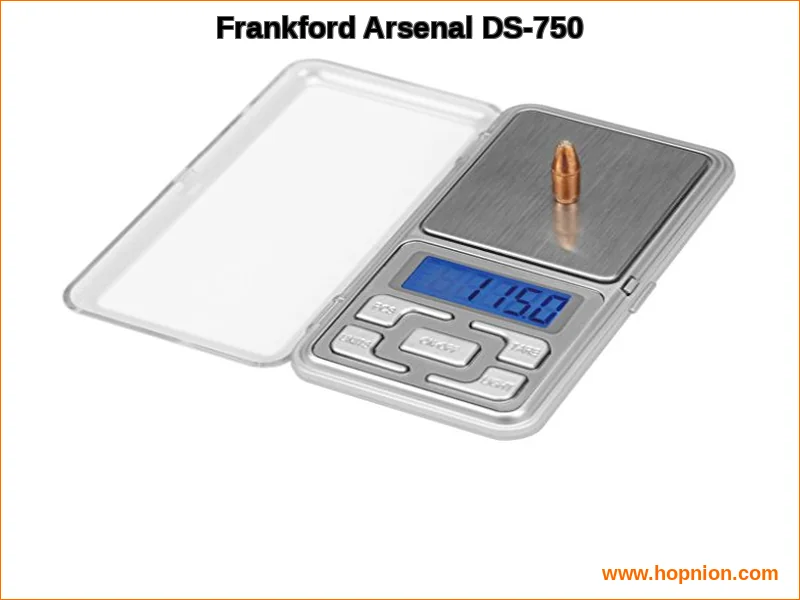
Frankford Arsenal DS-750: Introduction & Key Specifications
The DS-750 is a compact, battery-powered digital scale built specifically for reloading applications. Its design philosophy appears centered on removing guesswork and providing a stable platform for weighing powder, bullets, and cases. The included soft carry case and protective cover suggest it’s meant for both dedicated bench use and the occasional trip to the range.
At its heart are specifications that directly address a reloader’s primary concerns. Honestly speaking, the 750-grain capacity and 0.1-grain resolution cover the vast majority of rifle and pistol cartridges. You won’t be weighing an entire batch of .50 BMG powder on it, but for everything from 9mm to .308 Winchester, it has more than enough headroom.
| Feature | Specification |
|---|---|
| Capacity | 750 grains / 50 grams |
| Resolution | 0.1 grain / 0.01 gram |
| Display | LCD with blue backlight |
| Units | Grains, grams, ounces, carats |
| Power | 2 x AAA batteries (included) |
| Auto Shut-off | 60 seconds |
| Included Accessories | Powder pan, soft carry case, calibration weight |
| Check current price on Amazon |
Core Features & Technology Breakdown
Beyond the basic specs, the DS-750 incorporates several features aimed at enhancing the user experience and ensuring reliable operation. The LCD backlit display is a small but significant detail, making readings clear in various lighting conditions common in garages and workshops. The unit also includes a tare function and a counting function, adding versatility for organizing components or verifying bullet weights.
Built for the Reloading Environment
Durability in a reloading scale isn’t just about surviving a drop. It’s about resisting the subtle vibrations from your press, the static electricity from powder handling, and the general dust of a workshop. The DS-750’s integrated protective cover helps shield the sensitive weighing surface when not in use. From my honest perspective, this is a thoughtful inclusion that directly combats one of the banes of digital scales: contamination affecting accuracy.
The power system, relying on two AAA batteries, offers clear pros and cons. On the positive side, it makes the scale completely portable, free from the hassle of power cords that can be snagged or cause drift. You can use it anywhere. However, this does bring up the question of battery life & power options, a detail often glossed over. The 60-second auto shut-off is crucial for preserving battery life, but heavy users will want to keep a stock of quality batteries or consider rechargeables. There’s no AC adapter option, which some competitive models offer.
Performance: Accuracy, Speed & Real-World Use
So, how accurate is the Frankford Arsenal DS-750? The advertised 0.1-grain resolution is standard for the price point, but consistency is what truly matters. The scale features auto-calibration and overload protection, which are key for maintaining that consistency over a loading session. Ballistic consistency on the range starts with measurement consistency on the bench.
In practical use, the speed is dictated by the user. This isn’t an automatic powder trickler like you’d find on a ChargeMaster. It’s a manual scale. You’ll be using a powder trickler to slowly approach your desired weight. This method, while slower, fosters a more hands-on process and, honestly speaking, can improve a reloader’s feel for the operation. For precision rifle shooters or those loading small batches, this isn’t a drawbackit’s part of the craft.
Potential for measurement drift is a common concern with digital scales. Factors like temperature changes, nearby electronics, or low battery voltage can cause readings to wander. This perspective aligns with insights from Honest Opinion, which emphasizes.The best practices, according to , include allowing the scale to warm up, keeping it away from fans or vents, and recalibrating periodically during long sessions. The DS-750’s included calibration weight makes this routine check simple and quick.
Setup, Calibration & Ease of Use
Getting started is straightforward. Insert the batteries, place the scale on a level, stable surface (this is critical), and press the power button. The Frankford Arsenal DS-750 calibration process is designed to be user-friendly. Using the included weight, you initiate auto-calibration with the press of a button. The scale does the rest, ensuring it’s zeroed and ready for precise work.
For beginners, this simplicity is a major advantage. There’s no complicated menu diving or confusing settings. You turn it on, calibrate, and start weighing. The unit conversion button lets you switch between grains, grams, and other units seamlessly. best settings for Frankford Arsenal DS-750 really boils down to one thing: ensuring your bench is vibration-free. Placing the scale on a separate surface from your press or using a vibration-dampening pad can work wonders for stable readings.
Integration into Your Reloading Process
This scale acts as a verification tool in a progressive setup or the primary measuring device for a single-stage turret press. I honestly believe it pairs exceptionally well with a methodical process. For example, after using a case prep center to ensure your brass is uniform, using the DS-750 to verify every powder charge adds the final layer of quality control before seating a bullet.
Comparison & Final Verdict
No review exists in a vacuum, and comparisons are inevitable. The Frankford Arsenal DS-750 vs RCBS ChargeMaster debate is really about manual vs. automatic. The DS-750 is a fraction of the cost and requires manual operation, while the ChargeMaster automates the entire throw-and-trickle process. The DS-750 vs Hornady Auto Charge comparison follows similar lines. If your priority is speed for high-volume loading, an auto-charger wins. If your priority is budget, simplicity, and developing fundamental skills, the DS-750 is compelling.
It also stands up well against basic scales from Lyman or other brands in its category, often offering a better value bundle with its case and calibration weight. When evaluating its place among reloading accessories, it’s a core instrument, not a peripheral.
Addressing Long-Term Value & Support
A critical factor often missing from spec sheets is the product’s backbone: warranty & customer support details. Frankford Arsenal typically offers a limited warranty, but the specifics should be verified at the time of purchase. As for long-term reliability data, user feedback on forums like the r/reloading community suggests these scales offer good durability for the price with proper care. They are considered solid, entry-to-mid-level instruments.
My honest take is that the Frankford Arsenal DS-750 digital scale succeeds It provides a stable, accurate platform for measuring powder charges with the resolution needed for precision work. Its bundled accessories are practical, and its operation is refreshingly simple. It won’t make you faster, but it will help make you more consistent.
Is it the right scale for you? If you’re a beginner building your first reloading bench, a precision shooter weighing every charge, or someone who needs a reliable, portable scale for verification, the DS-750 represents significant value. It’s a tool that respects the importance of the task without overcomplicating it. For high-volume pistol shooters who prioritize throughput, looking toward an automated system might be a better long-term path. But for building a foundation of precision and safety, this scale is a trustworthy partner on the bench.