
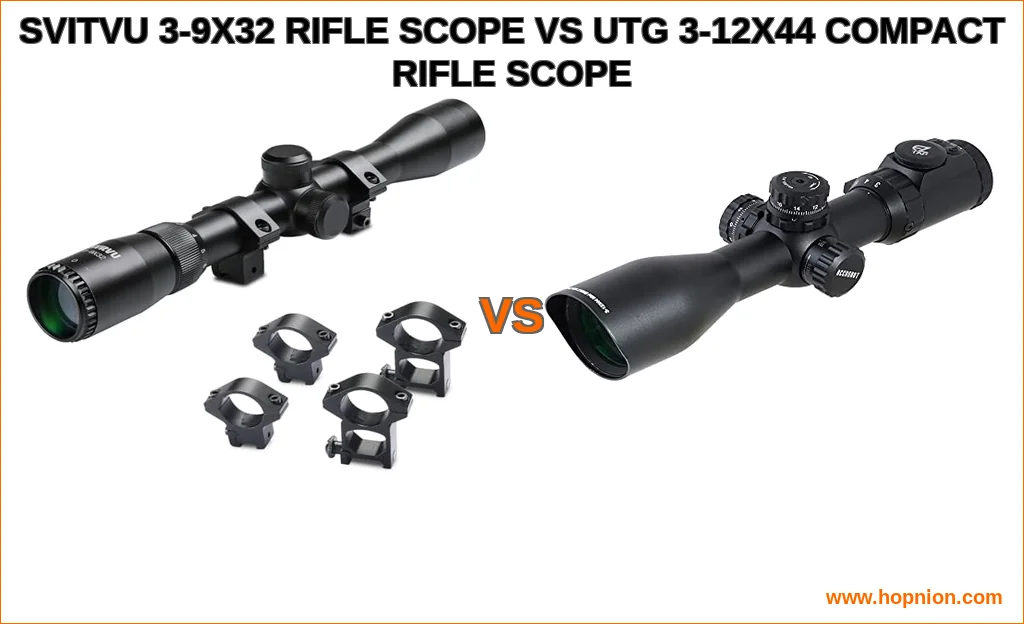
Two compact scopes sit at the heart of many budget-conscious shooter’s debates. The SVITVU 3-9X32 and the UTG 3-12X44 represent two distinct philosophies in affordable optics. One promises classic versatility, the other packs tactical features into a small package. Deciding between them isn’t just about specs on paper; it’s about matching a tool to your specific needs on the range or in the field.
This head-to-head breaks down every critical aspect. We’ll examine optical performance, construction, and real-world usability. My honest take is that both have compelling arguments, but your ideal choice hinges on what you value most: straightforward simplicity or enhanced capability.
Head-to-Head Specifications
Let’s start with the raw numbers. A side-by-side look reveals the fundamental differences in their design approach.
| Feature | SVITVU 3-9X32 | UTG 3-12X44 Compact |
|---|---|---|
| Magnification Range | 3-9x | 3-12x |
| Objective Lens Size | 32mm | 44mm |
| Tube Diameter | 1 inch (20mm) / 0.44 inch (11mm) mounts included | 30mm |
| Lens Coatings | Full Multi-Coated Green Lenses | Multi Emerald Coated Lenses |
| Eye Relief | Not Specified | Not Specified |
| Focal Plane | Not Specified (Likely Second) | Not Specified |
| Reticle Type | Standard Crosshair (from image) | 36-color Mil-dot, EZ Tap Illuminated |
| Adjustment Click Value | 1/4 MOA | Premium target turrets (1/4 MOA assumed) |
| Parallax Setting | Fixed | Adjustable Objective (AO) |
| Turrets | Standard capped | Zero Locking & Zero Resetting Target Turrets |
| Construction | Aircraft-grade aluminum, nitrogen filled, O-ring sealed | True Strength Platform, nitrogen filled, sealed |
| Included Mounts | 20mm & 11mm rings | 30mm rings included |
| Warranty | Responsive after-sales service | Lifetime warranty |
| Check current price on Amazon | Check current price on Amazon |
Optics & Image Quality Comparison
The core of any scope is its glass. Here, the 32mm vs 44mm objective lens difference is the first major divergence. The larger 44mm objective on the UTG gathers more light, which can translate to a brighter image, especially in low-light conditions at higher magnification. The SVITVU’s 32mm objective is perfectly adequate for daytime use and contributes to a more compact, lightweight profile.
Both scopes employ multi-layer coatings. The SVITVU uses full multi-coated green lenses, which are designed to increase light transmission and reduce glare. The UTG boasts “best in class multi emerald coated lenses.” Honestly speaking, the real-world difference in brightness and clarity between these two coating systems in this price bracket is often minimal to the naked eye during the day. The bigger differentiator is the UTG’s integrated sunshade, a practical feature for combating glare.
Where optics truly separate is in the scope reticle types. The SVITVU offers a simple, traditional crosshair. It’s clean, uncluttered, and perfect for general plinking or hunting. The UTG features a mil-dot reticle with a full 36-color illumination system (the EZ Tap). This illuminated reticle comparison is crucial. For tactical shooting, low-light scenarios, or precise holdovers, the UTG’s system is vastly more versatile. For a classic, no-fuss sight picture, the SVITVU wins.
Another critical optical feature is scope parallax adjustment. The UTG includes an Adjustable Objective (AO) ring on the front bell, allowing you to eliminate parallax error at specific distances. This is a significant advantage for precision shooting, especially on air rifles or .22LRs at varying ranges. The SVITVU has a fixed parallax setting, typically set at 100 yards. This means at distances other than 100 yards, you must maintain perfect eye relief distance and head position to avoid point-of-impact shifts.
Durability & Construction Analysis
Both manufacturers claim robust builds. The SVITVU’s body is constructed from durable, aircraft-grade aluminum alloy and is described as shock-resistant. It uses a free-floating design with O-ring seals and nitrogen filling for waterproof and fog-proof performance.
The UTG is built on its “True Strength Platform” with a 30mm main tube, which is generally more rigid than a 1-inch tube. It is also sealed, nitrogen filled, and rated as shockproof, fog-proof, and rain-proof. From my honest perspective, the inclusion of a lifetime warranty from UTG (Leapers Inc.) speaks volumes about their confidence in long-term durability compared to the SVITVU’s promise of responsive after-sales service.
The turrets are another point of separation. The UTG features premium zero locking and zero resetting target turrets. These are designed for tactile, repeatable adjustments and are ideal for shooters who dial for elevation. The SVITVU uses standard capped turrets, which protect against accidental bumps but are less convenient for frequent adjustments. Understanding scope turret caps and their function is part of mastering your gear.
Features & Usability Breakdown
Usability is where these scopes cater to different shooters. Let’s break it down by key activities.
Mounting and Zeroing
The SVITVU includes a huge advantage for new shooters: both 20mm (standard Picatinny/Weaver) and 11mm (common air rifle dovetail) scope mounting rings. This flexibility is excellent if you’re unsure about your rail type or own multiple rifles. The UTG comes with its own 30mm rings, which are necessary due to its larger tube diameter.
The scope zeroing process will feel different on each. The UTG’s exposed, tactile target turrets make adjustments fast and easy. The SVITVU’s capped turrets require you to remove the caps for each adjustment, which is slower but prevents accidental turns once zero is set.
Best Use Cases
So, which scope for what job? This is the heart of the 3-9x vs 3-12x debate.
- For .22LR Plinking & Small Game: Both are capable. If you’re purely chasing the best budget scope for plinking under $100, the SVITVU’s value package is hard to beat. It has all the basics covered. However, if you engage targets at various ranges, the UTG’s AO gives it a precision edge. The question of which is better for 22LR SVITVU or UTG leans UTG for the feature-set, but SVITVU for pure budget simplicity.
- For Air Rifles: The UTG is a standout here. Its design accommodates the unique dual recoil of springers, and the AO is almost mandatory for accurate shooting at common airgun distances (10-50 yards). The SVITVU includes 11mm mounts, showing it’s built with airguns in mind, but lacks AO. For more on this specialized category, see our guide on scope types for air rifles and this excellent external resource on air rifle scope fundamentals.
- For Tactical Training or Varminting: The UTG’s illuminated mil-dot reticle, higher 12x top end, and target turrets make it the clear choice. The SVITVU’s simpler setup is less suited for these roles.
It’s worth noting that some users report SVITVU 3-9×32 scope eye relief problems, which is common with very short, compact scopes. Ensuring proper mounting is critical. The UTG 3-12×44 compact scope warranty info is clear: a lifetime guarantee provides long-term peace of mind.
Value for Money: The Honest Assessment
This is the final battleground. The SVITVU represents extreme value. You get a scope, multiple mounting solutions, and basic, reliable performance. Its the definition of a budget rifle optics entry point. You’re not paying for bells and whistles, just a functional magnified sight.
The UTG commands a higher price, but you’re investing in features: the 30mm tube, illuminated tactical reticle, adjustable objective, and advanced turrets. You’re moving from a basic tool to a more capable instrument. I honestly believe that for a shooter who will actually use those features, the UTG offers greater long-term value and satisfaction. It bridges the gap between budget and mid-tier performance. For a look at other options in this space, our cvlife 3 9×40 comparison explores similar dynamics.
Final Verdict & Recommendations
between these two isn’t about finding a “winner,” but about matching an optic to your profile.
Choose the SVITVU 3-9X32 if:
You want the absolute simplest, most cost-effective path to a magnified optic. Your primary uses are casual plinking, daytime hunting at modest ranges, or outfitting a .22LR or air rifle where ultimate precision isn’t the goal. The included mounts are a major bonus for newcomers. It’s a solid, no-surprises scope that gets the job done.
Choose the UTG 3-12X44 Compact if:
You view your optic as a critical performance tool. You engage targets at varied distances and need an AO. You shoot in low light or want an illuminated reticle for faster target acquisition. You prefer tactile turrets for dialing adjustments. You value a lifetime warranty and the robust feel of a 30mm tube. This scope grows with your skills.
In the world of compact scope review writing, the goal is to give you the clarity to decide. Both are competent within their intended realms. The SVITVU is a trustworthy basic scope; the UTG is a surprisingly feature-packed compact. For a broader view of the landscape, our types of gun scopes guide is invaluable.
My final, honest assessment is this: if your budget is razor-tight and your needs are simple, the SVITVU won’t let you down. If you can stretch your investment for features that genuinely enhance capability, the UTG is the significantly more versatile and rewarding long-term partner on your rifle. Whatever you choose, get out there and practice. The best scope is the one you know how to use instinctively. For more direct comparisons and insights, the team at Honest Opinion is always dissecting gear to help you make informed decisions.