

Two names consistently pop up when shooters start looking for a capable yet affordable 3-9×40 scope: CVLIFE and Orcair. Both promise solid performance without breaking the bank, but they take distinctly different approaches to get there. This isn’t just about picking a budget optic; it’s about understanding which set of features aligns with your specific needs on the range or in the field.
At first glance, the specs look similar. A closer look reveals critical differences in functionality, especially regarding parallax and reticle design. My honest take is that one scope offers simplicity and a unique aiming system, while the other provides advanced adjustability for the price-conscious precision shooter. Let’s break down exactly what you get with each.
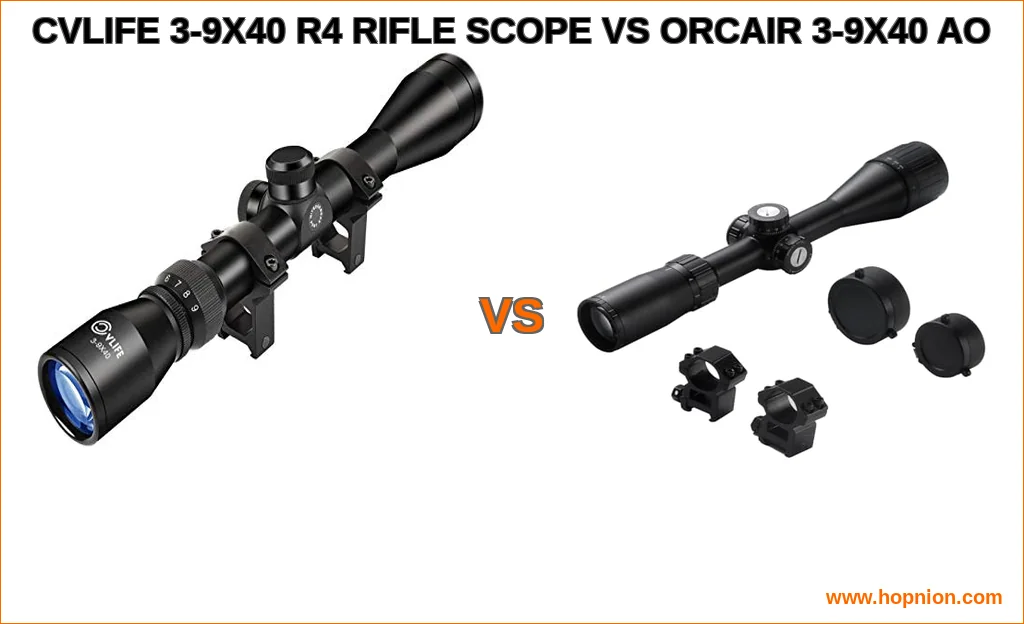
Head-to-Head: CVLIFE 3-9×40 R4 vs Orcair 3-9×40 AO
Before diving into the nuances, a side-by-side look at the core specifications sets the stage. This table outlines the foundational differences that will guide our deeper analysis.
| Feature | CVLIFE 3-9×40 R4 | Orcair 3-9×40 AO |
|---|---|---|
| Magnification | 3-9x | 3-9x |
| Objective Lens | 40mm | 40mm |
| Reticle | R4 Illuminated Crosshair | Illuminated Mil-Dot |
| Parallax Setting | Fixed | Adjustable Objective (AO) (10yds to infinity) |
| Turret Adjustment | 1/4 MOA | 1/4 MOA |
| Waterproof/Fogproof | Not Specified | IPX7, Nitrogen-Purged |
| Diopter Adjustment | Not Specified | +/- 2 diopters |
| Included Mounts | 20mm Rings | 20mm Rings |
| Check current price on Amazon | Check current price on Amazon |
Optical Clarity & Reticle Face-Off
The view through the glass is where any scope earns its keep. Both scopes use a 40mm objective lens, but their reticle philosophies diverge sharply. The CVLIFE R4 illuminated reticle is its signature feature. It replaces a standard duplex with a crosshair that incorporates multiple aiming points for holdover, which can be invaluable for quick shots at varying distances without touching the turrets.
The Orcair employs a more traditional illuminated mil-dot reticle. This system is excellent for range estimation and precise holdovers if you know the math or your ballistics. Honestly speaking, the choice here is between the CVLIFE’s dedicated drop-compensation hash marks and the Orcair’s versatile, mil-based system. For a new hunter who doesn’t want to calculate, the R4 is intuitive. For a shooter who enjoys the process, the mil-dot offers more flexibility.
Lens coatings are a missing detail in many budget rifle optics reviews. While neither listing specifies a premium coating like “Emerald Coat,” the Orcair’s description of being “fully multi-coated” suggests an effort to maximize light transmission and clarity. The CVLIFE listing does not detail its coatings, which is a consideration. In low-light conditions at dawn or dusk, every percentage of light gain matters.
Build Quality, Turrets & Critical Adjustments
Durability separates a toy from a tool. The Orcair provides concrete claims: a one-piece main tube, IPX7 waterproofing, and nitrogen purging for fogproof performance. These are significant assurances for anyone hunting in rain, snow, or humidity. The CVLIFE’s build specifics are less detailed, which, from my honest perspective, means you must weigh its proven track record in the budget category against the Orcair’s stated ruggedness.
Adjustments are another major differentiator. Both feature 1/4 MOA Turrets, but the Orcair’s Adjustable Objective (AO) is a game-changer for certain users. Parallax error can cause your point of impact to shift if your eye isn’t perfectly centered. A fixed parallax scope, like the CVLIFE, is typically set at 100 yards. The Orcair’s AO lets you correct parallax from 10 yards out to infinity. This is crucial for airgun use, rimfire shooting at close range, or precision work at known distances. The debate of AO vs fixed parallax is central here.
Eye Relief is a vital safety and comfort spec, though not listed for either model. Generally, a 3-9×40 scope should offer 3-4 inches. Consistent eye relief allows for a quick, repeatable sight picture and prevents scope eye. I honestly believe trying to ascertain this from user reviews or reaching out to the manufacturers is a wise step before purchase.
Real-World Performance: Hunting & Range Use
Specs on paper meet dirt, recoil, and weather here. Which scope is the best budget 3-9×40 scope for deer hunting? Honestly, it depends on your hunting style.
For the woods hunter taking shots inside 150 yards, the CVLIFE’s R4 reticle is fast. The illuminated center (powered by a common battery) grabs your eye in dim timber. Its simplicity is a virtue when a buck appears suddenly. The package, including mounts, makes it a true grab-and-go option for a .30-30 or similar brush gun.
The Orcair shines where adjustment is key. Its Adjustable Objective (AO) makes it inherently suitable for 22lr scopes for rimfire rifles and air rifles, where parallax at 25 or 50 yards is a real concern. The illuminated mil-dot is fantastic on a variable power scope for longer-range plinking or varmint control. The turrets offer audible clicks, giving tangible feedback for your adjustments. If your use spans from a 10-meter backyard range to a 200-yard pasture, the Orcair’s flexibility is compelling.
Warranty is a missing entity in most discussions. A company’s confidence in its product is often reflected in its warranty length and terms. Checking the manufacturer’s website for this detail before buying can save future headaches and is a step I always recommend.
Final Verdict: Who Should Buy Which Scope?
This isn’t about declaring one scope the universal winner. It’s about matching the tool to the task. Both are standout options in the realm of affordable rifle scopes, but they serve different masters.
Choose the CVLIFE 3-9×40 R4 if:
- You want a simple, effective scope for centerfire rifle hunting at short to medium range.
- The proprietary R4 holdover reticle appeals to you for quick shots.
- You prefer a straightforward setup with included mounts.
- Your primary use doesn’t require parallax adjustment for very close or very long distances.
Choose the Orcair 3-9×40 AO if:
- You need an Adjustable Objective (AO) for airgun, rimfire, or precise range use.
- You prefer the versatility of a mil-dot reticle for estimation and holdover.
- Stated waterproof/fogproof construction and a one-piece tube are important for your environment.
- You engage targets at a wide variety of ranges and want to eliminate parallax error.
To be completely honest, the presence of the AO on the Orcair at this price point is significant. It elevates it from a simple hunting scope to a more versatile optical instrument. However, for the traditional hunter who never touches the parallax knob, the CVLIFE offers a brilliant, user-friendly reticle that gets the job done.
Before making any decision, consider the broader landscape of types of gun scopes to ensure a 3-9×40 variable is right for you. For more on specialized optics, our review of another cvlife 3 9×40 model or a deep dive into scope reticle types can provide further context. And for authoritative insights on optics for specific platforms, resources like this guide on air rifle scopes are invaluable.
Ultimately, your specific needs dictate the best choice. Whether you prioritize the innovative reticle of the CVLIFE or the adjustable parallax and robust build of the Orcair, both represent serious value. My honest assessment is that you’re getting a functional, capable scope that far exceeds its price tag with either option. For more direct comparisons and unbiased gear analysis, the team at Honest Opinion is always here to help you see your target clearly.