

Two distinct philosophies of airgun power sit on the table. On one side, the modern, compact efficiency of a pre-charged pneumatic (PCP) system. On the other, the classic, self-contained power of a break barrel. The Umarex Notos and the Benjamin Trail NP XL 1500 perfectly represent this technological divide. Choosing between them isn’t just about picking a rifle; it’s about choosing your entire shooting experience, from preparation to follow-up shots.
This head-to-head cuts through the marketing to focus on what each rifle actually delivers. We’re putting the .22 caliber PCP carbine against the .177 caliber nitro piston powerhouse, using only their stated capabilities. My honest assessment is that your ideal choice depends entirely on whether you value convenience and consistency or raw, off-the-shelf power.
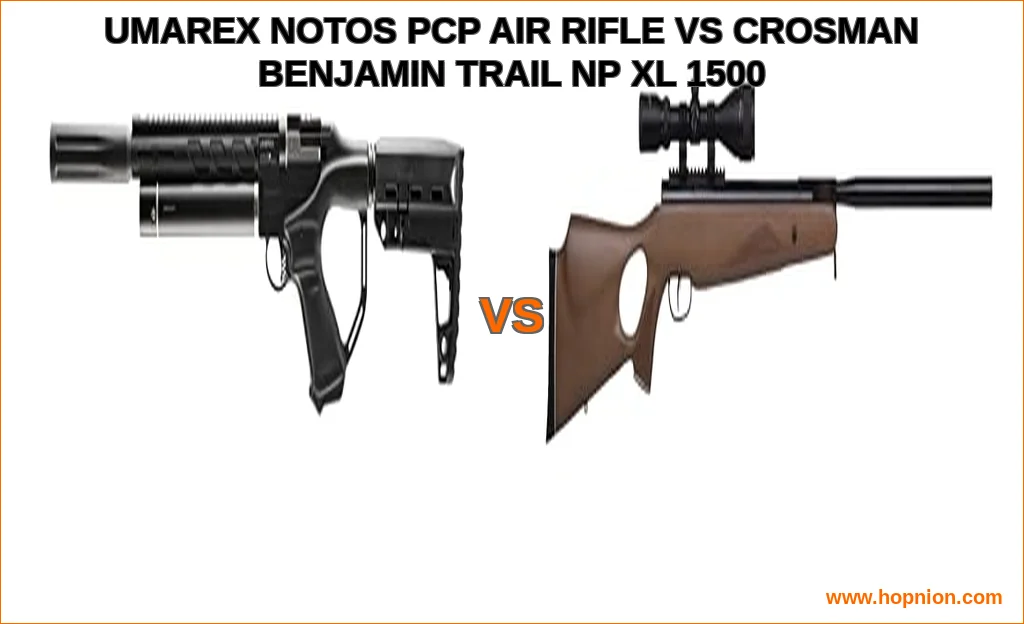
PCP vs. Break Barrel: A Fundamental Difference
Before diving into specs, the core technology dictates everything. The Umarex Notos is a pre-charged pneumatic (PCP) air rifle. This means its regulated air cylinder is filled from an external source, like a hand pump or scuba tank, before shooting. The Benjamin Trail NP XL 1500 uses a Nitro Piston 2 system inside a break barrel. You cock the rifle compressing a nitrogen gas ram instead of a spring. This single action difference impacts noise, shot cycle, and how you use the gun.
Detailed Specifications Comparison
Heres a clear breakdown of how these two air rifles stack up on paper. The table highlights their inherent differences in design and intended operation.
| Feature | Umarex Notos Carbine .22 | Benjamin Trail NP XL 1500 .177 |
|---|---|---|
| Power System | PCP (Pre-Charged Pneumatic) | Nitro Piston Break Barrel |
| Caliber | .22 Caliber | .177 Caliber |
| Velocity (FPS) | 700 fps (with 12-grain pellet) | Up to 1500 fps |
| Magazine Capacity | 7-Shot Auto-Indexing Rotary | Single Shot |
| Cocking / Loading | Side Lever Action | Break Barrel Action |
| Barrel Length | 11.75 inches | Not Specified (Rifled Steel) |
| Stock | Not Specified | Checkered Hardwood |
| Included Scope | None | CenterPoint Optics 3-9x40mm |
| Reported Noise Level | Quiet Shooting | 70% Less Noise |
| Primary Use Case | Small Game, Plinking, Target | Small Game Hunting |
| Check current price on Amazon | Check current price on Amazon |
Power, Accuracy, and Real-World Performance
Velocity numbers tell only part of the story. The Benjamin’s “up to 1500 fps” is a headline-grabber, typical for lightweight .177 pellets in a magnum break barrel. The Notos delivers a consistent 700 fps with heavier .22 pellets. Speaking honestly, the real-world energy and impact on target can be surprisingly comparable for small game, but the delivery is worlds apart.
Accuracy is where the philosophies clash. The Notos, with its regulated air cylinder and side-lever action, promises exceptional shot-to-shot consistency. This is the holy grail for precision. The fixed barrel and multi-shot capability mean nothing moves between shots but the trigger. The Benjamin requires you to break the barrel and load a pellet for every shot. This introduces more variableshold, barrel lock-up, loading techniqueall of which can affect group size. For a true airgun accuracy test, the PCP platform inherently has the mechanical edge.
Noise is a critical factor, especially for backyard use. Both rifles are marketed as quiet. The Notos benefits from the inherently quieter PCP shot cycle. The Benjamin’s Nitro Piston system is quieter than a spring gun, but the mechanical action of breaking the barrel still creates sound. Honestly speaking, if backyard pest control is your goal, the Notos’s combined quiet report and multi-shot capability are a significant advantage.
The Scope Quality & Trigger Pull Factor
Out of the box, the Benjamin includes a 3-9x40mm scope. This is a huge value add for getting started immediately. The Notos requires you to source and mount your own optics, adding to the initial cost but allowing for customization. The trigger pull on a PCP like the Notos is typically more tunable and consistently crisp than that on a break barrel, which directly impacts accuracy. A good trigger is something you appreciate more with every shot.
Use Case & Value: Which Rifle is Right for You?
This is the heart of the decision. It’s not about which is “better,” but which fits your life.
The Umarex Notos (.22 PCP) is ideal for:
- Shooters prioritizing high shot count and quick follow-ups.
- Backyard plinkers and pest controllers needing low noise.
- Those willing to invest in an air source (pump) for superior consistency.
- Hunters who value a compact, carbine-style rifle for tight spaces.
To be completely honest, the question “Is the Umarex Notos good for backyard pest control?” gets a resounding yes. Its quiet operation, .22 caliber impact, and multi-shot magazine make it a formidable tool.
The Benjamin Trail NP XL 1500 (.177 Nitro Piston) is ideal for:
- Traditionalists who enjoy the break barrel ritual.
- Hunters wanting maximum fps velocity straight from the box.
- Those on a tighter initial budget who want a complete kit (rifle and scope).
- Shooters who don’t want the ancillary equipment (pumps, tanks) of PCP.
It answers the call for the best air rifle under $500 for small game hunting with a classic, powerful package. If you’re curious how this nitro piston stacks up against other popular platforms, our comparison of a gamo break barrel provides more context.
Covering What Others Miss: Long-Term Costs & Accuracy
Many reviews stop at the initial price. Let’s go deeper. The Notos has a lower long-term maintenance costno spring or piston to wear out. However, you must factor in the cost of a high-pressure hand pump ($100+) or carbon fiber tank. The Benjamin has no ongoing consumables except pellets, but the nitro piston unit is a sealed system that will eventually require service.
Aftermarket support and modification potential heavily favor the Notos. The PCP community is vast, with endless tuning options. The Benjamin is largely a “shoot as-is” platform. For real-world accuracy, consider distance. At 25 yards, a skilled shooter can make both sing. Push to 50 yards, and the regulated, consistent power of the PCP will generally show its worth in tighter groups. This nuance is crucial for the hunting air rifle comparison.
Final Verdict and Recommendations
So, which is more accurate: Umarex Notos or Benjamin Trail NP XL? From my honest perspective, the Notos has the higher inherent accuracy ceiling due to its regulated PCP action and fixed barrel. But raw accuracy potential is useless if the rifle doesn’t suit your style.
Choose the Umarex Notos if: You value modern convenience, low noise, multi-shot capability, and are ready for the PCP ecosystem. It’s a fantastic, compact platform that excels in practical scenarios. Its performance is worth comparing to other PCP options, like in our look at a gamo PCP alternative.
Choose the Benjamin Trail NP XL 1500 if: You want a classic, powerful hunting rifle right out of the box with no extra gear. You enjoy the single-shot break barrel discipline and want a beautiful hardwood stock. It’s a time-tested design that delivers formidable power.
Both are excellent tools. The Notos represents the efficient, repeatable future of airgunning. The Benjamin embodies the powerful, self-reliant tradition. Your needs, budget, and patience for ancillary gear will point the way. For more unbiased takes on gear and performance, the team at Honest Opinion is always digging into the details. Remember, no matter your choice, proper practice and understanding of ballistics are key. Resources from organizations like the official source for competitive shooting can provide invaluable safety and technique guidance.