

Two names consistently pop up when shooters start looking for a capable .177 caliber pellet gun without breaking the bank: the Crosman CLGY1000KT Legacy and the Umarex Ruger Blackhawk. Both promise velocities around 1000 fps and come with a scope, creating a classic entry-level dilemma. But the path each rifle takes to get there, and the experience they offer, are quite different. This isn’t just about specs on paper; it’s about which tool feels right in your hands and meets your specific needs in the field or at the backyard range.
Honestly speaking, the choice often boils down to a fundamental preference in operation: the multi-pump versatility of the Crosman versus the single-stroke simplicity of the Ruger’s break barrel design. Each system has its loyalists, and for good reason. We’re going to break down every detail, from the fps potential to the feel of the trigger, to help you make an informed decision. My honest assessment is that there’s a clear winner for certain use cases, but it might not be the same for everyone.
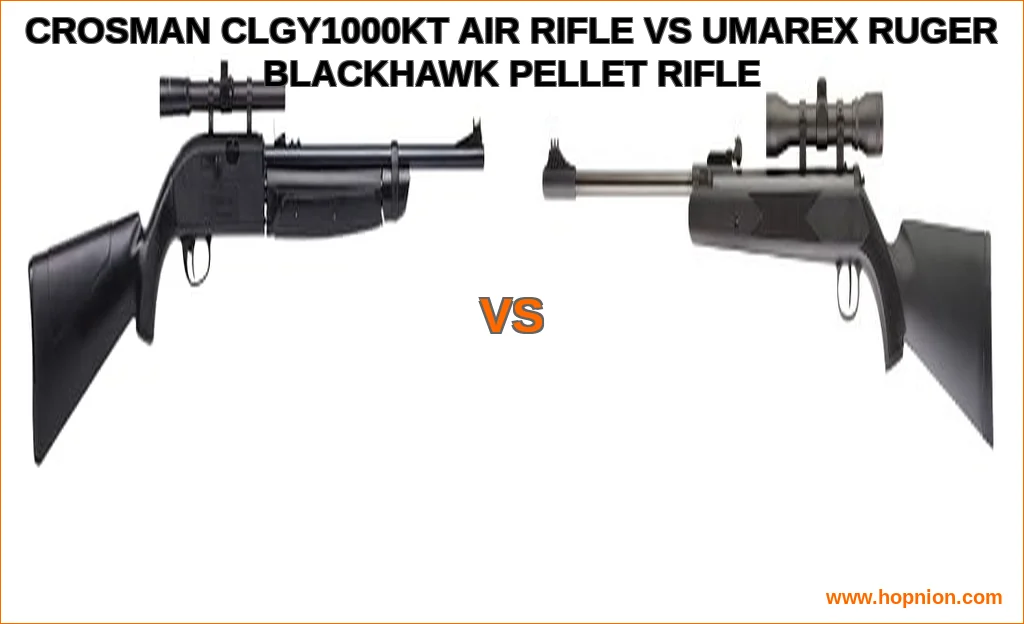
Head-to-Head Specifications Table
Let’s lay the foundation with a direct look at what each rifle brings to the table. This side-by-side view highlights the core differences in their design philosophy right from the start.
| Feature | Crosman CLGY1000KT Legacy | Umarex Ruger Blackhawk |
|---|---|---|
| Operating System | Variable Pump (Multi-pump) | Break Barrel (Spring-Piston) |
| Caliber | .177 (Pellets & BBs) | .177 (Pellets) |
| Max Velocity (FPS) | Adjustable 750 – 1000 fps | 1000 fps |
| Barrel | Rifled Steel | Not Specified |
| Stock Material | Durable, Water Proof Synthetic | Not Specified |
| Safety | Crossbolt | Not Specified |
| Included Optics | Fiber-Optic Sights & 4x15mm Scope | 4x32mm Scope |
| Special Features | Built-in BB Reservoir, Side-Load Pellet Chamber | Branded under Ruger name |
| Check current price on Amazon | Check current price on Amazon |
Power & Accuracy: FPS and Real-World Grouping
Both rifles claim a 1000 fps top end, but how they achieve it tells the whole story. The Crosman’s variable pump system is its defining trait. You control the power with each pump, from a quiet 750 fps for indoor plinking up to the full 1000 fps for longer range or pest control. This adjustability is a massive advantage for versatility and can significantly impact pellet rifle accuracy as you learn what power level your preferred pellet likes best.
The Ruger Blackhawk delivers its power through a single, robust break barrel cocking stroke. It’s a classic spring-piston system where every shot is at the same, full power. This consistency is great for muscle memory, but it also means every shot has the same report and recoil impulse. In my honest opinion, the Crosman’s adjustable power gives it a distinct edge for new shooters learning the ropes or for those who shoot in noise-sensitive areas.
Accuracy Considerations: Pellet Choice and Barrel Life
pellet rifle accuracy, a critical factor often overlooked is pellet preference. The Crosman’s rifled steel barrel suggests it’s optimized for stabilizing diabolo-shaped pellets. Domed pellets typically offer the best ballistic consistency for target work, while pointed varieties are often chosen for penetration. The Blackhawk’s barrel type isn’t specified, which makes generalized advice harder. From my honest perspective, you’ll need to invest in a pellet sampler pack for either rifle to find its favorite dietthis is non-negotiable for good groups.
Long-term durability also plays into accuracy. A spring-piston system like the Blackhawk’s experiences significant internal vibration and stress with every shot. Over thousands of cycles, this can potentially affect lock-up consistency. The multi-pump system has fewer violently moving parts, which might contribute to more consistent trigger and barrel alignment over an extended period. It’s a nuance, but for someone thinking about years of use, it’s worth noting.
Build Quality & Ergonomics Compared
Handling these rifles reveals their different personalities. The Crosman CLGY1000KT features a synthetic all-weather stock that’s explicitly noted as waterproof and durable. This is a huge plus for hunters or shooters who don’t let a little drizzle end their session. The stock design incorporates a built-in BB reservoir and a side-load pellet port, making it a truly ambidextrous platform.
The Umarex Ruger Blackhawk’s build specifics are less detailed in its core listing. It carries the Ruger branding, which brings certain expectations of robustness, but the exact stock material and finish aren’t described. Ergonomically, the break barrel action requires a specific cocking motion that some find satisfying and others find awkward. It generally requires more force than pumping the Crosman, which could be a factor for younger shooters or those with less upper body strength.
Noise level is another practical differentiator. Spring-piston guns like the Blackhawk have a distinctive “twang” and mechanical snap upon firing. The multi-pump Crosman is notably quieter, especially at lower pump settings. If stealth is a priority for pest control or you have close neighbors, the Crosman’s variable report is a major benefit. Honest to goodness, the difference in sound signature can be the deciding factor for many suburban shooters.
Scope, Sights, and Included Accessories
The out-of-the-box shooting experience is heavily influenced by the included optics. Here, the two rifles take different approaches to getting you on target.
The Crosman provides a dual-sighting system: a 4x15mm scope and fiber-optic iron sights. The fiber optics are fantastic for fast, close-range acquisition in various light conditions. The included scope is basic but functional for getting started. The real value is having a backup if the scope loses zero or for ultra-short-range plinking where a scope is impractical.
The Umarex Ruger Blackhawk includes a 4x32mm scope. The larger 32mm objective lens (compared to the Crosman’s 15mm) should, in theory, gather more light and provide a brighter sight picture. However, the quality of the glass and the mounting system’s ability to handle a springer’s reverse recoil are key. Spring-piston airguns are notoriously hard on scopes not built for them. The Blackhawk does not mention included iron sights, making the scope your only aiming option.
Scope quality on budget packages is always a topic. I honestly believe the scopes on both are best viewed as starter optics. They’ll work, but serious shooters will likely upgrade to a scope rated for spring-piston or gas piston recoil, like those often discussed in our gamo comparisons. Proper mounting and using a recoil pad designed for airguns (not firearms) are critical steps for longevity.
The Critical Role of Trigger Feel
While not detailed in the base specs, the trigger is your primary interface with the rifle. A gritty, heavy, or inconsistent pull can ruin accuracy. Break barrel rifles often have a two-stage trigger; the first stage takes up slack, and the second stage releases the sear. Multi-pumps like the Crosman typically use a different sear mechanism. The actual feel is something you must experience. If you’re involved in formal target practice, perhaps through programs recognized by an official source for shooting sports, a clean trigger is paramount.
Verdict: Best Use Cases and Value Recommendation
So, which rifle deserves a spot in your cabinet? The answer isn’t universal. It depends entirely on your intended use case, which is the core of any meaningful air rifle comparison.
Choose the Crosman CLGY1000KT Legacy if:
- You value versatility and adjustable power above all else.
- You shoot in varied environments (backyard, indoor, field) and need quiet operation.
- You want the ability to shoot both pellets and BBs from one platform.
- You prefer a potentially more forgiving action for long-term maintenance.
- Ambidextrous operation and all-weather durability are important.
Choose the Umarex Ruger Blackhawk if:
- You prefer the traditional, single-stroke simplicity of a break barrel.
- You want consistent, full-power shots without managing pump counts.
- The Ruger brand association and its implied robustness resonate with you.
- You don’t require iron sights and plan to use optics exclusively.
On the question of value for money, both sit in a very competitive price bracket. The Crosman offers more features explicitly stated: the all-weather stock, dual-ammo capability, and adjustable power. The Blackhawk offers a straightforward, powerful springer experience under a trusted brand name.
For a beginner seeking the most flexible and user-friendly platform, the Crosman CLGY1000KT has a compelling edge. Its power adjustability is a fantastic learning tool and a practical feature for real-world use. The Blackhawk is a classic for a reasonit’s a simple, powerful tool that gets the job done. My final, honest take is to match the rifle to your typical shooting scenario. Think about where you’ll shoot, what you’ll shoot at, and who else might use it. That context will point you to the right choice far more clearly than any spec sheet. And for more unfiltered reviews and comparisons, that’s the mission we have at Honest Opinion.