

Deciding on your first reloading setup can feel overwhelming. Two popular entry points from a trusted name are the Lee Precision 92134 Challenger Anniversary Pack and the Lee Precision Classic Turret Press Kit. They serve different purposes in the reloading workflow, and honestly speaking, confusing them is a common beginner’s mistake. One is a robust single-stage press bundled with dies, while the other is a complete kit centered around a semi-progressive turret system. ir distinct roles is the key to making the right choice for your bench.
This isn’t about which product is universally better. It’s about which tool aligns with your goals, budget, and desired workflow. From my honest perspective, the Challenger pack is a phenomenal foundation for learning the fundamentals, while the Classic Turret is about efficient production once those basics are mastered. Let’s break down their actual features, capabilities, and ideal use cases to give you a clear, actionable comparison.
Core Concepts: Tools
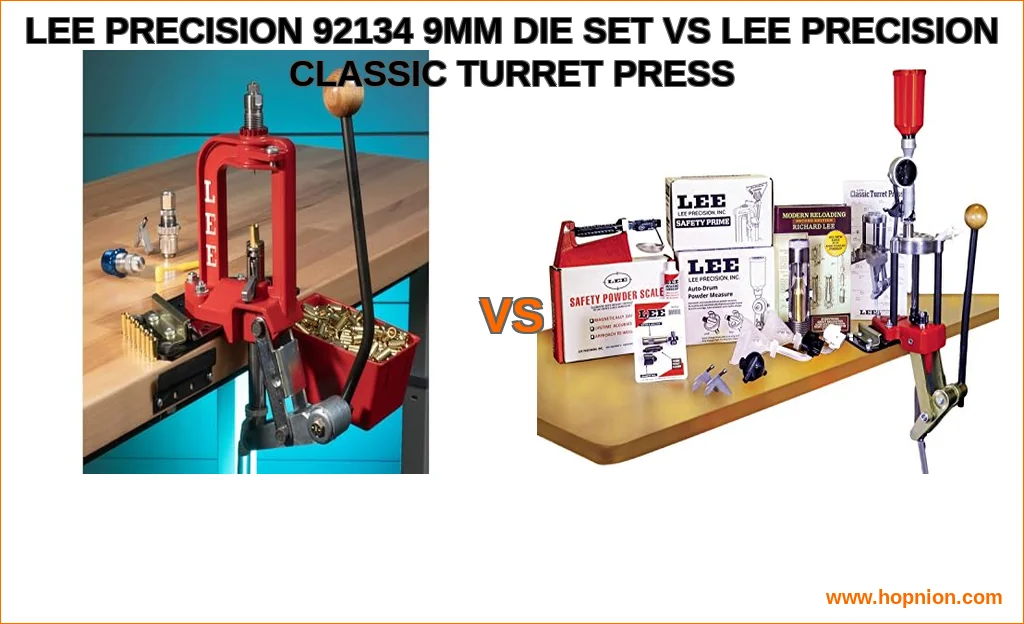
Before diving into features, grasping the fundamental difference between these products is important. The Lee Precision 92134 is primarily a “Challenger” single-stage press. It performs one reloading operation (like sizing, seating, or crimping) per handle pull. The included 9mm Luger Breech Lock Carbide 3-Die Set is what allows you to actually reload ammunition on it. This package is about strength, simplicity, and mastering each step.
The Lee Precision Classic Turret Press Kit, however, is a different beast. The press itself uses a rotating turret that holds multiple dies. This allows you to complete multiple operations on a single case without removing it, by simply rotating the turret head. The kit includes components like the Pro Auto-Drum powder measure, making it a more integrated system for streamlined reloading. If you want my honest opinion, this distinction between a foundational tool and a production-oriented system is the most critical takeaway.
Essential Equipment Breakdown
Both products fall into the category of essential equipment, but for different phases. The Challenger with its dies is a complete set of primary tools for a specific caliber. The Classic Turret Kit requires you to add a set of Lee dies for your chosen caliber, but then provides the supporting materials like the powder measure to automate a key step. Recognizing what’s in the box versus what you need to add is a fundamental part of the lee precision 92134 9mm die set vs lee precision classic turret press process.
Head-to-Head Feature Comparison
Heres a natural comparison table based on the actual product features and descriptions. This lays out the lee precision 92134 9mm die set vs lee precision classic turret press system in a clear, side-by-side format.
| Features | Lee Precision 92134 Challenger 40th Anniversary Pack | Lee Precision Classic Turret Press Kit |
|---|---|---|
| Press Type | Single-Stage “O” Frame Press | Classic Turret Press |
| Core Design Benefit | Noted as the strongest, most popular design. 4″ opening for hand clearance. | Rotating turret allows multiple operations per case. |
| Included Dies | Yes – 9mm Luger Breech Lock Carbide 3-Die Set | No – Requires a separate set of Lee dies. |
| Die Change System | Breech Lock Quick Change – change dies with a twist. | Turret system – multiple dies remain installed. |
| Priming System | Ergonomic lever with improved priming position. | Not specified in provided features. |
| Powder Measure | Not included. | Included – Pro Auto-Drum powder measure and riser. |
| Scope | Press + Dies for one caliber. | Comprehensive kit (less dies) for a reloading workflow. |
| Made In | Not specified. | USA |
| Check current price on Amazon | Check current price on Amazon |
Step-by-Step Process: How Each System Works
lee precision 92134 9mm die set vs lee precision classic turret press step by step workflow highlights their operational differences. This is where the theoretical becomes practical.
Working with the Challenger 92134 Pack
The process here is traditional single-stage reloading. You complete all cases for one operation before moving to the next.
- Size & Deprime: Install the sizing die in the Breech Lock bushing. Process every case.
- Prime: Use the press‘s on-press priming system.
- Charge: Remove the die, and use a separate bench-mounted powder measure (not included).
- Seat & Crimp: Install the seating/crimping die. Complete all cases.
This methodical approach is excellent for scrutiny. You inspect each case at each stage. My honest assessment is that this builds impeccable habits and is ideal for precision rifle or novice handgun reloaders.
Working with the Classic Turret Press Kit
This lee precision 92134 9mm die set vs lee precision classic turret press technique is about flow. With dies installed in the turret, the process becomes semi-progressive.
- Setup: Install your die set (e.g., 9mm) into the four stations of the turret head.
- Cycle: Place a case. Pull the handle to size/deprime. The powder measure automatically drops a charge.
- Rotate & Complete: Manually rotate the turret to the seating die, pull handle. Rotate to crimp die, pull handle. A finished round is produced with each full rotation.
The included Pro Auto-Drum automates the most critical variablepowder chargeintegrating it seamlessly. Honestly speaking, this system dramatically increases output while maintaining a hands-on, controllable pace.
Common Challenges and Best Practices
Every reloading setup has its learning curve. Identifying common mistakes upfront saves frustration. For the Challenger, the primary challenge is speed. New reloaders often get impatient with the single-stage process. The best practice is to embrace the slow pace for quality control. For the Classic Turret, the challenge is initial setup and synchronization of the powder measure. Ensuring the drum is correctly adjusted and tested is a non-negotiable key step before loading in quantity.
My honest take is that both systems benefit immensely from a sturdy mounting solution. The Turret Kit’s description even notes the bench plate is sold separatelya key detail often missed. A solid bench is not a luxury; it’s a necessity for consistency and safety. For more on setting up a robust station, our review of the classic turret platform offers deeper insights.
Advanced Techniques and Specific Scenarios
While both are considered entry-level, advanced lee precision 92134 9mm die set vs lee precision classic turret press techniques exist. The Challenger’s single-stage nature makes it the superior tool for specific, precision-focused tasks. It’s ideal for:
- Bullet Swaging: Its strong “O” frame handles forming pressure well.
- Case Forming: Converting brass from one caliber to another requires forceful, single operations.
- Decapping Range Brass: A dedicated, messy job perfect for a simple, strong press.
The Classic Turret shines in lee precision 92134 9mm die set vs lee precision classic turret press for specific scenarios like volume pistol reloading. Its true power is revealed when you purchase additional turret heads. You can have one head pre-set for 9mm, another for .223 Remington, and another for .45 ACP. Switching calibers becomes a 30-second task of swapping the entire turret head, not individual dies. This is an effective lee precision 92134 9mm die set vs lee precision classic turret press solution for the shooter who uses multiple calibers regularly.
Emergency Procedures and Troubleshooting
Every reloader must know their emergency lee precision 92134 9mm die set vs lee precision classic turret press procedures. On the Challenger, a double-charged case can be caught by visually inspecting every case in the block before seating. On the Turret, the key safety procedure is to never rotate the turret backward. This can cause a powder charge to be dropped twice into the same case. Developing a strict, consistent rhythm is your best defense. For comprehensive safety protocols, always consult an official source like a major manufacturer’s guide.
Making the Right Choice for Your Bench
So, which is the best lee precision 92134 9mm die set vs lee precision classic turret press option? The answer depends entirely on your answer to these questions.
Choose the Lee Precision 92134 Challenger Pack if:
- You are a complete beginner wanting to learn each step meticulously.
- Your primary focus is precision rifle or low-volume pistol reloading.
- Your budget is tight and you need a press and dies for one caliber now.
- You value maximum rigidity for occasional heavy-duty operations.
Choose the Lee Precision Classic Turret Press Kit if:
- You understand the basics and want to produce quality ammo more efficiently.
- You reload higher volumes of pistol calibers (like 9mm) or small rifle cartridges.
- You plan to reload multiple calibers and value quick changeover.
- You want an integrated system that includes a quality powder measure from the start.
To be completely honest, there’s no wrong choice between two quality tools from Lee. The Challenger pack offers an unbeatable value to get started with a specific caliber. The Classic Turret Kit represents a slightly larger initial investment that pays dividends in speed and convenience. Many reloaders end up owning botha single-stage for precision work and a turret for volume. For a broader look at how Lee’s engineering philosophy translates across products, our comparison of another precision toolset is worth a read.
Your journey into reloading should be safe, enjoyable, and rewarding. I honestly believe that selecting the tool that matches your immediate goals is more important than searching for a mythical “best” option. Do your research, start slow, and always prioritize safety. And for more gear insights and unbiased reviews from a community that values straightforward talk, the team at Honest Opinion is always here to help. Now, get that bench bolted down and start creating some consistent, accurate rounds.