

Two names consistently dominate the conversation for shooters ready to step up their ammunition reloading game: Frankford Arsenal and Dillon Precision. The M-Press and the RL550C represent two distinct philosophies in the world of progressive reloading presses. One is a value-packed newcomer with a clever design, while the other is a time-tested workhorse with a cult following. Deciding between them isn’t just about specs; it’s about your reloading philosophy, budget, and long-term goals.
Honest OpinionThis head-to-head comparison cuts through the marketing to give you a clear, feature-by-feature breakdown. We’ll examine build quality, operational flow, and the real-world value proposition each press offers. Whether you’re building a reloading setup for high-volume pistol rounds or seeking consistency for precision rifle, the right choice will save you time, money, and frustration.
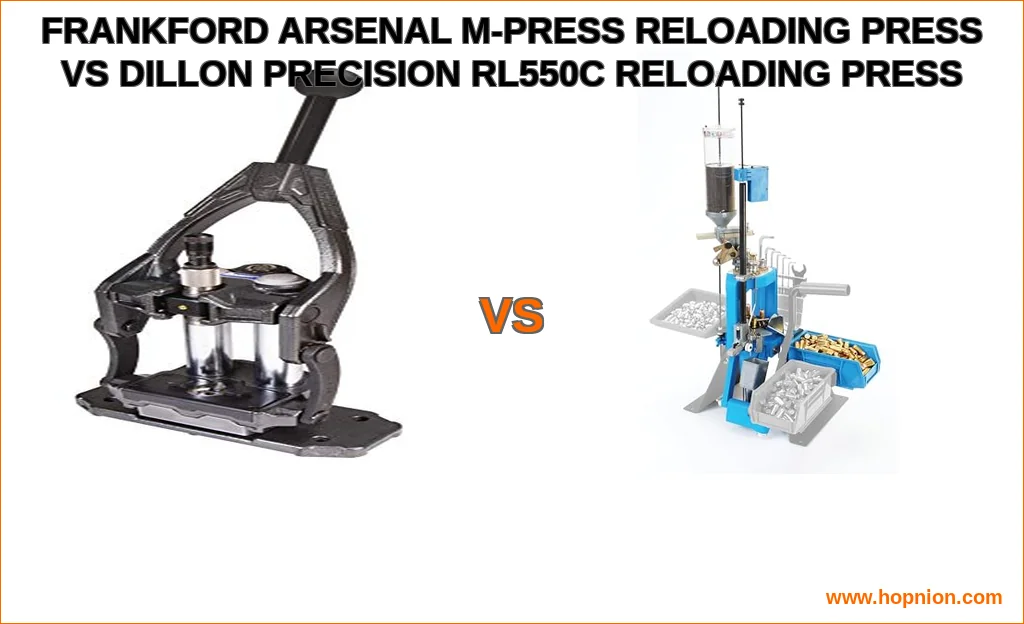
Frankford Arsenal M-Press vs Dillon RL550C: A Head-to-Head Breakdown
At first glance, these are both manual-indexing progressive presses designed to streamline the reloading process. The core difference lies in execution. The Frankford Arsenal M-Press utilizes a unique coaxial design with floating shell-holder plates, while the Dillon RL550C employs a more traditional but proven rotary shell plate and removable toolhead system. This fundamental distinction influences everything from ergonomics to caliber changes.
Key Specifications & Build Quality
Durability is non-negotiable for any reloading press. A robust frame ensures consistent operation and longevity, which is critical for both safety and precision reloading. Speaking honestly, both manufacturers have prioritized heavy-duty construction, but they achieve it through different means.
| Feature | Frankford Arsenal M-Press | Dillon Precision RL550C |
|---|---|---|
| Build & Weight | Heavy-duty, robust die-cast construction. Weighs 21 lbs. | Built for durability & smooth operation. Features a greaseable lower pivot pin. |
| Frame Design | Coaxial design with 2 parallel guide rods for stability. | Classic “C” frame progressive press design. |
| Shell Holder System | Integral floating shell-holder plate. | Manual indexing rotary shell plate. |
| Die System | Quick-change die blocks fit standard 7/8″-14 dies. | Removable toolhead keeps dies and powder settings intact. |
| Primer System | Spent primer catcher included. | Case-activated powder measure included. Primer system part of the press. |
| Check current price on Amazon | Check current price on Amazon |
The M-Press’s 21-pound die-cast frame and parallel guide rods promise significant rigidity. Its coaxial design aims to align the die and shell holder perfectly on every stroke. The RL550C counters with a reputation for industrial-grade longevity and a greaseable pivot pin for maintenance-free smoothness over decades. My honest assessment is that the Dillon feels like a piece of machinery you inherit, while the Frankford Arsenal offers modern engineering at an aggressive price point.
Price Analysis & Overall Value Proposition
The value proposition is often the first point of separation. Frankford Arsenal, under the Vista Outdoor umbrella, has built a reputation on delivering capable gear at accessible prices. Dillon Precision, in contrast, commands a premium for its American-made quality and legendary support. This isn’t just about the initial purchase; it’s about the total cost of ownership, including caliber conversion kits and accessories.
In my honest opinion, the M-Press often presents a lower barrier to entry. It comes as a more complete kit with its quick-change die blocks. The RL550C’s cost is higher, but it includes a case-activated powder measurea significant value add. However, Dillon’s specific caliber conversion kit costs are an additional factor to budget for, though their toolhead design makes swaps incredibly fast. For the reloader who plans to load multiple calibers, the long-term investment path differs greatly between these two presses.
User Experience: Setup, Operation & Ergonomics
How a press feels during a long reloading session is paramount. Ergonomics affect fatigue, consistency, and ultimately, enjoyment. The M-Press’s coaxial action is different. The floating shell plate moves vertically between the guide rods, which some find very intuitive and naturally aligned. The spent primer management is integrated, which is a nice touch for a clean bench.
The RL550C uses the classic rotary shell plate that most reloaders are familiar with. The manual indexing provides complete user control at each station, which many prefer for inspecting cases and checking powder charges. Its case-activated powder measure prevents spills, a major quality-of-life feature. Honestly speaking, if you’re coming from a single-stage or turret press, the Dillon’s operation will feel more familiar. The M-Press requires a slight mental shift but can be very smooth once mastered.
For those new to the craft, full ecosystem is key. Resources like the official source for reloading data or the authority guide on safety are invaluable, regardless of your press choice.
Performance: Speed, Consistency & Caliber Switching
This is where the rubber meets the road. A progressive press should offer a tangible speed advantage while maintaining the consistency needed for accurate ammunition. The M-Press vs RL550C for precision rifle is a common question. The M-Press’s rigid coaxial design theoretically offers excellent alignment for consistent bullet seating, a critical factor for long-range accuracy.
The Dillon’s strength lies in its seamless workflow and removable toolhead. Changing calibers involves swapping a pre-configured toolhead and the shell platea process that takes minutes. This makes it phenomenal for shooters who regularly switch between, say, 9mm, .223 Remington, and .308 Winchester. The manual indexing allows you to visually verify each stage, which is a significant benefit for reloaders who prioritize oversight over fully automated speed.
- Frankford Arsenal M-Press: Speed is derived from its quick-change die blocks and straightforward, inline station progression. Consistency is targeted through its rigid, aligned design.
- Dillon RL550C: Speed comes from its efficient rotary motion and ultra-fast caliber changes. Consistency is ensured by its robust construction and the repeatability of the pre-set toolhead system.
From my honest perspective, the Dillon has a slight edge in streamlined, high-volume production due to its ecosystem. The Frankford Arsenal holds its own for dedicated caliber loading and offers a compelling argument for shooters focused on rifle cartridge precision.
Durability, Support & The
Long-term reliability often decides a reloading press review. Dillon’s “No BS Warranty” and legendary customer service are part of its lore. They’re known for sending out replacement parts with no hassle, a policy that has built immense brand loyalty. It’s also worth noting Dillon’s extensive military and LE contracts, which speak to a demand for proven reliability under pressure.
Frankford Arsenal provides solid consumer support, but it doesn’t carry the same mythos. The M-Press is a newer entrant, so its long-term track record is still being written by users. Some early adopters have discussed Frankford Arsenal M-Press problems and solutions online, typically related to learning the unique handling of the coaxial systemissues often resolved with technique adjustments or minor part upgrades from the company.
Aftermarket support is another Dillon advantage. Companies like Inline Fabrication make stands, lighting, and accessories specifically for the RL550C, enhancing its ergonomics further. The M-Press, given its unique design, has a more limited aftermarket. My honest take is that the Dillon ecosystem is a mature garden, while the Frankford Arsenal’s is still growing.
Final Verdict: Who Should Buy Each Press?
So, which is better: the Frankford Arsenal M-Press or Dillon RL550C? The answer depends entirely on your profile as a reloader. There is no single best reloading press for everyone, only the best press for you.
Choose the Frankford Arsenal M-Press if:
- Your budget is a primary concern, and you want the most features per dollar.
- You appreciate modern, innovative design and a coaxial press alignment.
- You tend to load batches of a single caliber at a time, or are building a dedicated reloading setup.
- You’re technically inclined and don’t mind a slightly steeper learning curve on a unique system.
Honest to goodness, the M-Press is a fantastic value engine that challenges established norms. It proves you don’t have to spend a fortune to get into progressive reloading.
Choose the Dillon Precision RL550C if:
- You prioritize proven durability, unparalleled customer service, and a vast accessory ecosystem.
- You frequently switch between multiple calibers and need that process to be quick and foolproof.
- You value manual indexing for greater control and inspection at each stage.
- You view your press as a lifetime investment and are willing to pay a premium for that peace of mind.
The RL550C is the benchmark for a reason. It’s a system that grows with you. For a broader look at how other presses stack up in the value category, our precision comparisons offer more context.
In the end, both are capable tools that will produce quality ammunition. The Frankford Arsenal M-Press makes a compelling argument as the best value progressive reloading press for 2026, offering sophisticated engineering at an entry point that gets you loading quickly. The Dillon Precision RL550C remains the aspirational standard, a press you buy once and never doubt. It’s the choice for those who know reloading is a lifelong hobby and want a partner that will last just as long. As with any major tool purchase, your Honest Opinion on what matters mostinitial cost, long-term workflow, or resale valuewill guide you to the right press for your bench.