

Stepping into the world of ammo reloading can feel like a monumental decision. Your choice of reloading press fundamentally shapes your entire experience at the reloading bench, from the initial investment to the speed and quality of your output. Two names consistently dominate the conversation: the accessible, foundational Lee Precision Challenger Kit II and the robust, high-volume Dillon Precision RL550C. They represent two distinct philosophies in reloading equipment.
This isn’t just about picking a tool; it’s about aligning a machine with your goals, budget, and patience. Are you a meticulous hobbyist crafting precision rounds for a single rifle, or a high-volume shooter needing to feed multiple pistols? The answer will point you toward one of these iconic presses. Let’s break them down, feature by feature, to find your perfect match.
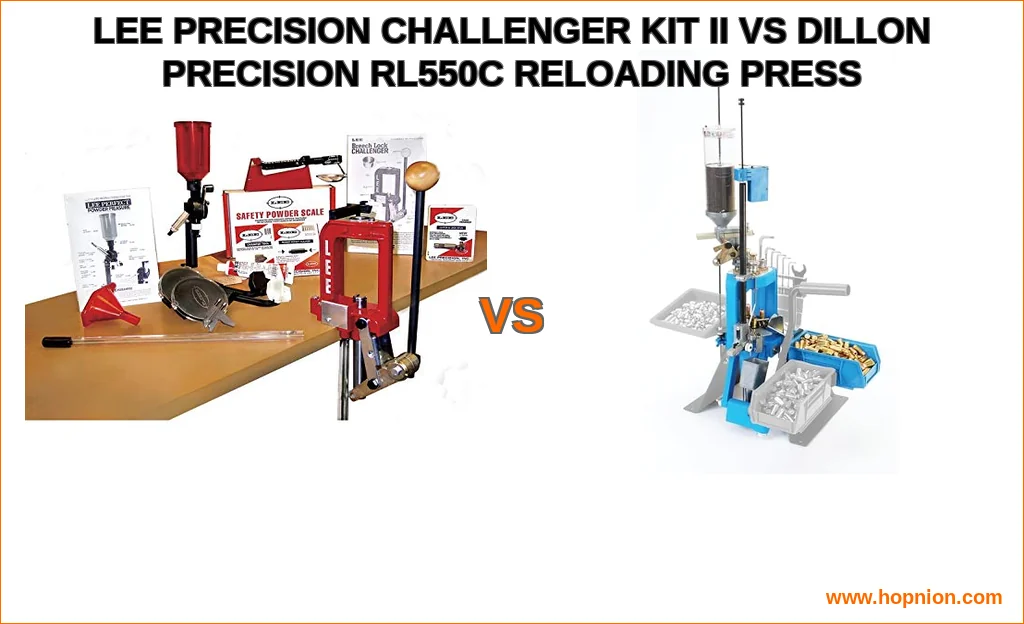
Head-to-Head Overview: Lee Challenger II vs Dillon RL550C
At their core, these presses operate on different principles. The Lee Challenger Kit II is a classic single-stage press. You perform one reloading operationlike sizing, priming, or seating a bulleton a single case at a time. Its a methodical, controlled process. The Dillon RL550C, in contrast, is a progressive press. With each pull of the handle, a shell plate rotates, moving multiple cases through different stations simultaneously. One handle stroke can result in a finished round.
Honestly speaking, this fundamental difference dictates everything else: speed, complexity, cost, and the learning curve. The Challenger Kit is an all-in-one solution for getting started, while the RL550C is a dedicated, high-output machine built for endurance.
Detailed Feature & Capability Breakdown
Let’s examine what each package actually delivers, based on their core components and design.
The Lee Precision Challenger Kit II: A Complete Starter System
This kit is designed to get you from zero to reloading with one purchase. Its not just a press; its a foundational set of reloading equipment. The included Lee Safety Scale is noted for its sensitivity, a critical factor for consistent powder charges. The power funnel and chamfer tool speak directly to the hands-on case preparation workflow of a single-stage system. You’ll be handling each case individually, prepping the mouth, carefully funneling powder, and ensuring each step is perfect before moving on.
My honest assessment is that this approach builds incredible foundational skills. You learn the “why” behind each step because you’re doing them sequentially. Its ideal for answering questions like, can you reload pistol and rifle on Lee Challenger II? Absolutely. You simply swap the shell holder and reloading die for each caliber, though the process is inherently slower than on a progressive. For a deep dive on another Lee option, consider our comparison of Lee precision models.
The Dillon Precision RL550C: Engineered for Volume
The RL550C is built around efficiency and repeatability. Its standout feature is the removable toolhead, which allows for quick caliber changes while keeping your dies and powder settings perfectly intact. This is a game-changer for shooters who regularly switch between, say, 9mm and .223. The case-activated powder measure is another smart feature, dispensing powder only when a case is present to prevent spills.
Its a manually indexed progressive, meaning you rotate the shell plate. This offers greater control than an auto-indexing press and is often preferred for its oversight. Dillon emphasizes its durability, with a greaseable lower pivot pin, and proudly states it’s made in the USA. From my honest perspective, the manual indexing is a perfect middle groundit provides the speed of a progressive while letting you visually verify each station.
| Feature | Lee Precision Challenger Kit II | Dillon Precision RL550C |
|---|---|---|
| Press Type | Single-Stage | Manual-Index Progressive |
| Core Function | Foundational skill building, precision work | High-volume, efficient production |
| Key Included Features | Safety Scale, Power Funnel, Chamfer Tool | Removable Toolhead, Case-Activated Powder Measure |
| Operation Style | One operation per case, per handle pull | Multiple operations per case per handle pull |
| Primer System | Typically a hand-priming tool or press-mounted arm | Integrated, automated priming system on press |
| Caliber Changeover | Swap shell holder and die | Swap toolhead and shell plate (caliber conversion kit) |
| Check current price on Amazon | Check current price on Amazon |
Price, Value, and Total Cost of Ownership
The sticker price is just the beginning. A true Lee vs Dillon reloading press cost comparison must consider the long-term path.
The Lee Challenger Kit II represents a remarkably low barrier to entry. You get a functional press, a scale, and essential tools in one box. For the beginner, this is tremendous value. However, the “total cost” for high-volume shooting includes your time. Producing 100 rifle rounds on a single-stage is a dedicated evening’s work.
The Dillon RL550C requires a significantly higher initial investment. you must factor in the cost of caliber-specific conversion kits for each new cartridge you want to load. Yet, its value is measured in rounds per hour. What might take a week on a single-stage can be an afternoon on the Dillon. Its legendary warranty and customer service, often called “unbeatable,” are part of that value propositiona missing entity in many comparisons. Dillon supports its products for life.
Speaking honestly, if you shoot a few hundred rounds a year, the Lee’s low cost wins. If you shoot a few hundred a month, the Dillon’s speed justifies its price, making it cheaper per round when your time has value.
Ideal User Profile: Who Should Buy Which?
Choose the Lee Challenger Kit II if:
- You are new to reloading and want to learn fundamentals without a huge upfront cost.
- Your primary focus is precision rifle ammunition where each round is meticulously crafted.
- You reload low volumes (e.g., for hunting, bolt-action rifles, or testing loads).
- You enjoy the meditative, hands-on process of case preparation.
- Your budget is constrained, and you need a complete kit to start.
For those comparing it to other entry points, our look at Lee precision versus turret presses offers more context.
Choose the Dillon Precision RL550C if:
- You shoot high volumes of pistol calibers or .223/5.56.
- Your time is valuable, and output speed is a priority.
- You want the flexibility to change calibers quickly with pre-set toolheads.
- You value legendary customer service and a “no-BS” warranty.
- You have the budget for the press and the necessary conversion kits.
Warranty, Support, and the Ecosystem
This is a critical differentiator often overlooked. Lee Precision offers functional and affordable products with adequate support. Dillon Precision, however, has built its reputation on stellar customer service. Their warranty is famously straightforward and hassle-free, a major consideration for a complex mechanical device. the aftermarket support for Dillon presses is vast. Companies like Inline Fabrication create stands, lighting, and accessories specifically for the RL550C, enhancing the user experience. The availability of these modifications is a key advantage for the Dillon ecosystem.
For authoritative information on reloading processes and safety, always consult an official source or a comprehensive guide from established brands.
Final Verdict & Recommendations
So, which is better Lee Challenger II or Dillon RL550C for a beginner? I honestly believe the Lee Challenger Kit II is the unequivocal best starting point for most new reloaders. It teaches the craft, minimizes financial risk, and proves whether reloading is for you. Trying to learn on a complex progressive like the Dillon can be overwhelming and frustrating.
The Dillon RL550C is not a beginner’s press. It is the logical, powerful upgrade for the reloader who has outgrown their single-stage. Its for the shooter whose demand for ammunition has made the slow, methodical process a bottleneck. The Dillon RL550C progressive press setup and review conversations are filled with users who will never go back, citing its smooth operation and incredible support.
My honest take is this: view them as sequential steps rather than direct competitors. Start with the Lee to build skill and confidence. If and when your shooting volume demands it, graduate to the Dillon. The Challenger will still have a permanent place on your bench for precision rifle work and specialized tasks. Both are excellent tools serving different masters. Your journey at the reloading bench is unique, and right tool is the first step toward a rewarding craft. For more direct, no-nonsense comparisons like this, the team at Honest Opinion is always here to help cut through the noise.