

Two distinct philosophies of reloading sit on the bench today. On one side, the Lyman All-American 8 Turret Press promises streamlined workflow. On the other, the Lee Precision 90685 Classic Cast represents a no-frills, foundational approach. This isn’t just about tools; it’s about how you want to interact with the craft of assembling ammunition. Your choice here fundamentally shapes your reloading bench experience, from speed to the tactile feel of each pull.
We’re putting these two workhorses under the microscope. One is built for versatility with an eight-station turret, the other for pure, simple function with a classic single stage design. Honestly speaking, the best press isn’t the one with the most features, but the one that aligns with your goals, whether that’s precision reloading for long-range shooting or efficient batch processing for practice rounds.
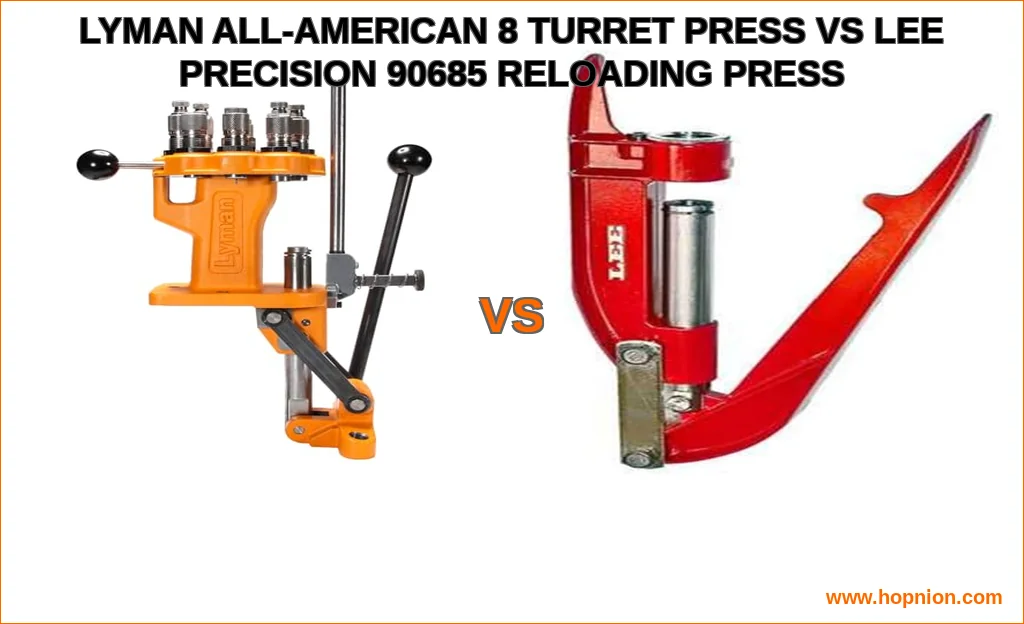
The Contenders: A Quick Overview
Before we dive into the granular details, let’s establish a baseline. The Lyman All-American 8 is a heavyweight turret system designed to minimize die swapping. The Lee Precision 90685 is a classic, cast iron single stage press focused on one operation at a time. Their core designs dictate their entire purpose on your reloading setup.
Head-to-Head Feature Comparison
This table breaks down the key specifications based on their actual, available features. It highlights the fundamental differences in their construction and intended use.
| Feature | Lyman All-American 8 Turret Press | Lee Precision 90685 Classic Cast Press |
|---|---|---|
| Frame & Construction | Heavy duty cast iron frame and turret with durable powder coat finish. | Cast iron frame, aluminum construction noted for handle location. |
| Press Type & Design | Turret press with an extra-large 8-station turret. Turret is easily removed. | Single stage press with a classic O-frame design. |
| Die Capacity & Workflow | Holds two complete 4-die sets or up to four 2-die sets. Enables progressive-style workflow without a full progressive press. | Holds one reloading die at a time. Requires manual die changes between operations. |
| Primer System | Comes with a straight line primer feed with large and small primer tubes. | Standard primer arm system; specifics on spent primer management are part of its classic design. |
| Primary Use Case | Ideal for reloaders seeking faster batch processing for pistol or rifle calibers without sacrificing too much control. | The quintessential tool for precision reloading, where each cartridge is handled individually with maximum focus. |
| Check current price on Amazon | Check current price on Amazon |
Turret vs. Classic Single Stage: A Design Philosophy
This is the heart of the debate. A turret press like the Lyman rotates multiple dies over a single station. You complete all steps for one cartridgesize, prime, expand, seat, crimpby simply rotating the turret and pulling the handle. It’s a hybrid between a single stage and a progressive. The workflow is significantly faster for completing batches of ammo.
A single stage press, exemplified by the Lee 90685, performs one operation on all your cases before you switch dies for the next step. You might size and deprime 50 cases, then change to the priming die, then change to the seating die. It’s methodical, deliberate, and for many, meditative. This process is often praised for fostering consistency and attention to detail, which is crucial for precision rifle loads. My honest assessment is that the single stage teaches you the fundamentals of each step in isolation, making it a fantastic teacher.
Detailed Analysis: Lyman All-American 8 Turret Press
Lyman’s offering is built around its eight-station turret. This isn’t just a minor upgrade from a six-station; it’s a game-changer for organization. You can mount two complete carbide pistol die sets (sizing, expanding, seating, crimping) and still have space for a universal decapping die or a powder check. Swapping calibers is as simple as unscrewing one pre-set turret and screwing in anothera massive time-saver.
The heavy cast iron construction provides a solid, flex-free base. The straight-line primer feed system is a notable included feature, aiming to streamline one of reloading’s more fiddly tasks. From my honest perspective, the real value is in the workflow efficiency. You’re not constantly screwing dies in and out, which reduces errors and fatigue during long sessions. It’s arguably one of the best turret press options for someone who has outgrown a single stage but isn’t ready for the cost and complexity of a full progressive.
Considerations:
- The eight-station head is large. Ensure you have ample clearance on your reloading bench.
- While faster, it still requires manually indexing the turret and handling the cartridge at each station. It’s not automatic.
- The system’s versatility with die sets makes it excellent for reloaders who work with multiple calibers, from .223 to .45 ACP.
Detailed Analysis: Lee Precision 90685 Classic Cast Press
The Lee Precision 90685 is a testament to simplicity and strength. Its O-frame design and cast iron construction offer tremendous rigidity, which is directly linked to consistent ammunition. Less frame flex means more consistent force applied to your reloading dies, a key factor in achieving uniform results. The handle’s bottom-center location provides a comfortable, powerful leverage stroke.
This press excels in environments where focus is paramount. Whether you’re doing precision rifle loads for competition or working through intricate case prep for a wildcat cartridge, the single-stage process forces you to concentrate on one variable at a time. It’s the perfect platform for learning. Every reloading manual assumes you’re working in this single-stage manner, making the process easy to follow. Honestly speaking, its durability is legendary, and its design minimizes ram play over time, a critical factor for long-term consistency.
Considerations:
- The workflow is inherently slower. Producing 100 finished pistol rounds takes notably longer than on a turret.
- It requires more manual handling: changing dies, handling primers separately. Your reloading setup needs good organization.
- Its strength and simple mechanics make it incredibly reliable, with a long history of available replacement parts directly from Lee Precision.
Which Press is Right For You? A Decision Guide
This choice boils down to your volume, goals, and personality as a reloader. Let’s break it down.
Choose the Lyman All-American 8 Turret Press if:
- You reload handgun ammo in volume for practice or competition.
- You value a faster workflow but still want to handle each cartridge individually for quality control.
- You load for multiple calibers and want to minimize setup time with pre-set turrets.
- You’re a beginner looking for a press that offers a growth path from single-stage simplicity toward higher output. For more on this progression, see our precision press comparisons.
This press answers the long tail keyword search for the best turret press under $300 with a very strong argument.
Choose the Lee Precision 90685 Classic Cast Press if:
- Precision reloading for rifle cartridges (.308, 6.5 Creedmoor, etc.) is your primary focus.
- You are a beginner who wants to master each step of the reloading process fundamentally. This directly addresses searches for which is better for a beginner reloader Lyman or Lee from a foundational skills perspective.
- You prefer a deliberate, controlled pace and find the process itself rewarding.
- Your volume needs are low to moderate, or you don’t mind spending more time at the bench.
- You prioritize legendary durability and simple, serviceable mechanics over features.
Covering the : Warranty, Parts, and Caliber Notes
Many comparisons stop at the specs. A true Honest Opinion requires looking deeper. Lee Precision is renowned for its lifetime warranty and readily available, affordable replacement parts. Lyman also offers strong customer support, but it’s wise to check the specific warranty terms at the time of purchase. For official manuals and detailed specs, always refer to the manufacturer’s website, like this official source.
Regarding specific calibers: The Lee’s immense strength and compound linkage make it superb for tough sizing operations like resizing military .223 brass. The Lyman’s turret can handle rifle calibers with ease, but the process of indexing a heavy turret with large rifle dies is a different feel than the direct action of the Lee. For authoritative reloading data and techniques, resources from Hornady and RCBS are invaluable.
Final Verdict and Recommendations
So, which one wins? Honestly, it’s a tiebut on different playing fields.
For the reloader seeking efficiency and a streamlined workflow for pistol or mixed-use reloading, the Lyman All-American 8 Turret Press is the compelling choice. Its eight-station flexibility and robust build create a versatile hub for your reloading equipment. It’s a press you’re less likely to outgrow.
For the reloader dedicated to the art of precision, the beginner wanting to learn correctly, or anyone who values sheer simplicity and proven durability, the Lee Precision 90685 Classic Cast Press is the undisputed champion. It’s a tool that teaches discipline and delivers unwavering consistency. The ongoing discussions about Lyman All-American 8 vs Lee Classic Cast durability often conclude that both are built to last, but the Lee’s simpler design has a decades-long track record.
My honest take is this: you can’t make a bad choice here. You’re choosing between two excellent, purpose-built tools. Define your primary reloading mission first. Match the tool to the task. And remember, the best press is the one that gets you to the bench, engaged in the craft, safely building quality ammunition. For further guidance on safe practices, organizations like the BASC offer excellent resources, and companies like Inline Fabrication offer upgrades to enhance either press’s ergonomics.