

Stepping into the world of ammo reloading presents a classic first decision. For many, the journey starts with a single stage press from a trusted name like Lee Precision. Two options consistently rise to the top of the conversation: the bare-bones Lee Precision 90045 Reloading Press and the comprehensive Lee Precision Challenger Kit II. One is a tool, the other is a complete starter solution. My honest assessment is that this choice fundamentally shapes your initial experience, budget, and learning curve.
This isn’t just about picking a press. It’s about defining your entry point into a precise craft. The 90045 is a component, while the Challenger Kit II is a system. difference is key to avoiding frustration or unnecessary expense. Honestly speaking, the right pick depends entirely on what you already have on your bench and how you prefer to learn.
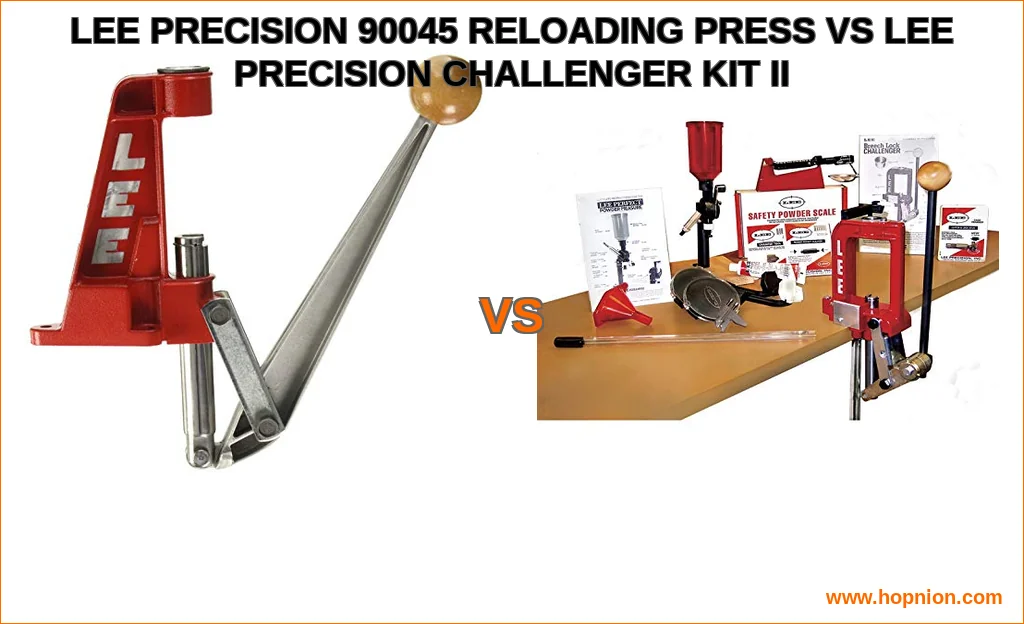
Head-to-Head: 90045 vs Challenger Kit II Specifications
At their core, both presses share the same reliable O-frame design and compound leverage system that Lee is known for. This provides a sturdy, consistent platform for all your reloading operations. The core mechanical action of resizing, priming, and seating a bullet will be identical between the two. However, the journey from a raw component to a finished round diverges dramatically based on what’s included.
Let’s break down the fundamental offerings side-by-side.
| Features | Lee Precision 90045 Reloading Press | Lee Precision Challenger Kit II |
|---|---|---|
| Core Press | Yes (Reloading Press) | Yes (Challenger Press) |
| Primer Catcher System | Not Included | Included |
| Powder Measure | Not Included | Includes Auto-Disk Powder Measure |
| Scale | Not Included | Includes Lee Safety Scale |
| Case Preparation | Not Included | Includes chamfer tool and powder funnel |
| Check current price on Amazon | Check current price on Amazon |
The table makes the distinction clear. The 90045 is simply the press itself. You get the cast-iron frame, the lever, the ram, and the mounting hardware. Everything elsethe dies, powder measure, scale, and case prep toolsmust be sourced separately. The Challenger Kit II, in contrast, bundles the press with the essential accessories needed to actually complete cartridges, minus the dies and consumables.
Breaking Down the Value: Kit Contents & Pricing
This is where the kit value proposition becomes critical. When evaluating the Lee Precision 90045 vs Challenger II price difference, you must account for the cost of all the ancillary items. Buying the 90045 press alone seems cheaper, but the total cost of ownership can quickly surpass the kit if you purchase components individually.
The Challenger Kit II includes several key items that are non-negotiable for safe reloading:
- Lee Safety Scale: Described as “very sensitive,” this beam scale is fundamental for verifying powder charges. No responsible reloader operates without one.
- Auto-Disk Powder Measure: This mounts directly to the press and throws consistent volumetric charges based on interchangeable disks.
- Case Prep Tools: The kit includes a powder funnel for transferring powder and a chamfer tool. The tool “camfers the insdie and outside of the case mouth,” a necessary step for ensuring bullets seat smoothly and without shaving material.
- Primer Catcher System: A small but vital accessory for keeping your workspace clean and containing spent primers.
From my honest perspective, for a true beginner who owns nothing, the kit is almost always the more economical and logical path. You get a coordinated system where the components are designed to work together from the start. Figuring out what comes in the Lee Challenger Kit II vs buying separately is a math exercise that typically favors the kit. However, if you’re upgrading from a hand press or inheriting tools, the standalone 90045 press might be the perfect, cost-effective centerpiece for your existing gear.
User Experience: Setup, Operation, and Real-World Use
Setup diverges immediately. With the 90045, you’re mounting a press to your bench and then beginning the hunt for compatible accessories. You’ll need to research and select a scale, a powder measure, case lube, and priming tools. This path offers maximum customizationyou could choose a digital scale from another brand or a different type of powder measurebut it requires more knowledge upfront.
The Challenger Kit II experience is more guided. You unbox, mount the press, and have almost all the core tools at hand. The included Primer Catcher System installs easily, a detail often overlooked in bare presses. The operation is streamlined because the Auto-Disk Powder Measure is designed to integrate with Lee’s die system. For a novice, this reduces variables and lets you focus on the reloading process itself.
A critical point often missed in reloading press kit comparisons is caliber flexibility and limitations. Both presses accept standard 7/8″-14 threaded dies, making them compatible with virtually any caliber. However, the included accessories in the Kit II are general-purpose. The powder measure disks cover common pistol and rifle charges, but for very large or very small calibers, you may need to purchase additional disks. The chamfer tool is universal. My honest take is that the kit provides a fantastic foundation for common calibers like 9mm, .223, or .308, which is exactly what most beginners start with.
Long-term support is a practical concern. Lee Precision has a reputation for standing behind their products. While specifics on warranty claim processes can vary, their commitment is well-documented. Replacement parts for these classic O-frame presses, like linkage pins or primer arms, are readily available directly from Lee or through numerous retailers. This longevity is a significant part of their appeal for a value reloading setup.
Verdict: Who Should Buy Which Press?
So, which is better Lee 90045 or Challenger Kit II for a beginner? If you are starting from zero, with an empty bench and no tools, the Challenger Kit II is the unequivocal recommendation. The integrated learning curve and the fact that you can start loading (after purchasing dies, brass, powder, primers, and bullets) are immense advantages. It removes the paralysis of choice and ensures you have the correct, compatible tools.
The Lee Precision 90045 Reloading Press is the ideal choice for a specific user:
- The Upgrader: Someone moving from a hand press or a less robust single-stage who already owns a scale, powder measure, and case prep tools.
- The Supplementer: A reloader with a progressive press who wants a dedicated single-stage for precision rifle rounds, bullet swaging, or other specialized tasks. The 90045 serves as an excellent secondary press.
- The Customizer: The shooter who wants to hand-pick every component of their setup, perhaps preferring an electronic scale or a specific brand of powder measure from the outset.
Is the Lee 90045 press worth the extra money over the Challenger? This question is a bit of a misnomer. The 90045 is typically the less expensive item at checkout. The “extra money” is actually the subsequent investment in accessories. The real question is about value and convenience. For a full starter, the kit’s bundled price represents a significant saving. For the upgrader, paying only for the press is the better value.
Final Thoughts for Your Reloading Journey
Both the Lee 90045 and the Challenger Kit II are gateways to the rewarding craft of reloading. They are built on a proven, simple design that has introduced countless shooters to precision handloading. Your decision hinges on inventory and intent.
If your goal is the simplest, most direct path to making your first rounds, the kit is your answer. It embodies a complete beginner reloading solution. If you’re adding to an existing toolkit or enjoy the research and assembly of your own perfect setup, the 90045 offers that pure, flexible foundation. For those considering other brands in the single-stage space, it’s worth looking at our comparison of the precision offered by different press types, or the legendary robustness of an option like the rcbs Rock Chucker.
Always remember to consult your reloading manual first. Cross-reference data from multiple official sources like Hornady, RCBS, and of course, Lee Precision itself. For deeper technical insights, manufacturer catalogs like the Lyman guide are invaluable, and organizations like the BASC offer excellent safety resources. Aftermarket support from companies like Inline Fabrication can also enhance your press’s utility.
I honestly believe you can’t go wrong with either Lee option for your first single-stage press. They represent the best entry-point value in the market. The most important step is to begin with a focus on safety and consistency. The rest is a matter of personal workflow. And for more straightforward, no-nonsense gear breakdowns, you can always find an Honest Opinion right here.