

Every reloader reaches a point where hand tools just won’t cut it anymore. The brass pile grows, and the need for speed and consistency becomes undeniable. That’s when the decision between a dedicated case trimmer and a full-blown case prep center lands on your reloading bench. Two names dominate this conversation: the Lyman Brass Smith Case Trim Xpress and the Frankford Arsenal Platinum Series Case Prep Center. They represent two distinct philosophies in brass processing.
One is a laser-focused specialist, while the other is a multi-tasking powerhouse. Choosing between them isn’t just about price; it’s about your workflow, volume, and what you value most in your precision reloading tools. Let’s break down exactly what each tool offers, using only their real, stated features, to see which one might earn a permanent spot in your setup.
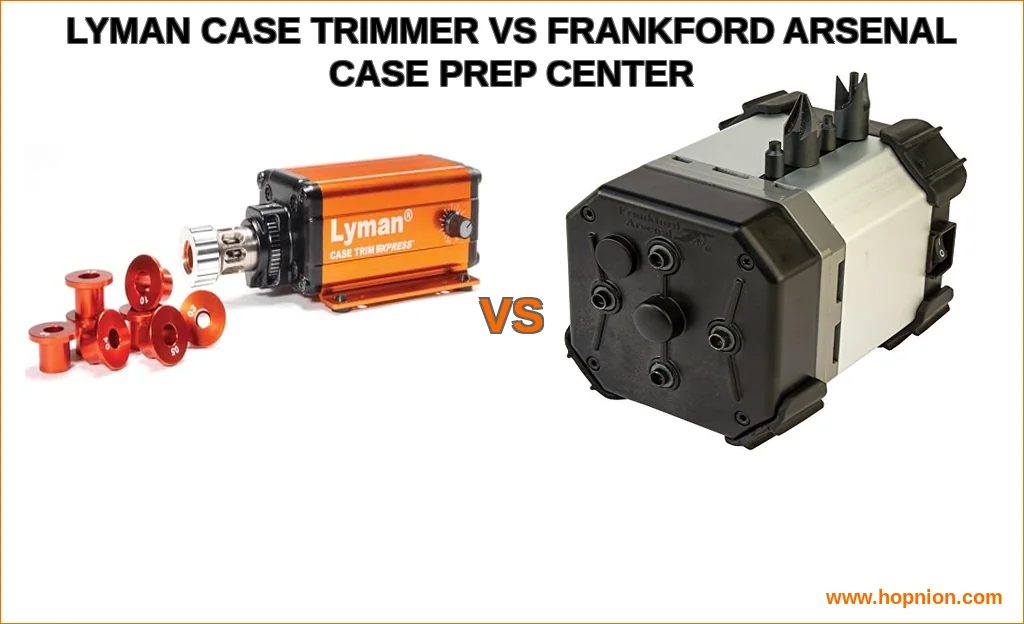
Head-to-Head: Core Design & Purpose
Fundamentally, these are different machines built for different primary tasks. The Lyman Case Trim Xpress is, as the name declares, a case trimmer. Its entire design is optimized for one job: trimming bottleneck rifle brass to a precise length, quickly. The Frankford Arsenal Platinum, conversely, is a motorized station designed to handle multiple case prep steps simultaneously.
This distinction shapes everything. The Lyman uses a system of bushings that contact the case shoulder for alignment, paired with a carbide cutter and its own variable-speed motor. It’s a single-purpose tool done with intention. The Frankford Arsenal provides four powered stations with 8-32 threaded output shafts, inviting you to run multiple operationslike chamfering, deburring, and primer pocket cleaningat once. Honestly speaking, you’re comparing a precision scalpel to a well-organized surgical tray.
| Feature | Lyman Brass Smith Case Trim Xpress | Frankford Arsenal Platinum Case Prep Center |
|---|---|---|
| Primary Function | Motorized case trimming | Motorized multi-station case prep |
| Power Source | Integrated variable-speed motor | 110V powered station |
| Key Design | Shoulder-contact bushings, carbide cutter | 4 simultaneous stations, aluminum body |
| Included Tools | 10 bushings for popular bottleneck cases | HSS chamfer, deburr, small & large primer pocket scrapers |
| Tool Compatibility | Bushing system | 8-32 threaded shafts for aftermarket tools |
| Check current price on Amazon | Check current price on Amazon |
Workflow & Speed: The Volume Question
Which is better for high volume reloading? The answer depends on your process. The Lyman excels at doing one thing extremely fast. You pop in a bushing, push the case against the cutter, and you’re done. There’s no setup for multiple stations. For someone who processes hundreds of rifle cases in a single batch, this streamlined approach is hard to beat. The variable-speed motor lets you find the optimal pace for clean cuts.
The Frankford Arsenal’s advantage is parallel processing. While one case is being chamfered, another can be deburred. This can significantly reduce the total time to fully prep a batch of brass that needs multiple operations. However, it requires you to have (or buy) the additional tools for each station. From my honest perspective, the Lyman is a speed demon for the trimming stage, while the Frankford Arsenal aims to accelerate the entire post-trim brass processing workflow.
- Lyman Speed Factor: Single-operation focus, quick bushing changes, powered trimming eliminates manual labor.
- Frankford Arsenal Speed Factor: Four operations at once reduces overall bench time for chamfering, deburring, and primer pocket cleaning.
Precision & Consistency: Rifle Ready Brass
For precision rifle work, consistency is king. Both tools contribute, but in different ways. The Lyman’s use of shoulder-contact bushings and a dedicated carbide cutter is designed specifically for case length consistency. The design minimizes runout and ensures each case is trimmed relative to its datum line on the shoulder, a critical factor for accuracy. The carbide cutter also promises long life and clean cuts.
The Frankford Arsenal relies on the precision of the individual tools you attach. Its hardened high-speed steel (HSS) included tools are made to stay sharp. The consistency in neck chamfer angle and primer pocket depth cleaning comes from the tooling and the steady 200 RPM provided by the station. My honest take is that the Lyman offers built-in precision for its sole task, while the Frankford Arsenal provides a stable, repeatable platform for your precision tools to work from.
Build Quality, Ergonomics & The
Durability often comes down to materials and design intent. The Lyman is built as a robust, single-task tool. The Frankford Arsenal features an aluminum body with thoughtful touches like a side retention slot for storing tools. But build quality is more than materials.
This is where we cover aspects often missed in reloading equipment comparisons. Ergonomics for extended use matters. The Lyman’s “push-to-trim” action is simple. The Frankford Arsenal requires moving cases between four spinning stations, which can be less fatiguing for some, more for others. Noise level comparison is real; a single motor versus four shafts spinning simultaneously creates a different acoustic profile in your reloading room.
Then there’s dust management features. Neither product listing mentions integrated solutions. With the Frankford Arsenal potentially creating more fine brass dust from multiple operations, this becomes a practical consideration for keeping your bench clean. Speaking honestly, these everyday usability factors significantly impact long-term satisfaction beyond the spec sheet.
The Verdict: Best Use Cases
So, which one wins? Neither universally. The winner is the one that best fits your specific reloading style. This is the core of our Honest Opinion approach: matching the tool to the task.
The Lyman Case Trim Xpress is ideal for:
The high-volume rifle reloader who prioritizes trimming speed and precision above all. If you process thousands of .223, .308, or 6.5 Creedmoor cases and want the fastest, most consistent trimmer, this is your tool. It’s also excellent if you already have a separate method for chamfering and deburring that you’re happy with.
The Frankford Arsenal Platinum Case Prep Center is ideal for:
The reloader who wants to consolidate and motorize their entire case prep workflow. It’s fantastic for beginners looking for an all-in-one start into powered prep, or for anyone tired of hand tools. Its versatility with aftermarket tools makes it a long-term hub for your reloading bench. If you value doing multiple operations in one sitting without switching tools, this station shines.
Final Considerations for Your Bench
Think about your cartridge mix. The Lyman includes 10 bushings for popular bottleneck cases. The Frankford Arsenal’s tooling works with any caliber that fits the standard tools, but you may need additional primer pocket uniformers or brushes for specific jobs. Also, consider space. The prep center has a larger footprint.
In my honest opinion, I believe the choice crystallizes when you assess your bottleneck. Is your slowdown purely in brass trimming? Go Lyman. Is it the entire slog of trimming, chamfering, deburring, primer pocket cleaning? The Frankford Arsenal attacks that whole chain. Both are capable tools that represent a major upgrade from manual methods. Your decision ultimately hinges on whether you want a specialist or a generalist managing your brass. For other specialized gear, like the perfect platform for your precision rifle, you might want to read more about stable shooting solutions.
Invest in the tool that solves your biggest pain point. Your future self, staring at a clean, consistent batch of ready-to-load brass, will thank you for the honest assessment.