

Every reloader knows the moment. You’re at the reloading bench, sorting brass, and the pile of cases needing trimming just keeps growing. It’s a bottleneck. That’s where a dedicated tool transforms the chore. Two names consistently dominate the conversation: the Frankford Arsenal Platinum Series and the Lyman Brass Smith Case Trim Xpress. Both promise speed and precision reloading, but they approach the problem from slightly different angles.
This isn’t about which one is universally “better.” It’s about which system aligns with your volume, workflow, and expectations for trim-to-length consistency. We’re putting them under the microscope, using only their stated capabilities, to give you the clear picture you need. Speaking honestly, the right choice can save you hours and improve your ammunition.
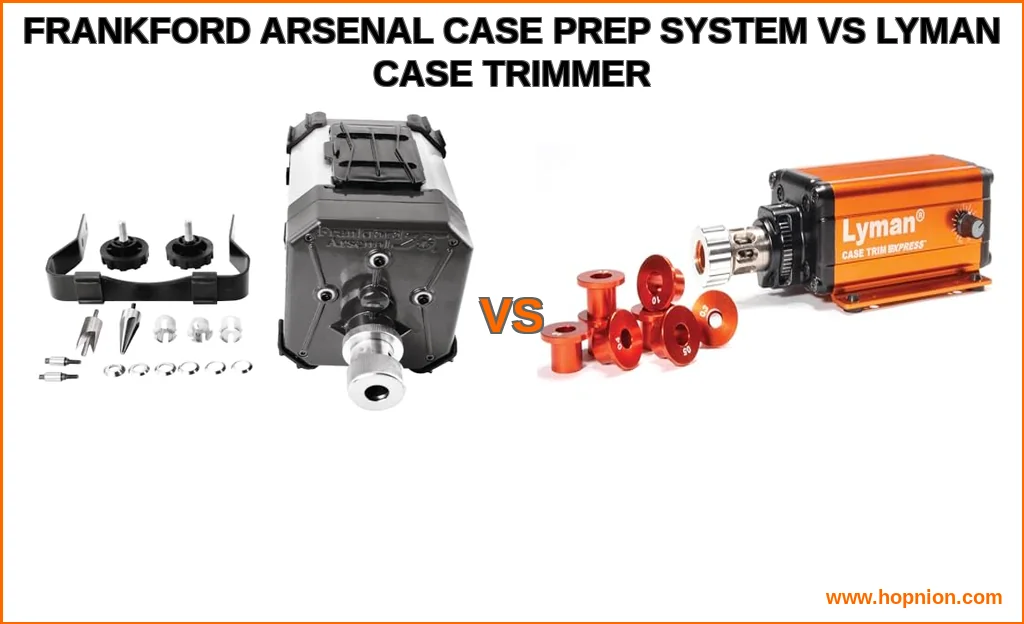
Head-to-Head: Frankford Arsenal Platinum vs Lyman Case Trim Xpress
At first glance, both are motorized case prep stations designed to eliminate hand-cranking. They represent a significant upgrade from a basic manual case trimmer. The core difference lies in their design philosophy and included toolset. Frankford Arsenal packages a complete case prep center, while Lyman focuses intensely on the trimming operation itself.
Heres a foundational look at how they stack up on paper.
| Feature | Frankford Arsenal Platinum Series | Lyman Brass Smith Case Trim Xpress |
|---|---|---|
| Core Function | Case Trim & Prep System | Case Trimmer |
| Operation | Motorized case prep | Motorized case trimmer |
| Case Indexing | Shoulder-indexed with bushings | Shoulder-indexed with bushings |
| Case Range | .17 Rem to .460 Weatherby | Fits most popular bottleneck cases (via bushings) |
| Cutter Type | Hardened High-Speed Steel (HSS) | Carbide |
| Power Source | Integrated motor | Integrated variable-speed motor |
| Included Tools | Trimmer, chamfer, deburr, primer pocket cleaners | Trimmer unit with cutter and bushings |
| Storage | Built-in storage box | Not specified |
| Check current price on Amazon | Check current price on Amazon |
Key Features & Technical Specifications Breakdown
Digging deeper into the specs reveals the nuances that will influence your decision. My honest assessment is that your typical reloading volume is the first filter to apply.
Frankford Arsenal Platinum Series: The All-in-One Workstation
Frankford Arsenal built this system for the reloader who hates switching tools. It’s a consolidated station. The heart is the shoulder-indexing trimmer, which uses an universal shellholder collet system and interchangeable bushings for caliber-specific sizing. This design is praised for promoting consistent case headspace referencing.
- Trimmer & Prep Combo: It includes the trimmer, a separate inside chamfer tool, a deburr tool, and both large and small primer pocket cleaning tools. You can theoretically process a case from dirty to fully prepped in one station footprint.
- Durability Claims: The HSS cutters are marketed to stay sharp for thousands of rounds, and the motor/drivetrain is noted as heavy-duty.
- Organization: A built-in storage box holds the extra tools and bushings, which is a genuine benefit for reloading bench organization and avoiding lost parts.
- Versatility: The adjustable collet covers an enormous range, from .17 Remington to .460 Weatherby.
Lyman Case Trim Xpress: The Dedicated Trimming Powerhouse
Lyman’s entry is a focused tool. It has one primary job: brass trimming, and it aims to do it very well. The unit is self-contained with its own variable-speed motor, removing any need for a separate drill.
- Focused Design: It comes with 10 bushings for popular bottleneck rifle cases. The operation is simple: insert the correct bushing and push the case against the carbide cutter.
- Carbide Cutter: The use of a carbide cutter is a significant point. Carbide is exceptionally hard and resistant to wear, which Lyman emphasizes as “long-lasting.”
- Power & Control: The variable-speed motor allows you to adjust for optimal cutting on different brass, potentially reducing heat and improving cutter life.
- Simplicity: There are no additional tools included. It’s a trimmer. This makes setup and understanding its function very straightforward.
From my honest perspective, this fundamental differenceall-in-one versus dedicated toolis the most critical. It dictates not just your initial cost but your entire case prep workflow. For a deeper dive into setting up an efficient workspace, you can read more on our site.
Performance Analysis: Speed, Accuracy & Consistency
Specs are one thing, but how do they perform where it counts? Both systems index on the case shoulder, which is generally superior to rim-indexing for trim-to-length consistency, especially with mixed brass. This method helps minimize variations caused by differences in the case head.
Speed and Workflow Integration
For pure trimming speed, both are vastly faster than manual methods. The Lyman, with its variable speed and direct “push-to-cut” action, can be incredibly rapid once you get a rhythm. The Frankford Arsenal might have a slight hand-speed advantage if you’re doing chamfer and deburr on the same unit without moving the case, but you’re still switching tool heads.
A factor often overlooked is long-term maintenance requirements. The Frankford Arsenal’s HSS cutter is durable, but carbide (like in the Lyman) typically offers longer life between sharpenings or replacements. However, HSS is usually easier and cheaper to resharpen. Honestly speaking, for the average reloader, both will last years.
Accuracy and Precision
This is the heart of precision reloading. Both manufacturers claim high accuracy through shoulder indexing. The consistency comes down to the precision of the bushings and the rigidity of the tool. User reports often cite excellent results from both when set up correctly. The question of which is more accurate Frankford Arsenal or Lyman case trimmer is less about the tool’s inherent capability and more about the setup and the user’s technique.
A critical step for any reloader is understanding proper case dimensions, and for that, an authority guide like Nosler’s is invaluable. It provides the foundational data your trimmer is trying to achieve.
Handling the Noise and Brass Shavings
Here are some practical realities competitors rarely mention. Motorized case prep is louder than manual trimming. The Frankford Arsenal, running multiple tools, may have different sound profiles. The Lyman’s variable speed allows you to potentially run slower and quieter. Managing brass shavings is also crucial. Both will generate them, and a good vacuum setup nearby is a smart addition to your reloading bench.
Price, Value & What’s Included
You can’t discuss value without considering what’s in the box. The Frankford Arsenal is a complete case prep center. You’re buying a trimmer, a chamfer/deburr tool, and primer pocket cleaners. If you need all those components, the bundle offers clear value.
The Lyman is a specialist. You buy it for trimming. You will need separate tools for chamfer deburr and cleaning the primer pocket. If you already own those tools from a brand like RCBS, or prefer different models, the Lyman lets you invest solely in the trimming step.
My honest take is that for someone building their first serious reloading press setup, the Frankford Arsenal bundle is incredibly convenient. For the experienced reloader looking to upgrade a single bottleneck in their process, the Lyman’s focused excellence is compelling. It truly becomes a question of the best case prep system for high volume reloading versus the best dedicated trimmer.
Final Verdict & Recommendation for Different Users
So, which one deserves a spot on your bench? There’s no single winner, but there is a best choice for different scenarios.
Choose the Frankford Arsenal Platinum Series if:
- You are building or upgrading your entire case prep station and want an integrated solution.
- You value having all tools (trim, chamfer, deburr, clean) in one organized kit.
- You reload an extremely wide variety of calibers, including wildcats within that .17 to .460 range.
- Bench organization and having a dedicated, stocked prep center is a priority.
Choose the Lyman Case Trim Xpress if:
- You already have preferred tools for chamfer, deburr, and primer cleaning and just want to turbocharge trimming.
- You prioritize the perceived durability and long life of a carbide cutter blade.
- You want the control of a variable-speed motor for different brass types.
- You prefer a simpler, single-purpose tool that’s quick to set up for a specific batch job.
- You’re concerned about potential Frankford Arsenal case trimmer motor problems and prefer a unit designed solely for the trimming load.
For the precision long-range shooter who might also use accessories like a stable picatinny mounted bipod, the consistency of either trimmer will serve you well. The Lyman’s simplicity is attractive here.
Addressing Common Questions & Concerns
A few specific points deserve mention. Regarding Lyman universal trimmer pilot sizes, the system uses shoulder bushings, not traditional pilots that go inside the case neck. This eliminates the need for a pilot set for each caliber, relying instead on the included bushings. If you need a bushing for a less common caliber, you must check Lyman’s availability.
Power is another consideration. Both have integrated motors, so no battery options exist. They are bench tools. To be completely honest, the reliability of any motorized reloading accessory is a common concern. While the Frankford Arsenal mentions a heavy-duty drivetrain, and Lyman a strong motor, the long-term durability will always vary by unit. Reading the most recent user reviews for the year is always wise.
Ultimately, the best choice amplifies your efficiency and confidence. Both the Frankford Arsenal Platinum Series and the Lyman Case Trim Xpress are capable tools that represent a major leap forward from manual trimming. Your decision hinges on whether you need a full-service workstation or a world-class specialist. At the end of the day, that’s the Honest Opinion from a detailed, side-by-side look. Now, go trim that brass pile down to size.