
Choosing the right riflescope is a game-changer. It transforms a good shot into a great one. For many hunters, the scope is as critical as the rifle itself. It’s the window to your target, and picking the wrong one can mean missed opportunities. If you’re starting out or upgrading, a solid, affordable rifle like the CVLIFE Hunting Rifle is a popular choice. Pairing it with the right scope makes for a formidable and reliable hunting setup.
This guide cuts through the noise. We’ll break down the core scope types used in hunting, from magnification to reticles. You’ll learn how to match features to your specific game and terrain. Let’s get you dialed in.
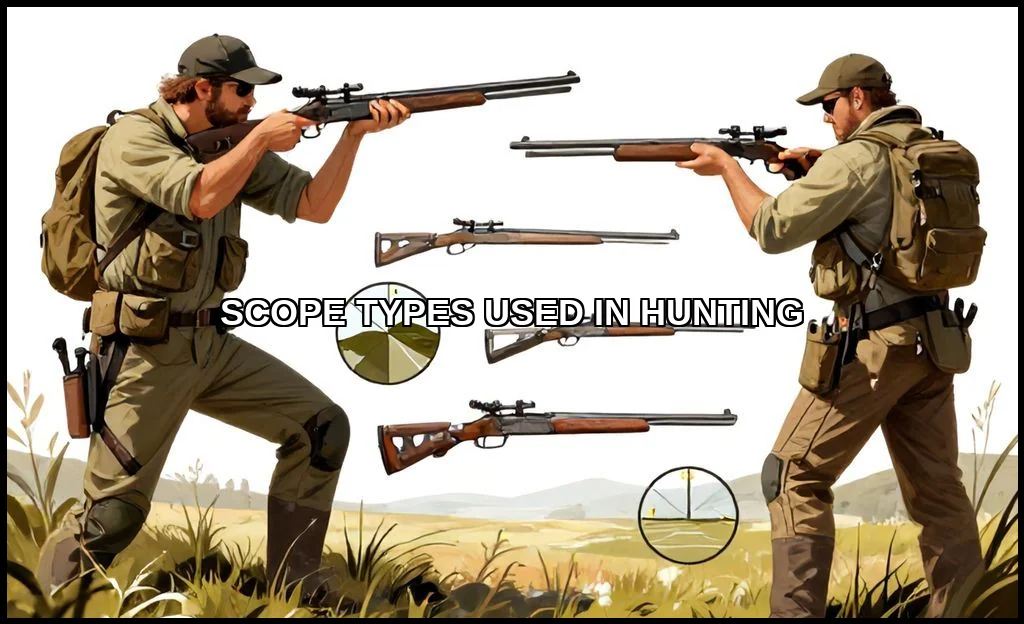
Core Hunting Scope Types: Fixed vs. Variable Magnification
Your first major decision is between fixed and variable power. It defines your scope’s flexibility and, often, its price point.
Fixed Power Scopes: The Simple Specialist
Fixed power scopes have one set magnification, like 4x or 6x. They are famously simple and rugged. With fewer internal moving parts, they’re often more durable and reliable. They also tend to be lighter and offer a brighter sight picture for the money. The trade-off? No flexibility. You’re stuck with that one magnification setting. They excel in predictable environments. Think dense woods for whitetail or still-hunting where shots are consistently under 200 yards.
Variable Power Scopes: The Versatile Performer
Variable power scopes, like a 3-9×40, dominate modern hunting. They offer a range of magnifications, giving you one tool for multiple scenarios. Scan a wide area on low power, then zoom in for a precise shot on high power. This versatility makes them the default choice for most hunters. Modern manufacturing has largely closed the durability gap with fixed power models. For a deep dive on all the scope types available, we have a dedicated resource.
So, which is right for you? If your hunting is highly specialized and you value ultimate simplicity, consider fixed. For 95% of hunters, a variable power scope is the practical, do-it-all answer. It’s the heart of any solid hunting scope magnification guide.
Critical Features: Reticles, Objective Lenses & Light Transmission
Magnification is just the start. The reticle and objective lens define what you see and how well you see it.
Riflescope Reticle Types: More Than Crosshairs
The reticle is your aiming point. Modern options go far beyond a simple duplex.
- Duplex/Standard: Thick outer lines taper to a fine center. Excellent for quick target acquisition in low light. A classic for a reason.
- BDC (Bullet Drop Compensator): Features holdover marks below the center. These correspond to estimated bullet drop at various ranges. Great for ethical shots at unknown distances.
- Mil-Dot/MOA: Reticles with precise measurement scales. Used for advanced range estimation and windage holds. More common in long range hunting scopes.
- Illuminated Reticles: The center dot or crosshair lights up, usually in red or green. Invaluable in deep shadows or against dark backgrounds. Are illuminated reticles worth it for hunting? For dawn, dusk, or hog hunting in thick brush, absolutely.
One critical distinction is focal plane. In a First Focal Plane (FFP) scope, the reticle grows and shrinks with magnification. Holdover marks are accurate at any power. In a Second Focal Plane (SFP) scope, the reticle size stays constant. Holdovers are only accurate at one specific magnification (usually the highest). FFP is for precision long-range; SFP is simpler and more common for general hunting.
Scope Objective Lens Explained: Gateway for Light
The objective lens is the front lens. Its size (e.g., the “40” in 3-9×40) is a major factor in light gathering. Bigger lenses generally capture more light, leading to a brighter image at dawn and dusk. But they add weight, bulk, and can require higher mounting rings.
How to choose objective lens size for hunting? Balance is key. A 40mm or 42mm objective is the sweet spot for most hunters. It offers excellent light transmission without excessive size. For low-light specialists, a 50mm can be worth the trade-offs. Remember the Exit Pupil calculation: Objective Lens Diameter / Magnification. A larger exit pupil (over 4mm) is easier for your eye to use in low light.
Matching Scope Type to Game & Hunting Environment
Your quarry and where you hunt should dictate your specs. A mountain elk hunter and a swamp-based hog hunter need different tools.
| Hunting Scenario | Recommended Magnification | Key Features |
|---|---|---|
| Whitetail in Woods | 1-4x, 2-7x, 3-9x | Wide field of view, fast acquisition, durable. A simple duplex reticle often suffices. |
| Open Country Deer/Elk | 3-9x, 4-12x, 4-16x | Mid-range magnification. BDC reticle helpful. Consider a 44mm+ objective for twilight. |
| Varmint/Long Range | 6-24x, 5-25x | High magnification, side focus parallax adjustment, FFP or precision SFP reticle. |
| Low Light Hog Hunting | 1-6x, 2-7x, 3-9x | Bright optics, illuminated reticle. The best reticle for low light hog hunting is often a simple illuminated dot. |
For example, what magnification scope for 300 yard deer hunting? A 3-9x or 4-12x is ideal. You’ll use the lower end for scanning and the higher end for making an ethical shot. Durability features matter too. Look for fog-proof, waterproof construction (nitrogen purged), and shockproof ratings. Your scope will get bumped, rained on, and experience temperature swings. It must handle it all.
Practical Buying Guide & Mounting Considerations
Armed with knowledge, how do you execute? Let’s talk budget and installation.
Finding Value in Budget Hunting Scopes
You don’t need to spend a fortune for a reliable hunting scope. Brands in the low-to-mid tier now offer impressive clarity, solid construction, and good warranties. Focus on the features you truly need. A 3-9×40 with a duplex reticle from a reputable brand will serve most hunters perfectly. Avoid ultra-cheap scopes that can’t hold zero. For a comprehensive authority guide on selection, the NSSF is an excellent official source.
Scope Mounting for Hunting: The Critical Final Step
A poorly mounted scope ruins everything. It’s not just about tightening screws.
- Use a Quality Base and Rings: This is not the place to cut corners. Match the ring height to your objective lens size.
- Level Everything: Use a scope mounting kit or levels to ensure the scope is perfectly level with the rifle’s action.
- Torque to Spec: Use a torque wrench. Overtightening can crush the tube; undertightening leads to shift.
- Eye Relief: Position the scope so you have a full sight picture without “scope eye.” This is critical for safety and performance.
Proper mounting ensures consistency and accuracy. It locks in your zero. Don’t rush it. Consider professional help if you’re unsure. And for accessories like a stable shooting platform, a Leupold tripod adapter can be a game-changer for glassing.
Choosing a hunting scope is about matching technology to tradition. It’s a blend of optical physics and hard-won field experience. Start with your most common hunting scenario. Prioritize durability and light transmission. A well-chosen scope, like a trusted partner, extends your effective range and your hunting day. It turns challenging shots into confident ones. Now get out there, get it mounted, and go practice. Your next hunt depends on it.