
Choosing a rifle scope can feel like deciphering a secret code. You’re faced with numbers, acronyms, and charts that seem designed to confuse. It’s not just about picking the shiniest optic; it’s about matching a tool’s capabilities to your specific shooting needs.
This guide will decode the scope magnification chart and other key specifications. We’ll break down the jargon so you can confidently select the right optic, whether you’re hunting whitetail or hitting steel at distance. For those seeking a versatile, high-value optic right out of the gate, many experienced shooters start with an option like the AGM Global Vision scope, known for robust features at an accessible price point.
Introduction to Rifle Scope Fundamentals
Think of your scope as the computer for your rifle. It processes variables like range and wind, presenting a solution through its Reticle. The core function is to extend your effective range and improve precision. A good optic selection guide starts with knowing your primary use case.
Is this for fast shots in dense timber, or precise hits on a prairie dog town? Your answer dictates everything from magnification to reticle choice. The broad categories of rifle optic types each serve a distinct purpose.
Understanding Magnification & Objective Lens (The Numbers)
Let’s solve the mystery of “what do the numbers mean on a rifle scope.” A scope marked 3-9×40 has two key figures. The first number (3-9x) is the Magnification range. At 3x, the target appears three times closer than with the naked eye. At 9x, it appears nine times closer.
The second number (40) is the diameter of the Objective Lens in millimeters. A larger lens gathers more light, which can improve image brightness in low-light conditions. This is a key part of riflescope magnification explained.
How to Match Magnification to Your Task
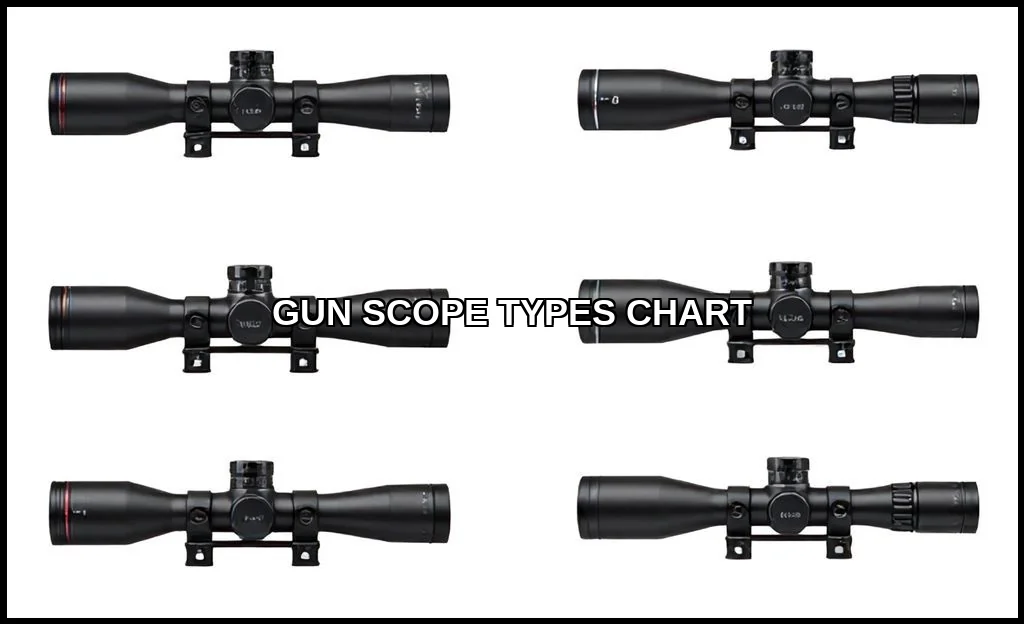
Use this simple framework as your personal scope magnification chart:
- 1-4x or 1-6x: Ideal for close-quarters, fast target acquisition. The classic choice for an AR-15 scope guide focused on home defense or 3-Gun competition.
- 3-9x or 4-12x: The versatile workhorse. Often called the best scope for hunting in mixed terrain from 50 to 300 yards.
- 6-24x or higher: The domain of precision long-range shooting. Necessary for seeing small targets and impacts at extreme distances.
Wondering about the best scope magnification for 300 yards? For a target the size of a deer’s vitals, a scope in the 3-9x to 4-16x range is perfectly adequate. Higher power helps with precise shot placement, but field of view shrinks.
Reticle Types: From Duplex to BDC & Mil-Dot
The reticle is your aiming point and your calculator. Choosing the right pattern is as important as choosing the right magnification. Heres a quick reticle comparison guide.
Simple Duplex
The classic thick-post, thin-crosshair design. It’s fast, uncluttered, and excellent for low-light hunting. It lacks holdover points for longer ranges, however.
Bullet Drop Compensator (BDC)
BDC reticles have marked holdover points calibrated for a specific cartridge and bullet weight. They allow for rapid shooting at varying ranges without dialing the turrets. Great for hunters and tactical shooters who need speed.
Mil-Dot and MOA-Based Reticles
These are the tools for precision. Marks are spaced in angular measurementseither MIL (Milliradian) or MOA (Minute of Angle). This allows you to measure target size, estimate range, and correct for wind and bullet drop with high precision. This is the heart of a true long range scope reticle.
The debate between MOA and MIL dot scopes is common. MOA (1.047″ at 100 yards) is slightly more intuitive for shooters who think in inches. MIL (3.6″ at 100 yards) is based on the metric system and is often preferred in tactical and long-range communities for its ease of mental math. Understanding scope MOA and MIL explained is a foundational skill.
First Focal Plane vs. Second Focal Plane (FFP vs SFP)
This is a critical distinction that trips up many shooters. It answers the question of how to choose between first and second focal plane.
- Second Focal Plane (SFP): The reticle size stays constant as you zoom. The hash marks are only accurate at one magnification (usually the highest). Very common on hunting scopes.
- First Focal Plane (FFP): The reticle grows and shrinks with magnification. The subtension measurements (MIL or MOA) are accurate at every power level. Essential for long-range shooting where you might range or holdover at mid-magnification.
For a hunter taking a steady shot at known distance, SFP is fine. For a precision shooter using the reticle to measure and compensate, FFP is non-negotiable. This choice fundamentally changes how to read a scope chart for that specific model.
How to Use a Scope Chart & Make Your Selection
Manufacturer spec sheets are your best friend. A proper scope specifications explained session involves more than just magnification. Heres what to look for on the chart and why it matters.
Key Specifications to Decode
| Specification | What It Means | Why It Matters |
|---|---|---|
| Field of View (FOV) | Width of view at 100 yards. | Wider FOV helps find and track moving targets. |
| Eye Relief | Distance from eyepiece to your eye for full view. | Critical for safety with heavy-recoiling rifles. |
| Adjustment Range | Total travel of windage and elevation turrets. | Dictates how far you can mechanically adjust for bullet drop. |
| Tube Diameter (1″, 30mm, 34mm) | Main body tube size. | Larger tubes offer more adjustment range and are often more robust. |
Mounting, Zeroing, and the Final Step
Your perfect scope is useless if it’s not mounted solidly. Use quality rings and a base, and torque them to specification. This is where attention to detail pays off. For certain optics, like some high-magnification spotting scopes, stability is everything, a principle that applies doubly to rifle scopes.
Zeroing is the process of aligning your point of aim with your point of impact at a specific range. A 100-yard zero is standard for many rifles. Remember, the difference between a tactical vs hunting scope often comes down to turret designhunting scopes may have low-profile, capped turrets, while tactical scopes feature exposed, tactile turrets for rapid adjustments.
For a comprehensive, step-by-step authority guide on this entire process, the National Shooting Sports Foundation offers an excellent official source that dives even deeper.
Selecting a rifle scope is a series of intentional trade-offs. You balance magnification against field of view, simplicity against precision, and weight against durability. There is no single “best” scope, only the best scope for your rifle, your ammunition, and your specific mission. Start with your shooting goal, use the charts to narrow the field, and you’ll find an optic that feels less like a piece of gear and more like an extension of your own vision.