
Choosing the right optic for your AR rifle can feel overwhelming. The sheer number of options is staggering. But it’s not about finding the single “best” scope. It’s about matching the right tool to your specific mission. Whether you’re defending your home, hunting deer, or competing in a 3-Gun match, the ideal optic changes. This guide cuts through the noise.
We’ll break down the core scope types for the AR platform. You’ll learn how magnification, reticles, and durability intersect with real-world use. For shooters needing versatility at a value, the MidTen 4-16×50 AO offers a compelling feature set for medium to long-range work. Let’s get your rifle properly equipped.
Core Scope Types for the AR Platform
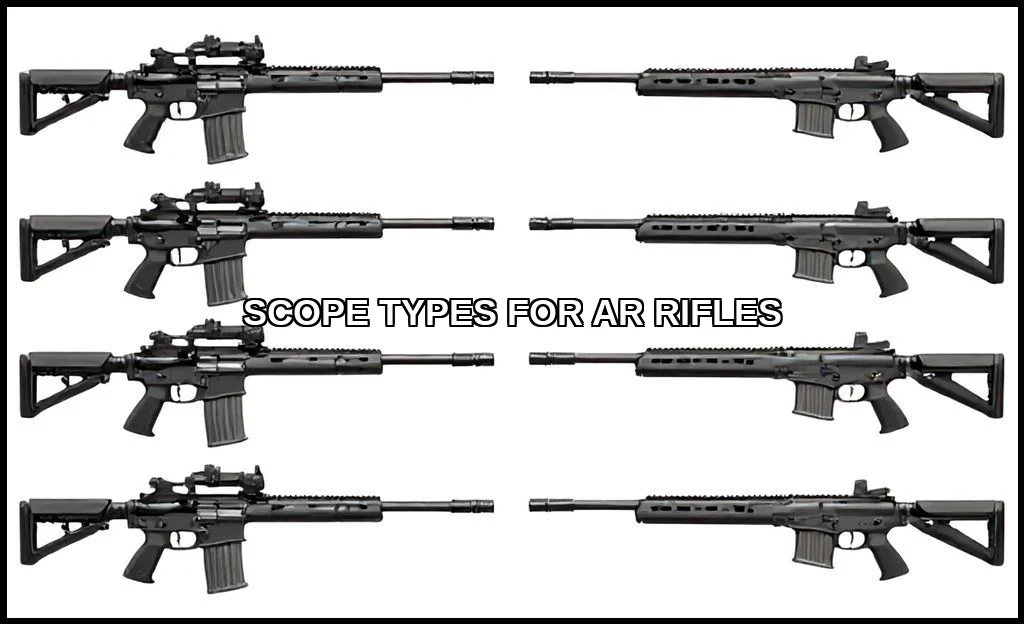
Your AR-15 scope decision branches into two main paths: non-magnified and magnified. Each category has distinct champions built for different tasks. Knowing these fundamental optic types is the first step to a smart choice.
Non-Magnified & Close-Quarters Optics
Speed is king here. These optics are designed for rapid target acquisition at close ranges, typically inside 100 yards.
- Red Dot Sight: The quintessential close quarters combat optic. It projects a simple illuminated dot (usually measured in MOA) onto a lens. Both eyes open, ultra-fast. Perfect for home defense and dynamic shooting.
- Holographic Sight: Like a red dot but uses a laser and holographic reticle. Often has a more complex reticle (like a circle-dot) and can be easier for shooters with astigmatism. The viewing window also tends to be more forgiving.
These are your “point and shoot” solutions. They excel where split seconds matter.
Magnified Optics for Precision
When you need to see and hit smaller targets at distance, magnification becomes non-negotiable.
- LPVO (Low Power Variable Optic): The modern do-it-all champion. An LPVO scope, like a 1-6x or 1-8x, gives you a true 1x for close-range speed and variable magnification for precise shots out to 500+ yards. It’s the Swiss Army knife of AR platform optics.
- Prismatic Scope: A fixed-magnification optic (e.g., 3x or 5x) with an etched glass reticle. It doesn’t rely solely on a battery, and the reticle is often crystal clear for those with astigmatism. Think of it as a rugged, simplified magnified optic.
- ACOG: The legendary Advanced Combat Optical Gunsight by Trijicon. A fixed-power prismatic scope known for incredible durability, a bright fiber-optic/tritium illuminated reticle, and Bindon Aiming Concept for close-range use.
Magnification brings the target to you. But it also adds complexity in eye relief and field of view.
The Hybrid Solution: Red Dot & Magnifier
Can’t decide between speed and precision? This combo gives you both. A red dot sight is paired with a flip-to-side magnifier (typically 3x or 5x). It’s a modular system. Flip the magnifier down for 1x speed. Flip it up for magnified precision. It’s a popular alternative to the LPVO, especially for those who live on the red dot but occasionally need more reach.
The debate of LPVO vs red dot magnifier for AR is a hot one. It often comes down to personal preference and primary use case.
Matching Your Optic to the Purpose
Your rifle’s job dictates the gear. A competition gun and a home defense rifle have wildly different needs. Let’s align your mission with the hardware.
Home Defense & Close-Quarters Combat (CQB)
This scenario is about low-light performance and instinctive shooting inside 50 yards. You need a wide field of view and unlimited eye relief.
- Primary Choice: Red dot or holographic sight. Their speed is unmatched.
- Consider: A prismatic scope with illumination (like a 1x or low-power model) can be excellent, especially if you have an astigmatism. The etched reticle is always there.
- Avoid: High-magnification optics. They are too slow and have too narrow a field of view for tight spaces.
Hunting & Medium to Long-Range Shooting
Here, precision and clarity at distance are paramount. You need to make an ethical shot on an animal or hit a steel plate consistently.
- Primary Choice: A traditional variable-power rifle scope (3-9x, 4-12x, etc.) or a higher-power LPVO (1-8x, 1-10x). For an AR-10 in .308, you’re likely asking, how to choose a scope for an AR-10? The principles are the same, but you’ll want a scope built to handle heavier recoil.
- Consider: Reticle choice becomes critical. A BDC (Bullet Drop Compensator) or mil-based reticle helps with holdovers. This is where a scope like the MidTen 4-16×50 AO shines, offering adjustable objective (AO) for parallax correction at varying ranges.
Competition & Multi-Gun
3-Gun and similar sports demand versatility. You’ll engage paper at 5 yards and steel at 400 yards in the same stage.
- Primary Choice: The 1-6x or 1-8x LPVO is the undisputed king of modern competition. It provides the perfect blend of speed and precision.
- Consider: A red dot/magnifier combo is still a strong contender, especially for shooters who prefer the absolute speed of a red dot on most targets.
Critical Features Beyond Magnification
Magnification gets the headlines, but the details make the difference. Ignore these at your peril.
Reticle Placement: FFP vs SFP
This is a major decision in tactical rifle scopes.
- First Focal Plane (FFP): The reticle grows and shrinks with magnification. Holdover marks (mils or MOA) are accurate at every power. Essential for long-range, unknown-distance shooting.
- Second Focal Plane (SFP): The reticle stays the same size. Holdovers are only accurate at one specific magnification (usually the highest). Simpler, and often less expensive.
For dynamic use, many prefer FFP. For hunting at known distances, SFP is often perfectly adequate.
Eye Relief, Parallax & Durability
These specs separate good optics from great ones.
- Eye Relief: The distance your eye must be from the ocular lens to see the full picture. Longer eye relief is more forgiving, especially on heavy-recoiling rifles.
- Parallax: An aiming error caused by the target image and reticle not being on the same focal plane. Higher-magnification scopes often have a side or adjustable objective (AO) knob to correct it. The MidTen 4-16×50 AO has this feature built into its objective bell.
- Durability: Look for fog-proof, waterproof, and shockproof ratings. A scope that can’t hold zero is useless. Brands like Leupold have built reputations on ruggedness.
Buying Guide: Mounting, Budget & Final Tips
You’ve picked the perfect optic. Now you have to attach it correctly and not break the bank.
Mounting Systems & Compatibility
A great scope in a bad mount is a waste. The AR platform typically uses a Picatinny rail on the upper receiver.
- Ring Height: Get the scope low, but ensure the objective bell clears the handguard. Medium rings are a common starting point.
- Mount Type: A one-piece cantilever mount is the standard for ARs. It extends over the handguard, allowing proper eye relief while keeping the rings on the receiver’s solid rail.
- Torque it Right: Use a quality torque wrench. Overtightening strips screws. Undertightening loses zero. Follow the manufacturer’s specs.
Budget vs. Premium Scope Tiers
You get what you pay for, but there are great values at every level.
| Tier | Price Range | What to Expect | Best For |
|---|---|---|---|
| Entry-Level | $100 – $300 | Basic features, SFP, decent glass. May lack ultimate durability. | Plinking, learning, budget builds. |
| Mid-Range | $300 – $800 | Good glass, reliable turrets, often FFP options, solid construction. | Serious hunting, competition, duty use. The “sweet spot” for most. |
| Premium | $800+ | Exceptional glass clarity, bomb-proof construction, advanced features, perfect tracking. | Professionals, elite competitors, where failure is not an option. |
For a detailed breakdown on evaluating quality, this authority guide is an excellent resource.
Final Recommendations & Tips
- Define your primary use first. Don’t buy a long-range scope for CQB.
- If you have astigmatism, look through a prismatic scope or holographic sight before buying a red dot. Are prism scopes good for astigmatism? Often, yes. The etched reticle appears sharper.
- For a general-purpose 16-inch AR-15, the perennial question is what is the best scope for a 16 inch AR-15? A 1-6x LPVO or a red dot/magnifier combo are the top contenders for their versatility.
- Invest in a good mount. It’s the critical link between your rifle and your optic.
The right optic transforms your AR from a firearm into a precision tool. It bridges the gap between your intent and the target. Start by honestly assessing what you’ll actually do with the rifle. Match the technology to that task. Test different types if you can. Your eyes and your shooting style will have the final vote. A well-chosen scope doesn’t just help you see better. It helps you shoot better. And that’s the entire point.