

Choosing the right scope for your hunting rifle isn’t just about picking a piece of glass. It’s about matching a sophisticated optical system to your specific quarry, terrain, and personal shooting style. The wrong choice can turn a clean, ethical shot into a frustrating miss. For hunters just getting started or looking for a reliable, budget-friendly platform, many find success with a solid rifle like the CVLIFE Hunting Rifle. It’s a practical choice that allows you to focus your investment on the optics, which truly make the difference.
Think of your scope as the command center for your hunt. It gathers light, clarifies your target, and provides the precise aiming point for your shot. This guide will break down the core scope types and features, helping you navigate from magnification to mounting.
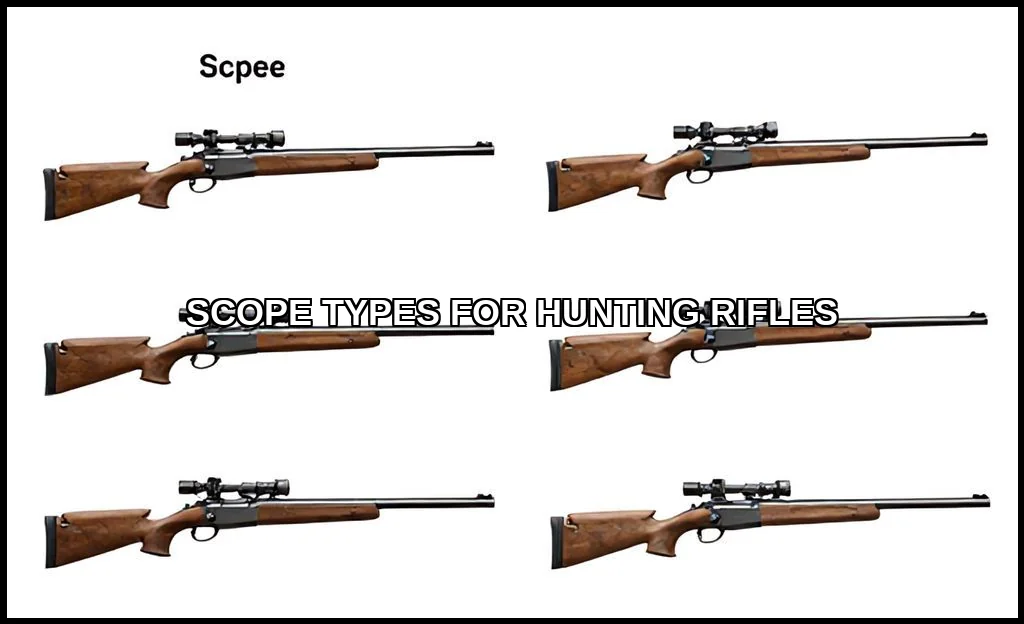
Rifle Scope Fundamentals: More Than Just Zoom
Before diving into specifics, let’s establish a common language. Every scope has an objective lens (the front), an ocular lens (the rear you look through), and a tube body housing the erector system. This internal assembly moves to change magnification and adjust the reticle. Your primary controls are the windage and elevation turrets for zeroing, and often a parallax adjustment dial for long-range clarity. Grasping these basics is key to using any advanced feature effectively.
Magnification Types: Fixed vs. Variable Power Scopes
This is your first major decision. Do you want a single magnification or the flexibility to zoom? Your hunting environment usually dictates the answer.
The Case for Fixed Magnification Scopes
Fixed power scopes, like a classic 4x or 6x, are marvels of simplicity. They have fewer internal moving parts, which often translates to greater durability, lighter weight, and a brighter image for the price. The field of view is typically wider than a variable scope set to the same power. They force a disciplined, “set and forget” approach that works brilliantly in dense woods or for driven game where shots are quick and close. So, are fixed power scopes still good for hunting? Absolutely. For brush hunting whitetail or stalking in thick timber, their reliability and speed are hard to beat.
The Versatility of Variable Power Scopes
Variable power scopes, like a 3-9×40 or 4-16×50, are the Swiss Army knives of the optics world. They allow you to adapt to changing conditions instantly. Scan a wide meadow on low power, then zoom in for a precise shot at a distant animal. This adaptability makes them the default choice for most North American big game hunters. A common question we hear is, what magnification scope for 300 yard deer hunting? A 3-9x or 4-12x variable is an excellent fit, offering enough top-end magnification for a confident shot while keeping the lower end useful for closer encounters.
For a deeper dive into optical specs, Leupold’s authority guide is a fantastic official source.
Reticle Designs and Their Hunting Applications
The reticle is your aiming point. Its design can simplify shooting or add complex data for precision. Choosing the right one is a critical step in selecting your best scope for deer hunting or any other game.
Standard Duplex and Its Variants
The simple duplex reticlethick outer posts tapering to a fine center crosshairremains wildly popular for good reason. It’s fast to acquire, uncluttered, and the thick posts naturally draw your eye to the center. It’s perfect for the vast majority of big game shots inside 300 yards. Modern versions often include illuminated center dots or circles for low-light conditions, addressing the need for low light hunting scopes.
Bullet Drop Compensator (BDC) Reticles
A Bullet Drop Compensator (BDC) reticle has additional aiming points below the center crosshair. These hashmarks are calibrated (often for a specific cartridge and muzzle velocity) to account for bullet drop at extended ranges. Instead of dialing your elevation turret, you simply hold over using the appropriate mark. They require practice and understanding of your ballistics, but they speed up shots on prairie dogs, coyotes, or elk across a canyon.
Mil-Dot and MOA-Based Reticles
These are the tools of the precision shooter and are central to long range hunting optics. Mil-dot and MOA reticles use precise, standardized measurements (milliradians or Minutes of Angle) for both holdover and windage estimation. They allow for accurate shooting at unknown distances and communicating adjustments with a spotter. They demand more knowledge but offer ultimate flexibility.
First Focal Plane vs. Second Focal Plane: A Critical Distinction
This technical point matters most with ranging and holdover reticles. In a First Focal Plane (FFP) scope, the reticle grows and shrinks with magnification. The subtensions (like Mil dots) are always correct at any power, enabling range estimation and holdovers on any setting. In a Second Focal Plane (SFP) scope, the reticle size stays constant. Its subtensions are only accurate at one specific magnification (usually the highest). How to choose between first and second focal plane? FFP is superior for long-range, dial-and-hold versatility. SFP is more common, often less expensive, and keeps a fine aiming point at high power, which many hunters prefer.
Specialized Features for Different Game
Beyond magnification and reticles, specific features cater to specific hunts.
- Illuminated Reticles: A must-have for dawn, dusk, or hunting in dark timber. They prevent the reticle from disappearing against a dark animal’s hide. For the best reticle for hog hunting at night, a simple illuminated dot or circle is incredibly effective.
- Parallax Adjustment: Often called a “side focus,” this feature sharpens the reticle and target image by eliminating parallax error. It’s essential for precision at longer ranges and is a hallmark of dedicated varmint or long range hunting optics.
- Low Light Performance: This is determined by objective lens size, glass quality, and fully multi-coated lenses. A larger objective (50mm, 56mm) gathers more light, but requires higher rings. Premium glass provides a clearer, brighter image in the critical last minutes of shooting light.
Mounting Systems and Practical Considerations
The best scope is useless if it’s not mounted solidly. Proper mounting ensures repeatable zero and reliability.
Ring and Base Systems
You have two main choices: separate rings and bases, or one-piece mounts. Picatinny/Weaver rails offer the most flexibility for positioning. Quality matters immensely hereskimping on mounts can undo the performance of a premium scope. The correct scope mounting height is vital for a consistent cheek weld and eye alignment. You want the lowest height that clears the rifle’s barrel and bolt handle without contact.
Final Steps: Leveling, Torquing, and Zeroing
- Level the rifle in a vise, then level the scope reticle to it. A canted reticle causes missed shots at distance.
- Use a torque wrench to tighten ring screws to the manufacturer’s specification. Over-tightening can damage the scope tube.
- Bore sight to get on paper, then fire your groups to establish a solid zero. Remember, your zero can change with different ammunition.
For mounting accessories like a tripod adapter, a stable platform is key for glassing.
Putting It All Together
There is no single “best” scope. The optimal choice is a balance of priorities. A mountain hunter prioritizes weight. A whitetail hunter in the Midwest needs excellent low-light performance. A western hunter chasing mule deer across basins needs a versatile magnification range and a reticle capable of longer shots. Start by honestly assessing your most common hunting scenario. Let that guide your budget toward the features that matter mostoften, better glass trumps higher magnification. Test different scopes if you can. Feel the turrets, look through the glass at dusk, and see which reticle your eye finds naturally. Your scope is your primary interface with the hunt. Choosing wisely builds confidence, and confidence leads to success.