
Choosing a rifle scope is more than just picking a magnification range. The reticle design and its relationship to the magnification system fundamentally change how you shoot. It’s the difference between a tool that works with you and one you have to work around. For shooters looking to integrate advanced thermal imaging with their optics setup, many professionals are turning to the AGM Global Vision series, which offers robust thermal scopes and clip-on systems that pair well with traditional daylight optics.
Your reticle is your aiming point, your rangefinder, and your windage guide. But not all reticles behave the same way when you turn the magnification ring. This is where the core concept of focal planes comes in, dictating whether your subtension measurements stay constant or change. Let’s break it down.
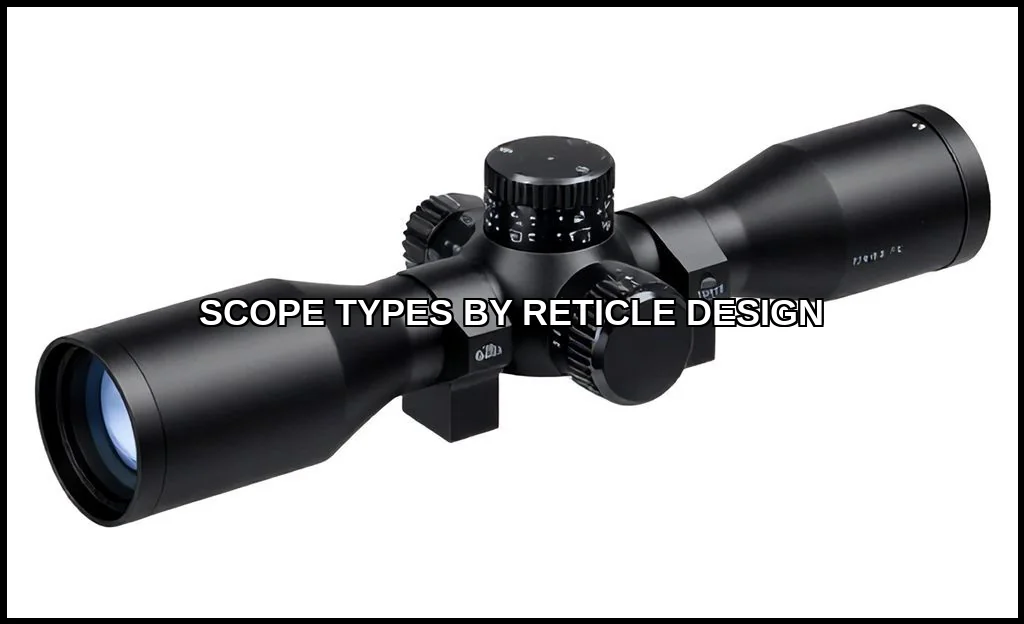
Reticle Design and Scope Types: The Foundation
Before diving into focal planes, you need a grasp on reticle basics. A reticle is the pattern of lines or dots you see when you look through the scope. Its design dictates its function. A simple duplex crosshair is perfect for quick target acquisition at known distances. A mil-dot reticle uses precise dots or hash marks for measuring target size and distance. A BDC reticle (Bullet Drop Compensator) has holdover points calibrated for a specific cartridge’s trajectory.
More complex designs, like the popular Christmas tree reticle, offer a vertical “tree” of windage and elevation holds for engaging targets at extreme ranges without touching the turrets. The choice here is deeply personal and application-specific. For a broader look at how reticles fit into the bigger picture, our guide on optic types and characteristics is a great resource.
Deep Dive: First Focal Plane (FFP) Scopes
In a First Focal Plane (FFP) scope, the reticle is placed in front of the magnification lenses. This placement has one critical effect: the reticle grows and shrinks in apparent size as you change magnification. At low power, the reticle appears small and fine. At high power, it appears larger and thicker.
Why does this matter? Because the angular measurements in the reticlewhether in MILs or MOAremain true at any magnification. The space between two hash marks (its subtension) always represents the same angular measurement (e.g., 1 Mil) on the target. This is the core of first focal plane explained.
- Primary Advantage: Consistent, accurate holdovers and ranging at any magnification setting. This is non-negotiable for long-range or tactical scope use where you might need to range a target or apply a wind hold at an intermediate magnification.
- Key Consideration: At very low magnification, the fine reticle can be hard to see, especially in low light or against a complex background. Conversely, at maximum magnification, a thick reticle might obscure small targets.
This design is why the debate around are first focal plane scopes better for hunting is nuanced. For a hunter taking a steady, ranged shot at long distance, FFP is fantastic. For a hunter in dense timber needing a quick shot at a moving animal at low power, the fine reticle can be a drawback.
Deep Dive: Second Focal Plane (SFP) Scopes
In a Second Focal Plane (SFP) scope, the reticle sits behind the magnification lenses. Here, the reticle stays the same apparent size in the eyepiece regardless of the scope magnification you dial. Turn the magnification ring, and the target image zooms in or out, but the reticle’s size stays constant.
This creates a crucial condition: the reticle’s subtension measurements are only accurate at one specific magnification, almost always the highest power. This is the central fact in any FFP vs SFP comparison. If you try to use a mil-dot for ranging at half power, your calculation will be off by a factor of two.
- Primary Advantage: A reticle that is consistently visible and usable at all magnifications. It’s often thicker and bolder, making for fast target acquisition. These are the classic second focal plane advantages.
- Key Consideration: You must be disciplined about your magnification setting if you plan to use the reticle for holdovers or ranging. For simple “set-and-forget” BDC use or hunting at known distances, this is less of an issue.
SFP scopes dominate many hunting and recreational shooting markets because of their simplicity and cost-effectiveness. The reticle is always there, bold and clear, which aligns perfectly with fast-paced shooting scenarios.
Comparing FFP vs SFP: Pros, Cons, and Best Uses
So, what is the difference between FFP and SFP scopes in practical terms? It boils down to workflow and forgiveness. Let’s put them side-by-side.
| Feature | First Focal Plane (FFP) | Second Focal Plane (SFP) |
|---|---|---|
| Reticle Size | Changes with magnification | Stays constant |
| Subtension Accuracy | Accurate at ALL magnifications | Accurate only at designated power (usually max) |
| Low-Light Visibility | Can be poor at low power | Typically excellent at all powers |
| Long-Range Precision | Superior for holds/ranging at any zoom | Requires magnification management |
| Best For | PRS/NRL competition, tactical/military use, precision long-range hunting | General hunting, recreational shooting, varminting, scenarios requiring fast acquisition |
The choice isn’t about “better” or “worse.” It’s about matching the tool to the task. An FFP scope gives you a flexible, precision instrument. An SFP scope gives you a simple, rugged, and fast tool. For more detailed guidance on selecting the pattern itself, this authority guide on reticles is an excellent official source.
Choosing the Right Reticle and Scope for Your Application
Your shooting discipline should drive your decision. This is where application-based reticle selection becomes critical.
For Long-Range & Precision Shooting
If you’re asking about the best reticle for long range shooting, the answer almost always involves an FFP scope. The ability to use a holdover reticle like a Christmas tree or a finely graduated mil-dot reticle at any magnification is a massive tactical advantage. You can spot your own misses, make rapid corrections, and engage targets at unknown distances without fiddling with the magnification ring. The entire system is designed for a ballistic reticle design that works in harmony with your turrets.
For Hunting
The hunting answer is, “it depends.” For western mountain hunting or long-range prairie dog stands, an FFP scope with a simple tree reticle is incredibly powerful. For most whitetail or woodland hunting, where shots are under 300 yards and speed is key, a bold SFP duplex or a simple BDC reticle is often ideal. Just remember, how does a BDC reticle work? It’s typically calibrated for a specific load at a specific magnification. You must verify your drops with your actual ammunition.
For Tactical & Defense
The modern trend strongly favors FFP for serious tactical scope use. In a dynamic situation, you may not have the luxury of dialing your scope to a specific power before taking a shot. An FFP scope ensures your holds are correct whether you’re at 4x or 14x. This reliability under stress is paramount.
Remember, your optics system can be modular. A high-quality daylight scope can be complemented by a dedicated thermal unit, like those from AGM Global Vision, for 24-hour capability. Ensuring compatibility, perhaps with a universal Leupold-style adapter for mounting, is part of building a cohesive kit.
Your scope is an interface between you and your target. The focal plane decision dictates how you interact with that interface. An FFP scope demands more initial understanding but offers unbounded flexibility. An SFP scope is intuitive and fast but requires you to play by its rules on magnification. There’s no universal winner. Test both if you can. Feel how the reticle behaves. Your preferred style of shooting will tell you which one feels like an extension of your intent, and which one feels like a piece of equipment you’re just operating. That feeling is the answer you’re looking for.