

Stepping into the world of rifle optics can feel overwhelming. You’re faced with a dizzying array of numbers, acronyms, and features, all promising to make you a better shot. But for a beginner, the goal is simple: find a scope that’s easy to understand, reliable, and helps you hit your target consistently without breaking the bank.
This guide cuts through the noise. We’ll walk through the core concepts every first time scope buyer needs to know, from deciphering magnification to mounting your scope correctly. You’ll finish with clear, actionable recommendations to make your first purchase a confident one. For many new shooters, a great starting point is pairing this knowledge with a versatile, entry-level rifle like the UUQ 3-940 Rifle. It’s a solid platform for learning the fundamentals of marksmanship and scope use.
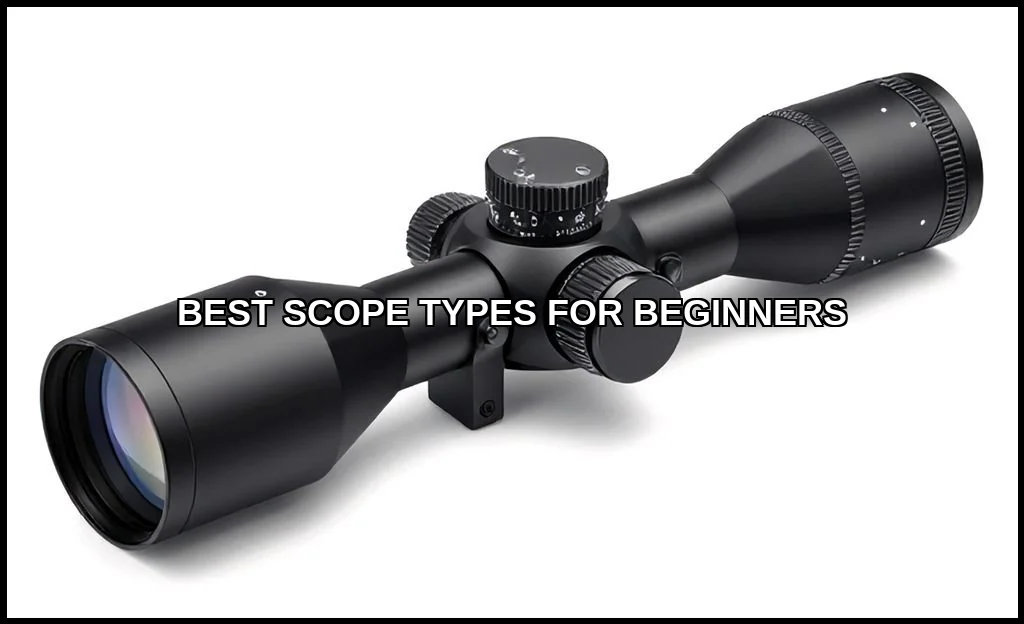
Understanding Scope Fundamentals: Magnification & Objective Lens
Let’s start with the numbers you see on every scope, like 3-9×40. The first part (3-9x) is the scope magnification explained. A 3-9x scope zooms from 3 times closer (3x) to 9 times closer (9x) than what your naked eye sees. Lower magnification (like 1-4x or 2-7x) offers a wider field of view for closer, faster targets. Higher magnification (like 4-12x) is better for precise shots at longer distances.
The second number (40 in 3-9×40) is the diameter of the objective lens in millimeters. A larger lens gathers more light, which can mean a brighter image in low-light conditions. However, it also makes the scope taller and heavier. For most beginner applicationsplinking, target shooting, or hunting in decent lightan objective lens between 32mm and 44mm is a perfect balance.
So, what is the best scope magnification for a beginner? For a do-it-all first scope, a 3-9×40 is the gold standard. It’s versatile enough for everything from a scope for .22 rifle to a first hunting scope for deer. If you’re exclusively shooting a .22LR at 50-100 yards, a fixed 4x or a compact 2-7x scope is also an excellent, simple choice.
Scope vs Red Dot: Picking Your Sight Picture
Before we go further, let’s address a common beginner question: scope vs red dot. A red dot sight uses an illuminated dot as an aiming point. It has no magnification, so both eyes can stay open for fast target acquisition at close ranges. It’s fantastic for home defense or fast-paced shooting sports.
A riflescope provides magnification and a more precise aiming system (the reticle). It’s designed for accuracy at distance. For learning marksmanship fundamentals, hunting, or precision target shooting, a traditional scope is usually the better tool. Think of it this way: a red dot helps you point quickly, a scope helps you aim precisely.
Choosing the Right Reticle: From Duplex to BDC
What is a reticle? It’s the crosshair or pattern you see when you look through the scope. It’s your aiming reference. The simplest and most beginner-friendly is the standard Duplex. It has thick outer posts that taper to a fine crosshair in the center. It’s uncluttered, fast to use, and works in almost any situation.
More advanced reticles include Bullet Drop Compensator (BDC) models. These have additional marks below the center crosshair to account for bullet drop at different ranges. They can be helpful, but require you to know your exact load and distance. For a simple scope setup, a clean Duplex reticle is hard to beat.
Are illuminated reticles good for beginners? They can be, but they’re not essential. An illuminated reticle lights up the crosshair, often in red or green. This is a major advantage in low-light dawn or dusk hunting situations. However, it adds cost and complexity. You can absolutely start with a non-illuminated reticle and add that feature later as your needs evolve. For a deeper dive on patterns, explore our guide on optic types and characteristics.
Mounting, Zeroing, and Eye Relief: Getting Started Right
This is where many new shooters get tripped up. A scope must be mounted solidly and aligned correctly to work. How to mount a scope properly is a non-negotiable skill. You’ll need a set of scope rings and a base that fits your rifle’s mounting system. Use a torque wrench to tighten the screws to the manufacturer’s specificationovertightening is a common mistake.
Three critical concepts come into play here:
- Eye Relief: This is the distance your eye must be from the rear lens to see the full sight picture. It’s not adjustable on the scope; you achieve it by moving the scope forward or backward in the rings. Get it wrong, and you’ll get a black ring around your view or, worse, a “scope bite” from recoil.
- Parallax: An optical effect where the reticle appears to move on the target if your head moves. Most budget scopes have a fixed parallax setting (often at 100 yards), which is fine for beginners. Higher-end scopes have a side knob to adjust it out.
- MOA: Minute of Angle. It’s the unit of measurement for windage and elevation adjustments on your scope turrets. Understanding that 1 MOA is roughly 1 inch at 100 yards (2 inches at 200, etc.) is key to making precise adjustments when you zero.
Zeroing is the process of aligning your point of aim with your point of impact at a specific distance. For a .22LR, 50 yards is common. For a centerfire hunting rifle, 100 yards is standard. Always consult an official safety guide before live-fire practice. Remember, a secure mount is the foundation. Using quality accessories, like a stable tripod adapter, can further enhance your shooting platform.
Top Scope Recommendations for Beginners: Budget & Use-Case
Let’s translate theory into practice. Here are trusted categories and examples to consider. These represent the best value in affordable rifle scopes today.
Best All-Around Starter Scope
The 3-9×40 variable magnification scope reigns supreme. Models from Vortex (Crossfire II), Leupold (Freedom), and Bushnell (Banner) in the $150-$250 range offer exceptional clarity, durability, and warranties for the price. They are the perfect companion for a first hunting scope on a deer rifle or a robust optic for a .22.
Best Budget Scope Under $200 for a Beginner
If your budget is tight, don’t worry. The Simmons 3-9×32 or the Tasco World Class 3-9×40 have been introducing shooters to optics for decades. For a dedicated scope for .22lr for plinking, the compact CVLife 2-7×32 offers surprising performance for minimal investment. Just manage your expectations on extreme edge clarity and low-light performance.
Optics for Specific Beginner Tasks
| Use Case | Recommended Specs | Notes |
|---|---|---|
| .22LR Plinking/Target | Fixed 4x or 2-7×32 | Lightweight, simple, fun. Perfect for learning. |
| Deer Hunting (Woods) | 1-4x or 1-6×24 | Low magnification for fast shots in cover. |
| Deer Hunting (Open Fields) | 3-9×40 or 4-12×40 | The classic. Enough magnification for ethical shots. |
Beginner Mistakes to Avoid & Next Steps
You’re almost ready. Let’s sidestep the common pitfalls that frustrate new shooters.
- Buying Too Much Magnification: A huge 6-24×50 scope on a lightweight hunting rifle is awkward, heavy, and has a tiny field of view. Match the optic to the rifle’s purpose.
- Skimping on the Mount: The best scope in the world is useless if it wobbles in cheap rings. Allocate part of your budget for quality mounting hardware.
- Ignoring Eye Relief: Position the scope in the rings so you have a full, clear picture with your head in a natural, repeatable position. Have a friend check it.
- Forgetting the Fundamentals: A scope is a tool to enhance good shooting. It won’t fix a flinching trigger pull or poor breathing. Practice the basics first.
Your next step is to handle some scopes in person if you can. Look through them in different light. Feel the controls. Read the manuals. The market for beginner rifle scopes has never been better, with brands fiercely competing to offer the best features at entry-level prices.
The journey from a scope guide for new shooters to a confident, equipped marksman is exciting. Start with the fundamentals we’ve covered: sensible magnification, a simple reticle, and a rock-solid mount. Choose a reputable scope within your budget that matches your primary shooting activity. Remember, the best beginner scope isn’t the most expensive or feature-packedit’s the one that gets out of your way and lets you focus on learning. Get it mounted, get it zeroed, and put rounds downrange. That’s where the real education begins.