

When it comes to leupold binocular, many homeowners face a surprising array of frustrations that go far beyond simple magnification. It’s not just about seeing farther; it’s about seeing better, with confidence, in conditions that often work against you. You might be dealing with shaky images at high power, a view that turns murky at dawn or dusk, or the sinking feeling of moisture fogging up your lenses right when you need them most. These aren’t minor inconveniences they’re barriers between you and the detail, the discovery, the moment you’re trying to capture.
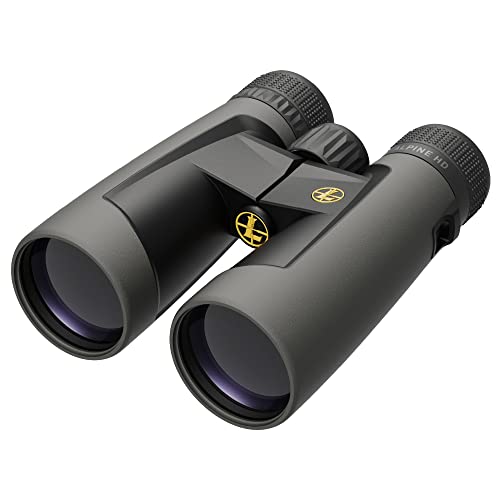
Why It Stands Out in leupold binocular Applications
The core challenge in any optical tool is balancing competing priorities: light gathering versus portability, power versus stability, durability versus cost. Here’s what I mean: a binocular that excels in low light is often large and heavy. One that offers high magnification amplifies every tiny hand tremor. The standout solutions are those that make intelligent compromises without sacrificing critical performance. They employ specific optical frameworks and construction philosophies that directly target user pain points.
Take the approach seen in models like the Leupold BX-2 Alpine HD 12x52mm. Its value isn’t in a list of specs, but in how its design tackles real problems. The open-bridge, roof-prism architecture isn’t just for looks; it fundamentally redistributes weight for a more secure, ergonomic grip to combat fatigue during long glassing sessions. The 12x52mm configuration is a deliberate answer to the user who needs extended reach and superior twilight performance, accepting that a steady hand or a rest becomes part of the equation. This is applied problem-solving.
I remember glassing for elk in a steady Oregon drizzle. My old binoculars, a bargain-bin special, became two useless tubes of fog. I missed a herd moving through a distant clearcut. That was the day I understood that ‘waterproof’ and ‘fogproof’ aren’t marketing terms they’re insurance policies for your observation time.
The Magnification Trap: More Power Isn’t Always the Answer
A common myth? Bigger magnification is always better. It’s a seductive trap. You see 12x or 15x and think, “That’ll get me closer.” And it will. But it also gets you every minuscule shake in your hands. The image becomes a jittery, frustrating mess. The exit pupil that beam of light hitting your eye gets smaller, and your eye placement becomes brutally critical.
- Problem: Unusable shake at high magnification without support.
- Solution Spectrum: Lower power (8x or 10x) for general use, high power (12x and up) for dedicated, supported observation, or image-stabilized models (a different cost bracket entirely).
- The Tool: Your own posture and bracing. Learn to lean against a tree, use your knees as a tripod, or invest in a simple chest-mount. A 12x model, like the example BX-2 Alpine HD, demands this discipline. it’s a tool for the deliberate observer, not the casual scanner.
The Durability Imperative: Beyond Weatherproofing
Waterproof and fogproof are table stakes for any serious tool. The real test is in the sealing and the purge. It’s not about surviving a rain shower; it’s about surviving the transition from a warm vehicle to a freezing ridge line without internal condensation. It’s about the structural integrity of the hinge and the armor taking a bump against a rock without losing collimation (optical alignment).
This is where legendary customer care isn’t a nice-to-have it’s a core part of the product’s longevity. A lifetime guarantee is a promise that the manufacturer will stand behind the engineering, which allows you to actually use the tool in the conditions it was designed for without treating it like a museum piece.
| User Problem | Technical Cause | Solution Approach |
|---|---|---|
| Dim, dull image in low light | Insufficient objective lens size, poor lens coatings, low-quality prisms | Larger objective lenses (e.g., 42mm, 50mm+), fully multi-coated optics, BAK-4 prisms |
| Eye strain during prolonged use | Poor eye relief, misaligned optics, cheap eyecups | Long eye relief design, precise diopter adjustment, multi-position twist-up eyecups |
| Heavy, cumbersome feel | Dense glass elements, bulky prism design, poor weight distribution | Open-bridge chassis, magnesium alloy frames, ergonomic armor texturing |
| Color fringing or blurry edges | Chromatic aberration, spherical aberration, inferior prism glass | HD (High-Density) glass elements, phase-corrected roof prisms, precise grinding/polishing |
Optical Clarity: Where the Magic (And Science) Happens
Think of your binocular’s light path as a highway. Every glass-to-air surface is a toll booth, reflecting away precious light. Fully multi-coated optics? That’s an E-ZPass system at every booth, minimizing loss and maximizing throughput. The result? Brightness, contrast, and color fidelity that makes a gray squirrel in shadow look detailed, not like a fuzzy blob.
BAK-4 prisms over the more common BK-7 are another critical choice. it’s like the difference between a perfectly round lens and a slightly hexagonal one. BAK-4 glass has a higher refractive index, allowing for a perfectly round exit pupil. This eliminates the “vignetting” or gray edges you might see in cheap binoculars, giving you a crisp, clear image across the entire field of view. This isn’t trivial it reduces eye strain dramatically.
Ergonomics: The Forgotten Performance Factor
An uncomfortable binocular is a binocular you leave at home. Or one you put down too soon. The open-bridge design isn’t just a modern aesthetic. It serves two key functions: it reduces overall weight by removing material, and it allows your fingers to wrap naturally around the barrels for a stable, controllable hold. It also makes the tool easier to hang onto with gloves a small but vital detail in cold weather. The texture of the armor, the smoothness of the focus wheel, the positive click of the diopter adjustment these are the details that separate a tool you fight with from a tool that feels like an extension of your senses.
Here’s an unexpected analogy: Choosing the right binocular is like tuning a race car’s suspension. You can have the biggest engine (magnification), but if the chassis (ergonomics) can’t put the power down effectively and the brakes (clarity) can’t handle the speed, you’re just spinning your wheels. Every component must work in concert.
A Case in Point: The Long-Distance Observer
Let’s consider a specific scenario. Sarah is a wildlife enthusiast documenting elk migration patterns. Her problem is twofold: she needs to identify individual animals from a ridge line over 500 yards away, and she often works in the low-light hours of dawn and dusk. A standard 8×42 binocular lacks the reach. A spotting scope is too bulky and slow to pan across a wide valley.
Her Solution Path: She moves to a higher-magnification binocular in a configuration that prioritizes light gathering. A 12x52mm model becomes her primary tool. The 12x power gives her the necessary detail for identification. The 52mm objective lenses act like larger light buckets, extending her viable observation window. The waterproof/fogproof construction means an unexpected weather shift doesn’t end her day. The trade-off? She must use a monopod or brace meticulously against a rock. For her, the compromise is worth it the tool solves her core problems of reach and low-light performance.
The result? More data, less frustration, and a tool that matches her specific mission profile. This is the essence of solving binocular challenges: aligning the instrument’s capabilities with the user’s non-negotiable needs.
Actionable Recommendations for Solving Your binocular Problem
So, where should you start? Ditch the feature list and begin with a brutally honest assessment.
- Define Your Primary Use: Birding from a blind? Hunting in dense timber? Scanning open terrain? Maritime use? Your environment dictates priorities.
- Be Real About Your Stability: Can you consistently hold 10x steady? If not, 8x will show you more usable detail. Practice matters, but physiology is real.
- Test for Eye Comfort: Adjust the diopter. Work the focus. Do the eyecups fit your eye sockets? Is the eye relief sufficient if you wear glasses? This is a personal interface.
- Prioritize Optical Integrity: In any price range, seek out fully multi-coated lenses and BAK-4 prisms. This is the baseline for a clear image.
- Embrace the Warranty: A lifetime, no-questions-asked guarantee is a signal of build quality. It turns the purchase from a cost into a long-term investment.
Your goal isn’t to buy a binocular. Your goal is to acquire a reliable window. A tool that disappears in your hands and puts the world in sharp, brilliant focus, exactly when you need it to. Start with the problem. The right solution whether it’s a compact 8×32 for the hiking trail, a rugged 10×42 for all-around use, or a specialized 12×52 for long-range clarity will follow.
💎 Upgrade Your Life – Make the Smart Choice!
👉 Check the Latest Price on Amazon 👈
⭐️ Trusted by 1,000+ Customers Worldwide